


A structural equation model of perievent panic and posttraumatic stress disorder after a community disaster
- PMID: 21351165
- PMCID: PMC3334528
- DOI: 10.1002/jts.20603
A structural equation model of perievent panic and posttraumatic stress disorder after a community disaster
Abstract
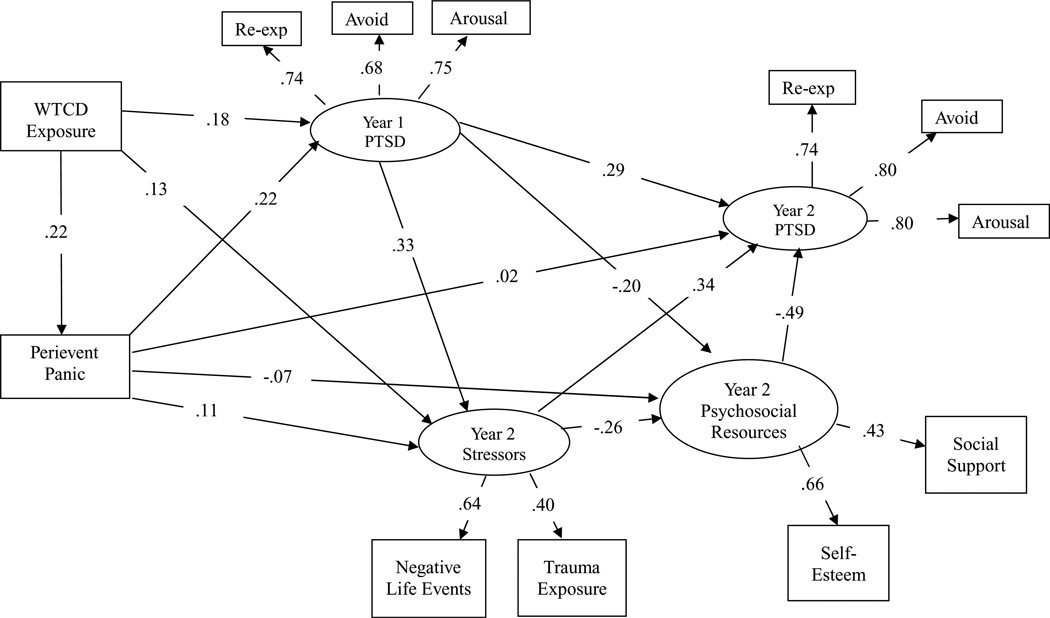
Studies suggest that perievent panic attacks are predictive of future posttraumatic stress disorder (PTSD). Using a population of New York City residents interviewed after the World Trade Center Disaster, the authors measured event exposure, perievent panic, potential confounding, mediating variables, and PTSD. When they estimated a structural equation model, with other stressor events, psychological resources, and Year 1 and Year 2 PTSD as latent variables and adjusted for confounders, the association between perievent panic and Year 2 PTSD was not significant. Results revealed that perievent panic was predictive of Year 1 PTSD, but not Year 2 PTSD. Year 2 stressors and Year 2 psychosocial resources were the best predictors of Year 2 PTSD.
Copyright © 2011 International Society for Traumatic Stress Studies.
Figures
References
-
- Adams RE, Bromet EJ, Panina N, Golovakha E, Goldgaber D, Gluzman S. Stress and well-being after the Chornobyl nuclear power plant accident. Psychological Medicine. 2002;32:143–156. - PubMed
-
- Adeola FO .Mental health and psychological distress sequelae of Katrina: An empirical study of survivors. Human Ecology Review. 2009;16:195–210.
Publication types
MeSH terms
Grants and funding
LinkOut - more resources
Full Text Sources
Medical
