


Regulatory functions of glutathione S-transferase P1-1 unrelated to detoxification
- PMID: 21351850
- PMCID: PMC4603649
- DOI: 10.3109/03602532.2011.552912
Regulatory functions of glutathione S-transferase P1-1 unrelated to detoxification
Abstract
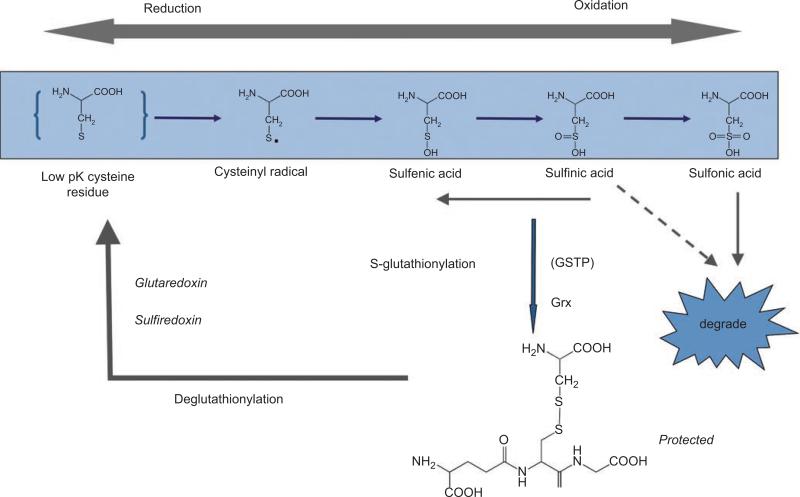
Glutathione S-transferase P1-1 (GSTP) is one member of the family of GSTs and is ubiquitously expressed in human tissues. The literature is replete with reports of high levels of GSTP linked either with cancer incidence or drug resistance, and yet no entirely cogent explanation for these correlations exists. The catalytic detoxification properties of the GST isozyme family have been a primary research focus for the last four decades. However, it has become apparent that they have undergone structural and functional convergence where evolutionary selective pressures have favored the emergence of noncatalytic properties of GSTP that has imbued this isozyme with expanded biological importance. For example, GSTP has now been linked with two cell-signaling functions that are critical to survival. Through protein:protein interactions, GSTP can sequester c-jun N-terminal kinase (JNK) and act as a negative regulator of this stress kinase. Pharmacologically, this activity has been linked with the activity of GSTP inhibitors in stimulating myeloproliferation. In addition, GSTP is linked with the forward S-glutathionylation reaction, a post-translational modification that impacts the function/activity of a number of proteins. Catalytic reversal of S-glutathionylation is well characterized, but the role of GSTP in catalyzing the forward reaction contributes to the "glutathionylation cycle." Moreover, GSTP is itself susceptible to S-glutathionylation, providing an autoregulatory loop for the cycle. Because oxidative stress regulates both S-glutathionylation and JNK-signaling pathways, such links may help to explain the aberrant patterns of GSTP expression in the cancer phenotype. As such, there is an ongoing preclinical and clinical platform of drug discovery and development around GSTP.
Figures
References
-
- Adachi T, Weisbrod RM, Pimentel DR, Ying J, Sharov VS, Schoneich C, et al. S-glutathiolation by peroxynitrite activates SERCA during arterial relaxation by nitric oxide. Nat Med. 2004;10:1200–1207. - PubMed
-
- Adams GB, Chabner KT, Alley IR, Olson DP, Szczepiorkowski ZM, Poznansky MC, et al. Stem cell engraftment at the endosteal niche is specified by the calcium-sensing receptor. Nature. 2006;439:599–603. - PubMed
-
- Arai F, Yoshihara H, Hosokawa K, Nakamura Y, Gomei Y, Iwasaki H, et al. Niche regulation of hematopoietic stem cells in the endosteum. Ann N Y Acad Sci. 2009;1176:36–46. - PubMed
-
- Armstrong RN. Structure, catalytic mechanism, and evolution of the glutathione transferases. Chem Res Toxicol. 1997;10:2–18. - PubMed
Publication types
MeSH terms
Substances
Grants and funding
LinkOut - more resources
Full Text Sources
Other Literature Sources
Research Materials
Miscellaneous
