


Infections and immunodeficiency in Down syndrome
- PMID: 21352207
- PMCID: PMC3074212
- DOI: 10.1111/j.1365-2249.2011.04335.x
Infections and immunodeficiency in Down syndrome
Abstract
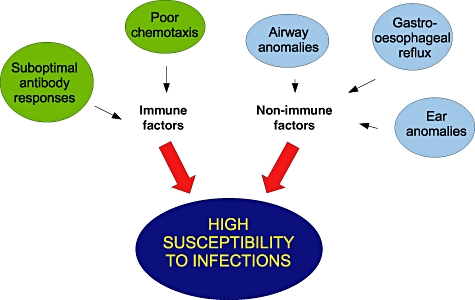
Down syndrome (DS) is the most common genetic disease and presents with cognitive impairment, cardiac and gastrointestinal abnormalities, in addition to other miscellaneous clinical conditions. DS individuals may have a high frequency of infections, usually of the upper respiratory tract, characterized by increased severity and prolonged course of disease, which are partially attributed to defects of the immune system. The abnormalities of the immune system associated with DS include: mild to moderate T and B cell lymphopenia, with marked decrease of naive lymphocytes, impaired mitogen-induced T cell proliferation, reduced specific antibody responses to immunizations and defects of neutrophil chemotaxis. Limited evidence of genetic abnormalities secondary to trisomy of chromosome 21 and affecting the immune system is available, such as the potential consequences of gene over-expression, most significantly SOD1 and RCAN1. Secondary immunodeficiency due to metabolic or nutritional factors in DS, particularly zinc deficiency, has been postulated. Non-immunological factors, including abnormal anatomical structures (e.g. small ear canal, tracheomalacia) and gastro-oesophageal reflux, may play a role in the increased frequency of respiratory tract infections. The molecular mechanisms leading to the immune defects observed in DS individuals and the contribution of these immunological abnormalities to the increased risk of infections require further investigation. Addressing immunological and non-immunological factors involved in the pathogenesis of infectious diseases may reduce the susceptibility to infections in DS subjects.
© 2011 The Authors. Clinical and Experimental Immunology © 2011 British Society for Immunology.
Figures
References
-
- Yang Q, Rasmussen SA, Friedman JM. Mortality associated with Down's syndrome in the USA from 1983 to 1997: a population-based study. Lancet. 2002;359:1019–25. - PubMed
-
- Canfield MA, Honein MA, Yuskiv N, Xing J, Mai CT, Collins JS. National estimates and race/ethnic-specific variation of selected birth defects in the United States, 1990–2001. Birth Defects Res A Clin Mol Teratol. 2006;76:747–56. - PubMed
-
- van Trotsenburg AS, Heymans HS, Tijssen JG, de Vijlder JJ, Vulsma T. Comorbidity, hospitalization, and medication use and their influence on mental and motor development of young infants with Down syndrome. Pediatrics. 2006;118:1633–9. - PubMed
-
- Zachor DA, Mroczek-Musulman E, Brown P. Prevalence of celiac disease in Down syndrome in the United States. J Pediatr Gastroenterol Nutr. 2000;31:275–9. - PubMed
-
- Sanchez-Albisua I, Storm W, Wascher I, Stern M. How frequent is celiac disease in Down syndrome. Eur J Pediatr. 2002;161:683–4. - PubMed
Publication types
MeSH terms
LinkOut - more resources
Full Text Sources
Other Literature Sources
Medical
Miscellaneous
