


Behavioral cross-sensitization between DOCA-induced sodium appetite and cocaine-induced locomotor behavior
- PMID: 21352848
- PMCID: PMC3086042
- DOI: 10.1016/j.pbb.2011.02.016
Behavioral cross-sensitization between DOCA-induced sodium appetite and cocaine-induced locomotor behavior
Abstract
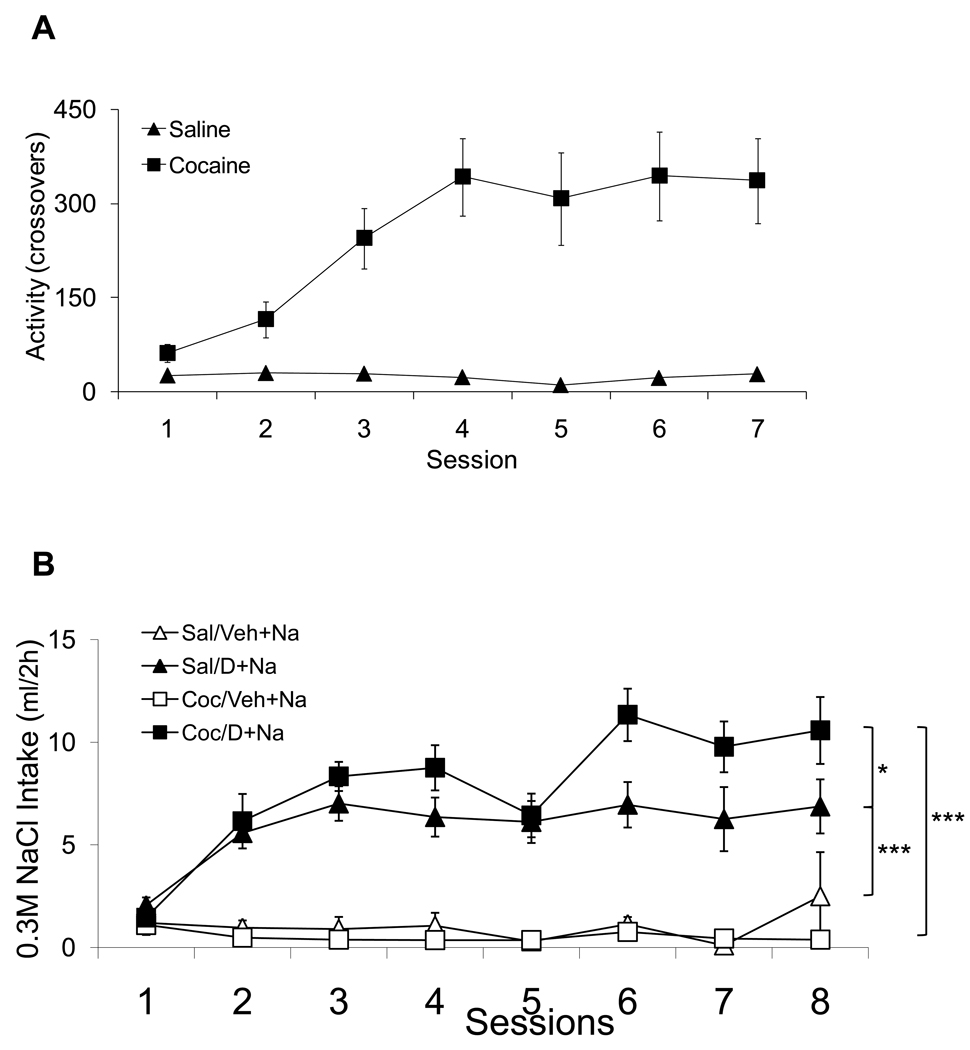
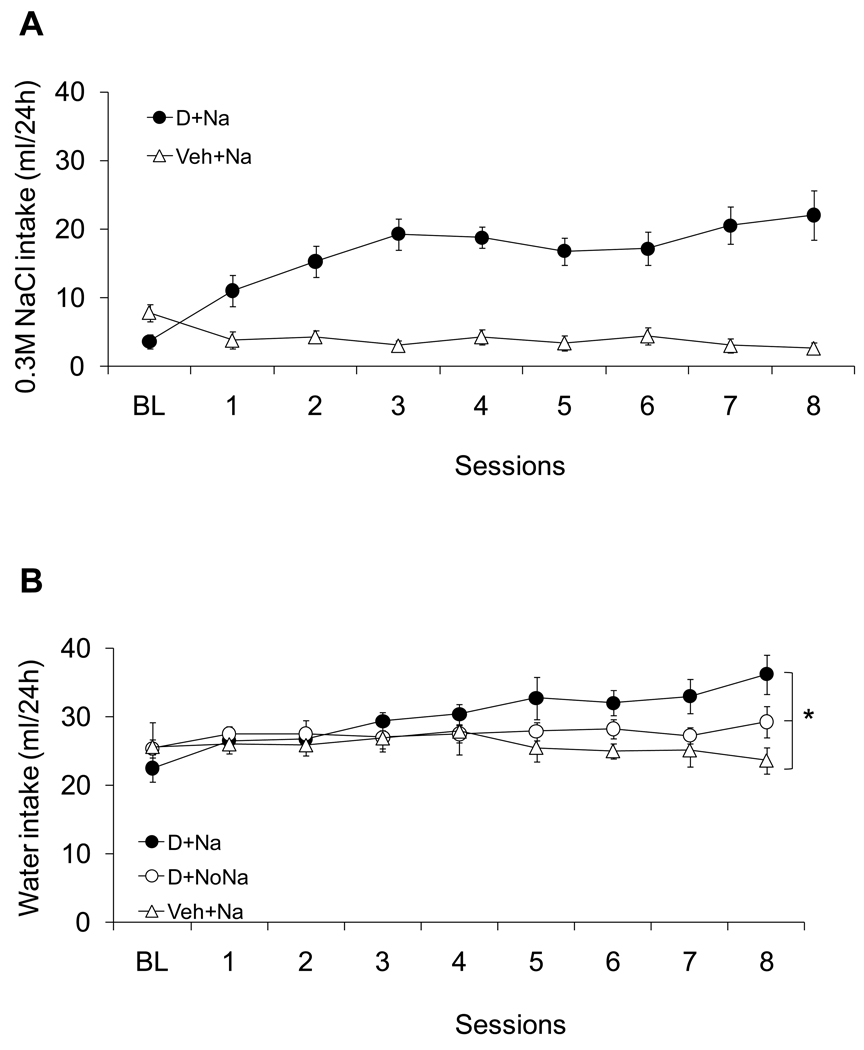
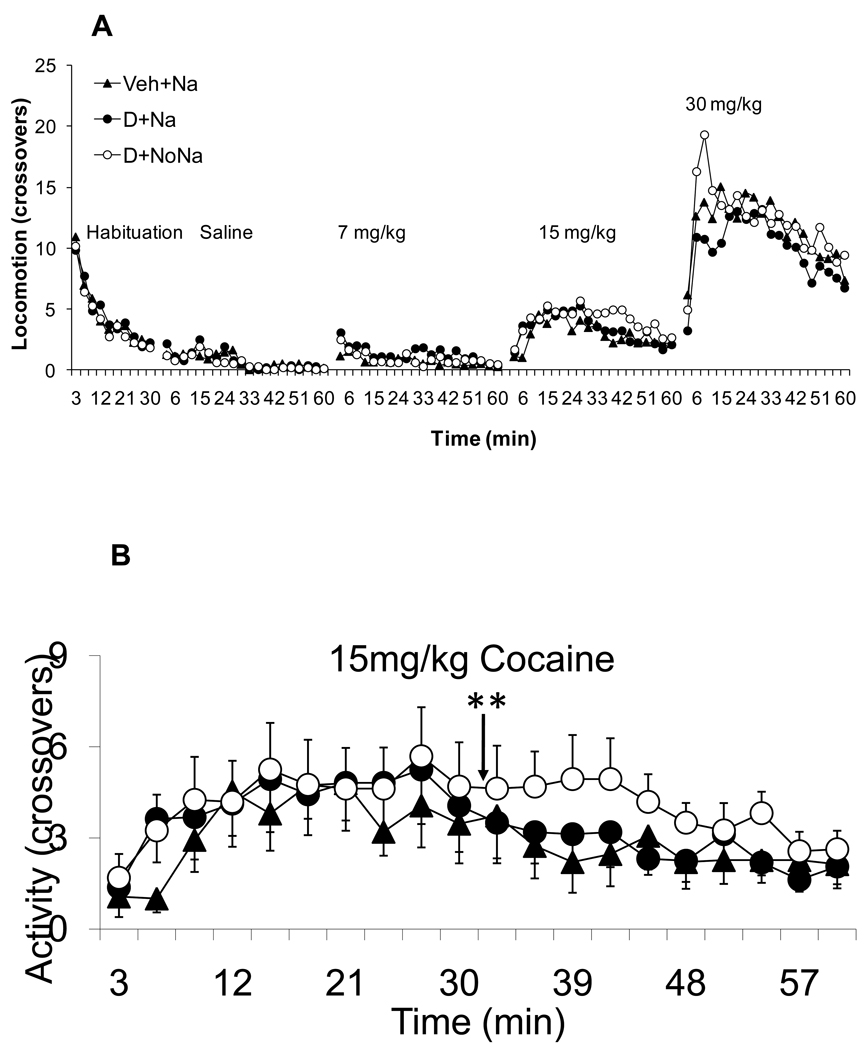
Behavioral sensitization involves increases in the magnitude of a response to a stimulus after repeated exposures to the same response initiator. Administration of psychomotor stimulants and the induction of appetitive motivational states associated with natural reinforcers like sugar and salt are among experimental manipulations producing behavioral sensitization. In rats, repeated administration of the mineralocorticoid agonist deoxycorticosterone acetate (DOCA) initially induces incremental increases in daily hypertonic saline consumption (i.e., sensitization of sodium appetite) in spite of the retention of sodium. The present studies investigated whether sodium appetite sensitization induced by DOCA shares mechanisms similar to those of psychomotor stimulant-induced sensitization, and whether there is evidence for reciprocal cross-sensitization. In Experiments 1 and 3, rats received control or cocaine treatments to induce locomotor sensitization. A week later DOCA (or vehicle) was administered to generate a sodium appetite. Animals pretreated with cocaine showed a greater sodium appetite. In Experiment 2, the order of the putative sensitizing treatments was reversed. Rats first received either a series of DOCA or vehicle treatments either with or without access to saline and were later tested for sensitization of the locomotor response to cocaine. Animals pretreated with DOCA without access to saline showed greater locomotor responses to cocaine than animals receiving vehicle treatments. Together these experiments indicate that treatments generating a sustained salt appetite and producing cocaine-induced psychomotor responses show reciprocal behavioral cross-sensitization. The underlying mechanisms accounting for this relationship may be the fact that psychostimulants and an unresolved craving for sodium can act as potent stressors.
Copyright © 2011 Elsevier Inc. All rights reserved.
Figures
References
-
- Anagnostaras SG, Robinson TE. Sensitization to the psychomotor stimulant effects of amphetamine: modulation by associative learning. Behav Neurosci. 1996;110:1397–1414. - PubMed
-
- Antelman SM, Chiodo LA. Amphetamine as a stressor. In: Creese I, editor. Stimulants: Neurochemical, Behavioral, and Clinical Perspectives. New York: Raven Press; 1983. pp. 269–299.
-
- Antelman SM, Eichler AJ, Black CA, Kocan D. Interchangeability of stress and amphetamine in sensitization. Science. 1980;207:329–331. - PubMed
-
- Araujo AP, DeLucia R, Scavone C, Planeta CS. Repeated predictable or unpredictable stress: effects on cocaine-induced locomotion and cyclic AMP-dependent protein kinase activity. Behav Brain Res. 2003;139:75–81. - PubMed
-
- Avena NM, Long KA, Hoebel BG. Sugar-dependent rats show enhanced responding for sugar after abstinence: evidence of a sugar deprivation effect. Physiol Behav. 2005;84:359–362. - PubMed
Publication types
MeSH terms
Substances
Grants and funding
LinkOut - more resources
Full Text Sources
