


Minimum toe clearance adaptations to floor surface irregularity and gait speed
- PMID: 21354576
- PMCID: PMC5375113
- DOI: 10.1016/j.jbiomech.2011.02.010
Minimum toe clearance adaptations to floor surface irregularity and gait speed
Abstract
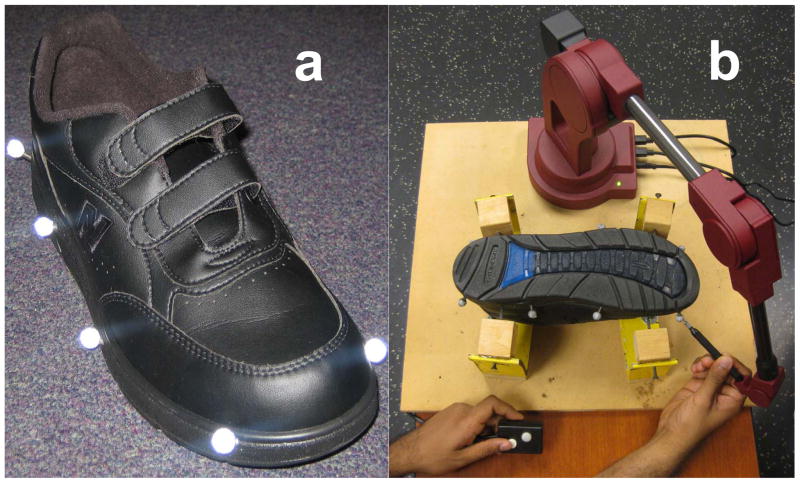
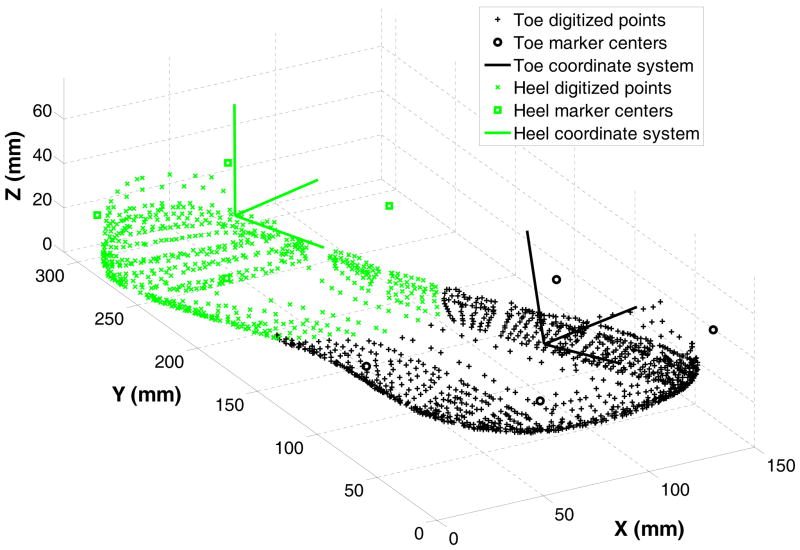
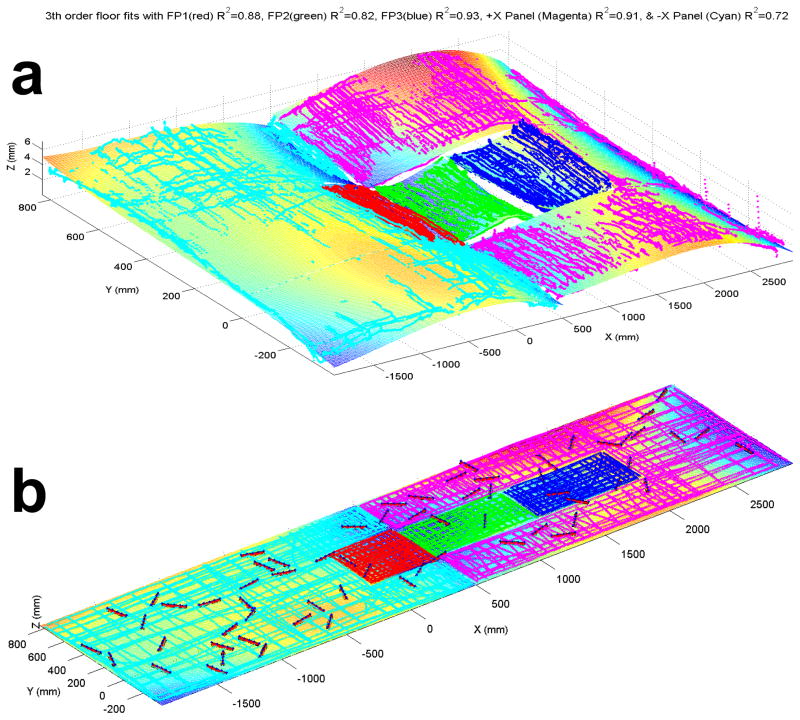
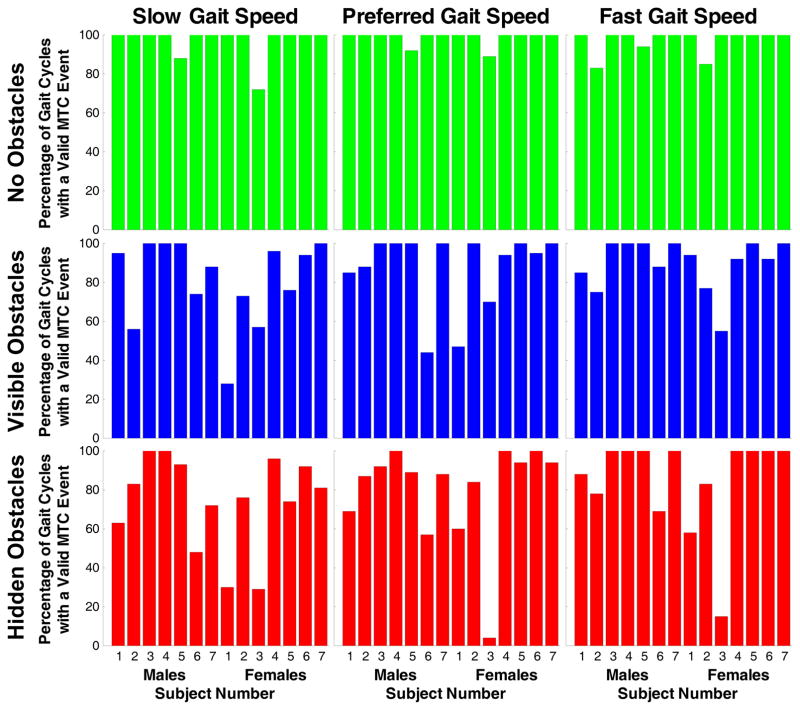
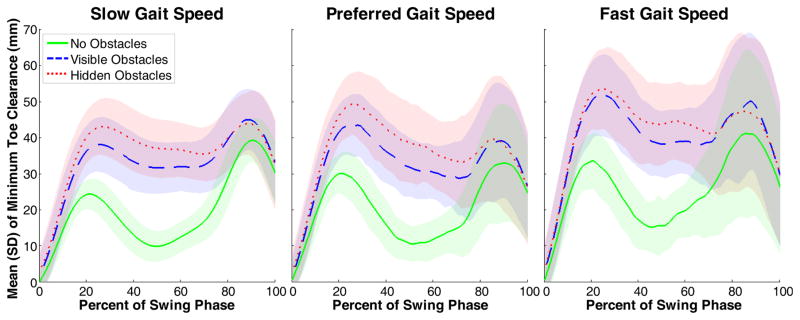
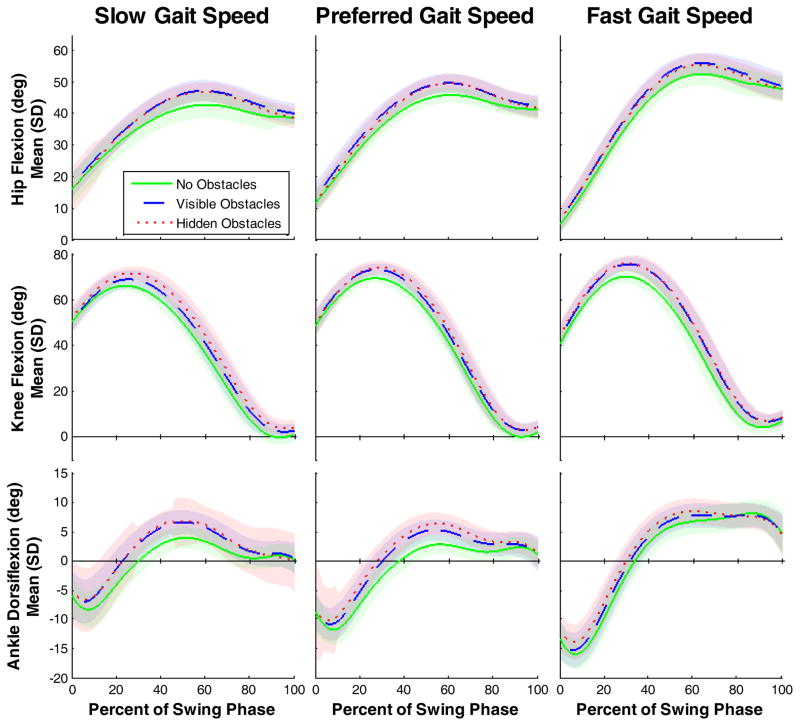
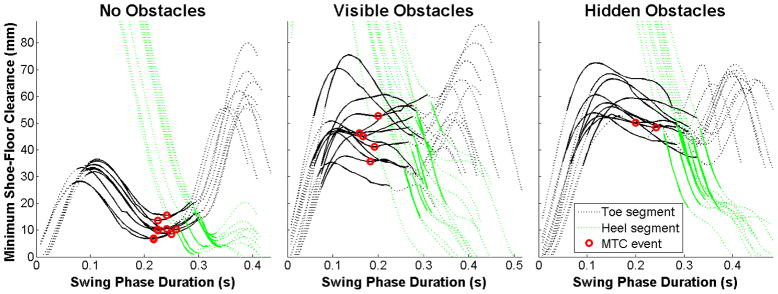
Toe speed during gait generally nears its maximum while its height reaches a local minima approximately halfway through swing phase. Trips are thought to frequently occur at these local minima (minimum toe clearance or MTC events) and trip risk has been quantified using the minimum distance between the toe and ground here (MTC). This study investigated MTC on floor surfaces with and without multiple small obstacles. After shoes and floor surfaces were digitized, 14 unimpaired subjects (half women) each traversed a 4.88 m walkway 4 times at slow, preferred, and fast speeds across surfaces with no obstacles, visible obstacles, and hidden obstacles. Both surfaces with obstacles had the same random obstacle configuration. Shoe and body segment motions were tracked using passive markers and MTC and joint kinematics calculated. All MTC and kinematic variables tested significantly increased with faster instructed gait speed except the likelihood of MTC event occurrence (local minima in minimum toe clearance trajectory when foot is in upper quartile of speed). MTC events were less frequent for swing phases on surfaces with obstacles (80% vs. 98% for no obstacles). MTC values, when present, were doubled by the presence of visible obstacles (22.2 ± 7.3mm vs. 11.1 ± 5.7 mm) and further increased to 26.8 ± 7.1mm when these obstacles were hidden from view (all comparisons p ≤ 0.0003). These substantial floor surface-related changes in MTC event occurrences and values resulted from alterations in toe- and heel-clearance trajectories caused by subtle but significant changes in joint kinematics that did not exceed 10% each joint's swing phase range of motion.
Published by Elsevier Ltd.
Conflict of interest statement
The author has no relationship with any organization or person that may bias this work.
Figures
References
-
- CDC. [Accessed July 30, 2010];WISQARS (Web-based Injury Statistics Query and Reporting System) Available at: http://www.cdc.gov/injury/wisqars/index.html. - PubMed
-
- National Center for Injury Prevention and Control. [Accessed July 30, 2010]; Available at: http://www.cdc.gov/ncipc/wisqars/nonfatal/quickpicks/quickpicks_2007/all....
-
- Begg R, Best R, Dell’Oro L, Taylor S. Minimum foot clearance during walking: strategies for the minimisation of trip-related falls. Gait & Posture. 2007;25(2):191–198. - PubMed
-
- Bejek Z, Paróczai R, Illyés A, Kiss RM. The influence of walking speed on gait parameters in healthy people and in patients with osteoarthritis. Knee Surgery, Sports Traumatology, Arthroscopy: Official Journal of the ESSKA. 2006;14(7):612–622. - PubMed
-
- Blake AJ, Morgan K, Bendall MJ, Dallosso H, Ebrahim SB, Arie TH, Fentem PH, Bassey EJ. Falls by elderly people at home: prevalence and associated factors. Age and Ageing. 1988;17(6):365–372. - PubMed
Publication types
MeSH terms
Grants and funding
LinkOut - more resources
Full Text Sources
