Nurse-patient communication interactions in the intensive care unit
- PMID: 21362711
- PMCID: PMC3222584
- DOI: 10.4037/ajcc2011433
Nurse-patient communication interactions in the intensive care unit
Abstract
Background: The inability to speak during critical illness is a source of distress for patients, yet nurse-patient communication in the intensive care unit has not been systematically studied or measured.
Objectives: To describe communication interactions, methods, and assistive techniques between nurses and nonspeaking critically ill patients in the intensive care unit.
Methods: Descriptive observational study of the nonintervention/usual care cohort from a larger clinical trial of nurse-patient communication in a medical and a cardiothoracic surgical intensive care unit. Videorecorded interactions between 10 randomly selected nurses (5 per unit) and a convenience sample of 30 critically ill adults (15 per unit) who were awake, responsive, and unable to speak because of respiratory tract intubation were rated for frequency, success, quality, communication methods, and assistive communication techniques. Patients self-rated ease of communication.
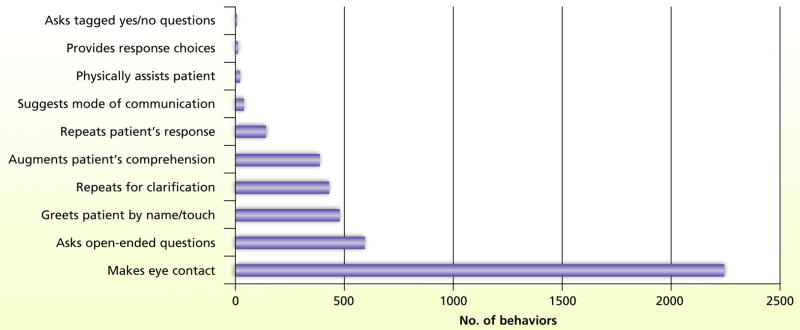
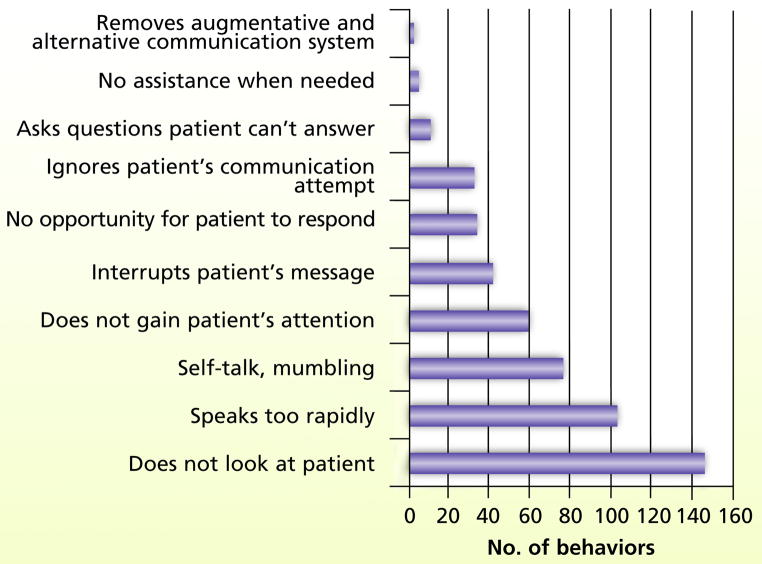
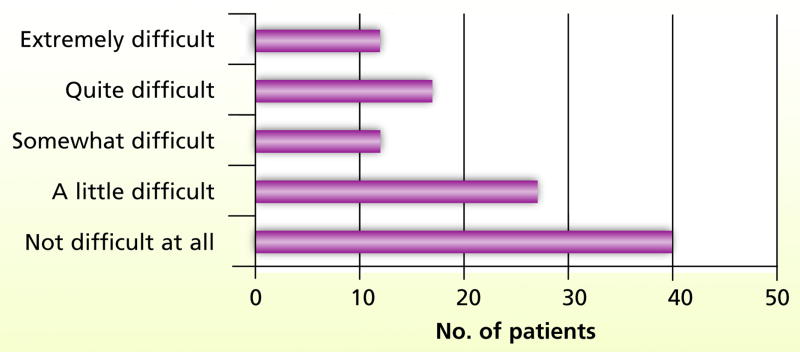
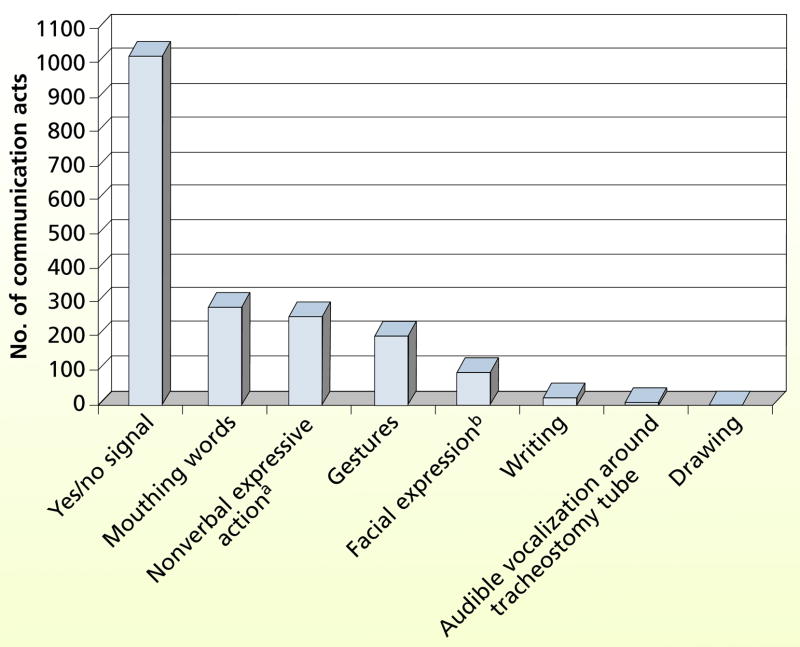
Results: Nurses initiated most (86.2%) of the communication exchanges. Mean rate of completed communication exchange was 2.62 exchanges per minute. The most common positive nurse act was making eye contact with the patient. Although communication exchanges were generally (>70%) successful, more than one-third (37.7%) of communications about pain were unsuccessful. Patients rated 40% of the communication sessions with nurses as somewhat difficult to extremely difficult. Assistive communication strategies were uncommon, with little to no use of assistive communication materials (eg, writing supplies, alphabet or word boards).
Conclusions: Study results highlight specific areas for improvement in communication between nurses and nonspeaking patients in the intensive care unit, particularly in communication about pain and in the use of assistive communication strategies and communication materials.
Figures
References
-
- Angus DC, Barnato AE, Linde-Zwirble WT, et al. Robert Wood Johnson Foundation ICU End-Of-Life Peer Group. Use of intensive care at the end of life in the United States: An epidemiologic study. Crit Care Med. 2004;32(3):638–643. - PubMed
-
- Angus DC, Shorr AF, White A, Dremsizov TT, Schmitz RJ, Kelley MA Committee on Manpower for Pulmonary and Critical Care Societies (COMPACCS) Critical care delivery in the United States: distribution of services and compliance with Leapfrog recommendations. Crit Care Med. 2006;34(4):1016–1024. - PubMed
-
- Happ MB. Communicating with mechanically ventilated patients: State of the science. AACN Clin Issues. 2001;12(2):247–258. - PubMed
-
- Pennock BE, Crawshaw L, Maher T, Price T, Kaplan PD. Distressful events in the ICU as perceived by patients recovering from coronary artery bypass surgery. Heart Lung. 1994;23(4):323–327. - PubMed
-
- Rotondi AJ, Chelluri L, Sirio C, et al. Patients’ recollections of stressful experiences while receiving prolonged mechanical ventilation in an intensive care unit. Crit Care Med. 2002;30(4):746–752. - PubMed