


Ambient concentrations and personal exposure to polycyclic aromatic hydrocarbons (PAH) in an urban community with mixed sources of air pollution
- PMID: 21364704
- PMCID: PMC4037700
- DOI: 10.1038/jes.2011.2
Ambient concentrations and personal exposure to polycyclic aromatic hydrocarbons (PAH) in an urban community with mixed sources of air pollution
Abstract
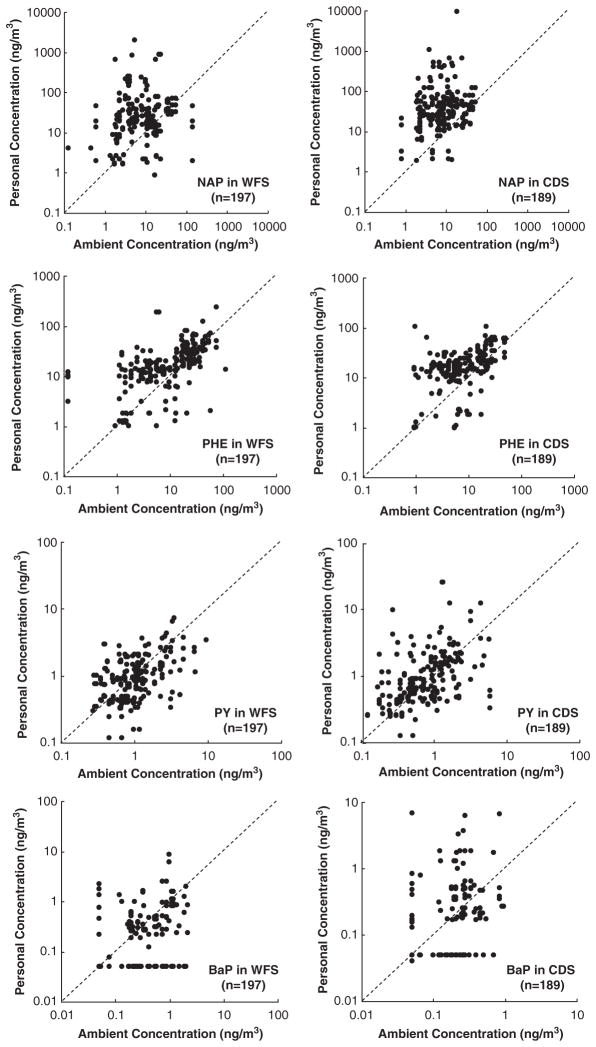
Assessment of the health risks resulting from exposure to ambient polycyclic aromatic hydrocarbons (PAH) is limited by a lack of environmental exposure data among the general population. This study characterized personal exposure and ambient concentrations of PAH in the Village of Waterfront South (WFS), an urban community with many mixed sources of air toxics in Camden, New Jersey, and CopeWood/Davis Streets (CDS), an urban reference area located ∼1 mile east of WFS. A total of 54 and 53 participants were recruited from non-smoking households in WFS and CDS, respectively. In all, 24-h personal and ambient air samples were collected simultaneously in both areas on weekdays and weekends during summer and winter. The ambient PAH concentrations in WFS were either significantly higher than or comparable to those in CDS, indicating the significant impact of local sources on PAH pollution in WFS. Analysis of diagnostic ratios and correlation suggested that diesel truck traffic, municipal waste combustion and industrial combustion were the major sources in WFS. In such an area, ambient air pollution contributed significantly to personal PAH exposure, explaining 44-96% of variability in personal concentrations. This study provides valuable data for examining the impact of local ambient PAH pollution on personal exposure and therefore potential health risks associated with environmental PAH pollution.
Conflict of interest statement
The authors declare no conflict of interest.
Figures

References
-
- Armstrong BG, Tremblay CG, Cyr D, Thériault GP. Estimating the relationship between exposure to tar volatiles and the incidence of bladder cancer in aluminum smelter workers. Scand J Work Environ Health. 1986;12:486–493. - PubMed
-
- ATSDR (Agency for Toxic Substances and Disease Registry) Toxicological Profile for Polycyclic Aromatic Hydrocarbons. U.S. Department of Health and Human Services; Atlanta, GA: 1995. - PubMed
-
- Baek SO, Field RA, Goldstone ME, Kirk PW, Lester JN, Perry R. A review of atmospheric polycyclic aromatic hydrocarbons: sources, fate and behavior. Water Air Soil Pollution. 1991;60:279–300.
-
- Buckley TJ, Waldman JM, Dhara R, Greenberg A, Ouyang Z, Lioy PJ. An assessment of a urinary biomarker for total human environmental exposure to benzo[a]pyrene. Int Arch Occup Environ Health. 1995;67:257–266. - PubMed
Publication types
MeSH terms
Substances
Grants and funding
LinkOut - more resources
Full Text Sources
Medical
