Meta-Analysis
. 2011 Feb 22;6(2):e16917.
doi: 10.1371/journal.pone.0016917.

Identifying consensus disease pathways in Parkinson's disease using an integrative systems biology approach

Affiliations
Meta-Analysis

Identifying consensus disease pathways in Parkinson's disease using an integrative systems biology approach

Yvonne J K Edwards et al. PLoS One. .

Abstract

Parkinson's disease (PD) has had six genome-wide association studies (GWAS) conducted as well as several gene expression studies. However, only variants in MAPT and SNCA have been consistently replicated. To improve the utility of these approaches, we applied pathway analyses integrating both GWAS and gene expression. The top 5000 SNPs (p<0.01) from a joint analysis of three existing PD GWAS were identified and each assigned to a gene. For gene expression, rather than the traditional comparison of one anatomical region between sets of patients and controls, we identified differentially expressed genes between adjacent Braak regions in each individual and adjusted using average control expression profiles. Over-represented pathways were calculated using a hyper-geometric statistical comparison. An integrated, systems meta-analysis of the over-represented pathways combined the expression and GWAS results using a Fisher's combined probability test. Four of the top seven pathways from each approach were identical. The top three pathways in the meta-analysis, with their corrected p-values, were axonal guidance (p = 2.8E-07), focal adhesion (p = 7.7E-06) and calcium signaling (p = 2.9E-05). These results support that a systems biology (pathway) approach will provide additional insight into the genetic etiology of PD and that these pathways have both biological and statistical support to be important in PD.


Conflict of interest statement

Competing Interests: The authors have declared that no competing interests exist.

Figures

Figure 1
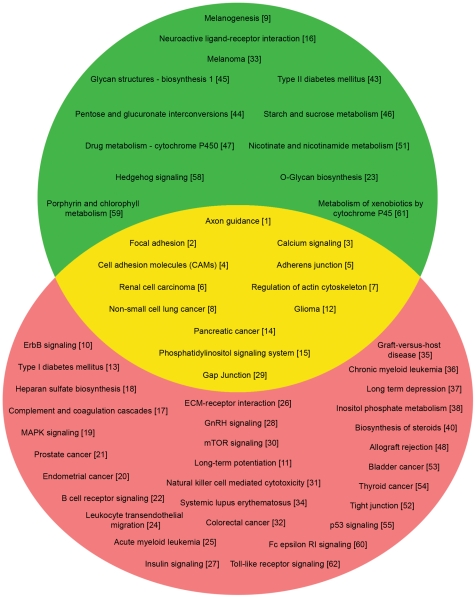
Figure 1. The Venn diagram shows 25 and 42 over-represented pathways in the GWAS (green) and the expression PD (pink) studies respectively.
Twelve over-represented pathways common to both PD studies are also shown (yellow). The pathway's rank in the meta-analysis is provided in parenthesis.
Figure 2
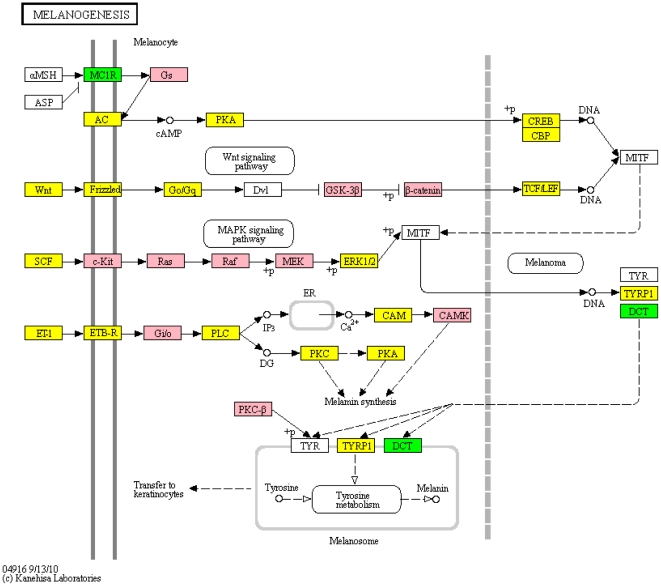
Figure 2. KEGG pathway for melanogenesis.
Similar to a gene expression array, those significant genes in the GWAS study are green, those in the expression study are pink and those that are significant in both are yellow.
Figure 3
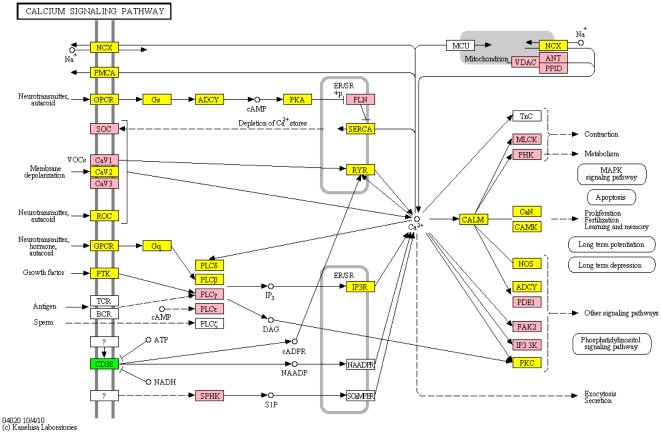
Figure 3. KEGG pathway for calcium signaling.
Similar to a gene expression array, those genes with significant expression in the GWAS study are green, those in the expression study are pink and those that are significant in both are yellow.
Figure 4
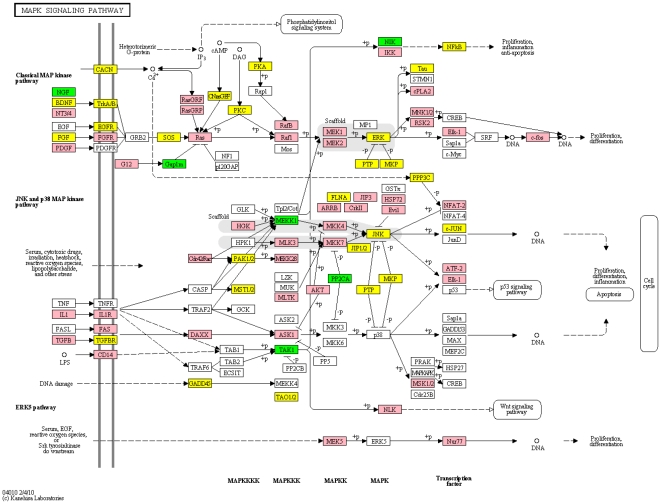
Figure 4. KEGG pathway for MAPK.
Similar to a gene expression array, those genes that are significant in the GWAS study are green, those in the expression study are pink and those that are significant in both are yellow.
Figure 5
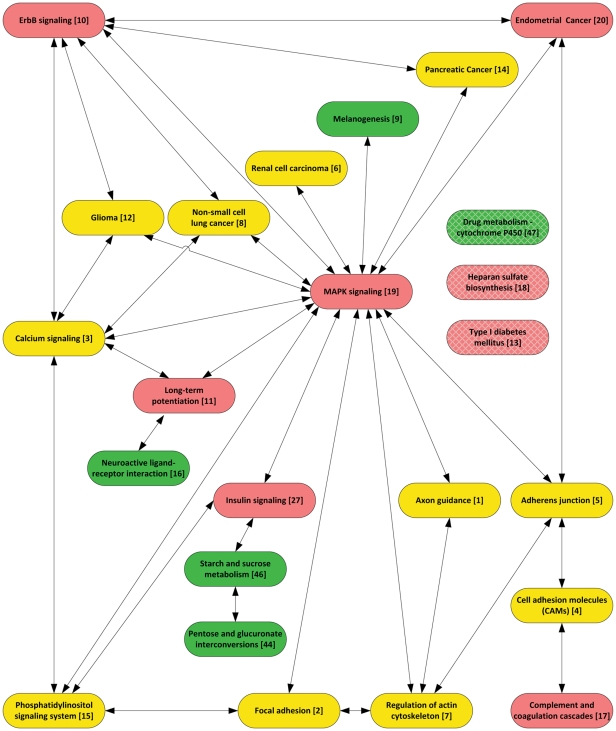
Figure 5. Cross-talk amongst over-represented pathways in PD.
The links are defined by the LinkDB function from the KEGG website. The top ten over-represented pathways from the GWAS and expression studies (Table 1) plus the top twenty over-represented pathways from the meta-analysis (Table 2) are shown. The insulin signaling pathway, linking the MAPK signaling with the starch and sucrose metabolism, is also shown. Three pathways (drug metabolism - cytochrome P450, heparan sulfate biosynthesis and type 1 diabetes mellitus shown with gray thatched background) did not cross talk with the other top pathways over-represented in this study. The pathway's rank in the meta-analysis is provided in parenthesis. The pathways unique to the GWAS PD study are green, those unique to the expression PD study are pink and the pathways common to both expression and GWAS PD studies are yellow.
Figure 6
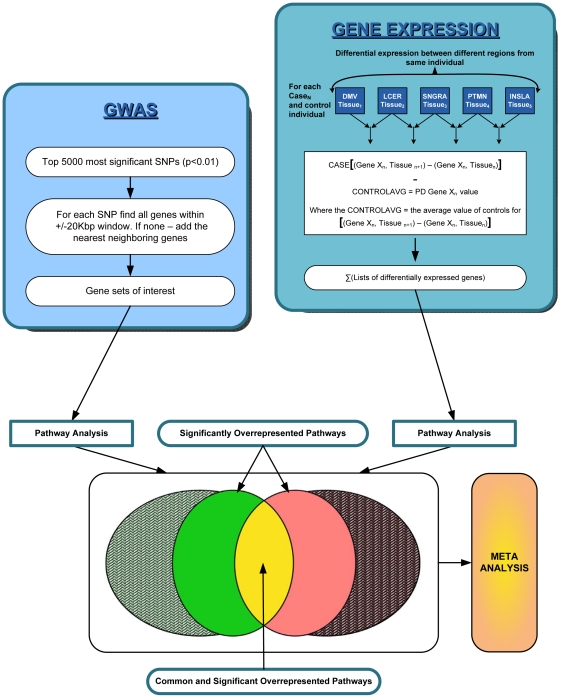
Figure 6. Conversion of Gene Expression and GWAS Pathways.
For gene expression analysis, differentially expressed genes between adjacent tissues affected in PD were identified in each individual and adjusted using average control expression profiles. Three subtractions were used to identify genes of interest in PD. The first subtraction between two adjacent tissues relates to a given PD patient (eg CASE N). The second subtraction is in controls, where a similar subtraction as above is performed, and then averaged over the four controls for the two given adjacent tissues. This is denoted as CONTROLAVG. To establish if gene X is of interest in PD between two adjacent tissues, the CONTROLAVG was subtracted from the first subtraction for each patient. An overview of the GWAS PD study is shown. Pathway analysis was performed on each of the GWAS and gene expression PD gene sets derived. Two types of convergence were performed. First, significantly over represented pathways common in both studies were identified (Figure 1). Second, a meta-analysis was carried out to combine the results obtained from the gene expression and the GWAS PD pathway analyses (Table 2). DMV = dorsal motor nucleus, LCER =  locus ceruleus, SNGRA =  substantia nigra, PTMN =  putamen, INSLA =  insula.

References

    1. Edwards TL, Scott WK, Almonte C, Burt A, Powell EH, et al. Genome-wide association study confirms SNPs in SNCA and the MAPT region as common risk factors for parkinson disease. Ann Hum Genet. 2010;74(2):97–109. - PMC - PubMed
    1. Peng G, Luo L, Siu H, Zhu Y, Hu P, et al. Gene and pathway-based second-wave analysis of genome-wide association studies. Eur J Hum Genet. 2010;18(1):111–117. - PMC - PubMed
    1. Pankratz N, Wilk JB, Latourelle JC, DeStefano AL, Halter C, et al. Genomewide association study for susceptibility genes contributing to familial parkinson disease. Hum Genet. 2009;124(6):593–605. - PMC - PubMed
    1. Simon-Sanchez J, Schulte C, Bras JM, Sharma M, Gibbs JR, et al. Genome-wide association study reveals genetic risk underlying parkinson's disease. Nat Genet. 2009;41(12):1308–1312. - PMC - PubMed
    1. Fung HC, Scholz S, Matarin M, Simon-Sanchez J, Hernandez D, et al. Genome-wide genotyping in parkinson's disease and neurologically normal controls: First stage analysis and public release of data. Lancet Neurol. 2006;5(11):911–916. - PubMed

Publication types

MeSH terms