


doi: 10.1016/s0022-4804(78)80005-5.
Liver regeneration in dogs: morphologic and chemical changes
- PMID: 213658
- PMCID: PMC3008562
- DOI: 10.1016/s0022-4804(78)80005-5
Item in Clipboard
Liver regeneration in dogs: morphologic and chemical changes
J Surg Res.
1978 Nov.
Abstract
Forty-four percent and 72% hepatectomy were carried out in dogs and the animals were sacrificed for biochemical and pathologic studies from 0.5 to 6 days later. Compensatory hypertrophy and hyperplasia (“regeneration”) were evident within 1 day, reached a maximum in 3 days, and were almost complete by 6 days. Coincident with the histologic events of regeneration were decreases in responsiveness of receptor adenyl cyclase to glucagon stimulation, increases of cyclic AMP, inconsistent changes in plasma insulin, and increases in plasma glucagon. These studies have standardized hepatic resection in dogs and they have focused attention upon some possible mechanisms that will require further study.
Figures
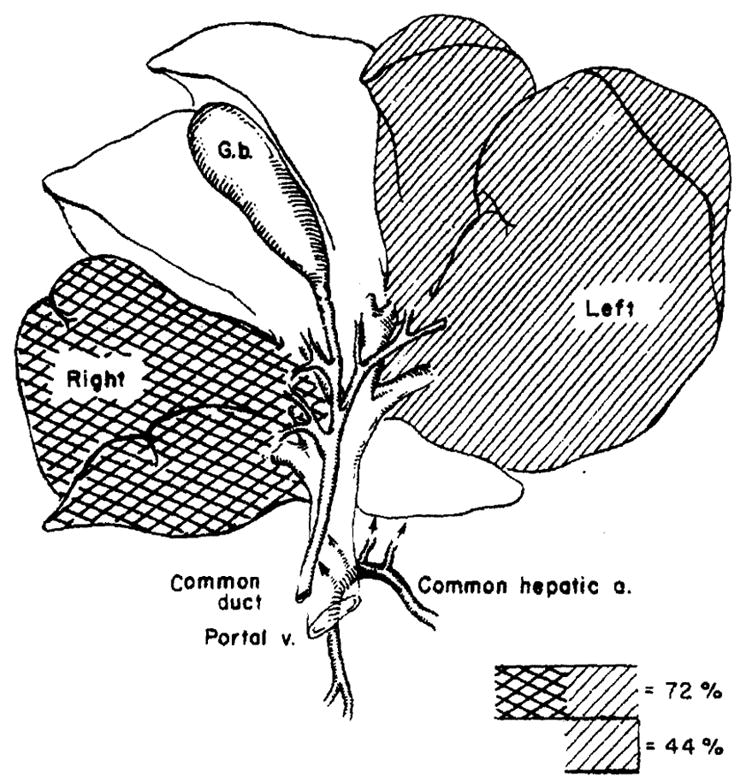
Extent of hepatectomies. For 72% resection the two far right and two far left lobes were removed. For 44% resection only the two far left lobes were excised.
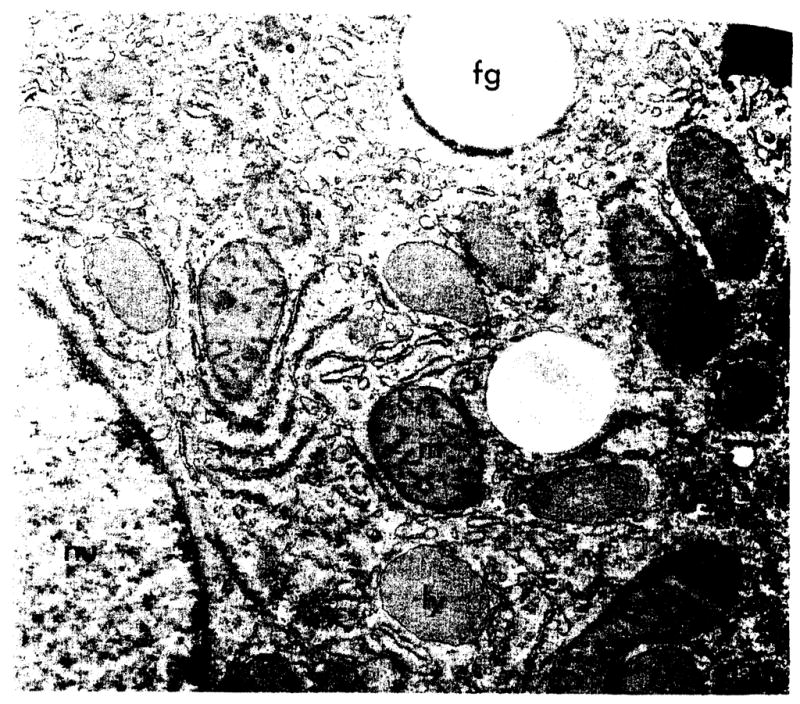
Part of an enlarged hepatocyte from a dog subjected to 44% hepatectomy 24 hr earlier. Both rough and smooth endoplasmic reticulum are prominent. Fat globules (fg) are present. The number of lysosomes (ly) is increased. Glycogen is depleted. The mitochondria (m) appear normal. nu, Nucleus. Electron micrograph; × 20,250.
References
-
- Bucher NLR, Malt RA. Morphological and biological aspects. In: Bucher NLR, Malt RA, editors. Regeneration of Liver and Kidney. chapter 3. Boston: Little, Brown; 1971. p. 23.
-
- Duguay LR, Orloff MJ. Role of the pancreas in regulation of liver regeneration in dogs. Surg Forum. 1977;28:387. - PubMed
-
- Faloona GR, Unger RH. Glucagon. In: Jaffe BM, Berman RH, editors. Methods of Hormone Radioimmunoassay. New York: Academic Press; 1974. p. 317.
Publication types
MeSH terms
Substances
Grants and funding
LinkOut - more resources
Full Text Sources