


High-dose vitamin D: helpful or harmful?
- PMID: 21369796
- PMCID: PMC3093446
- DOI: 10.1007/s11926-011-0175-9
High-dose vitamin D: helpful or harmful?
Abstract
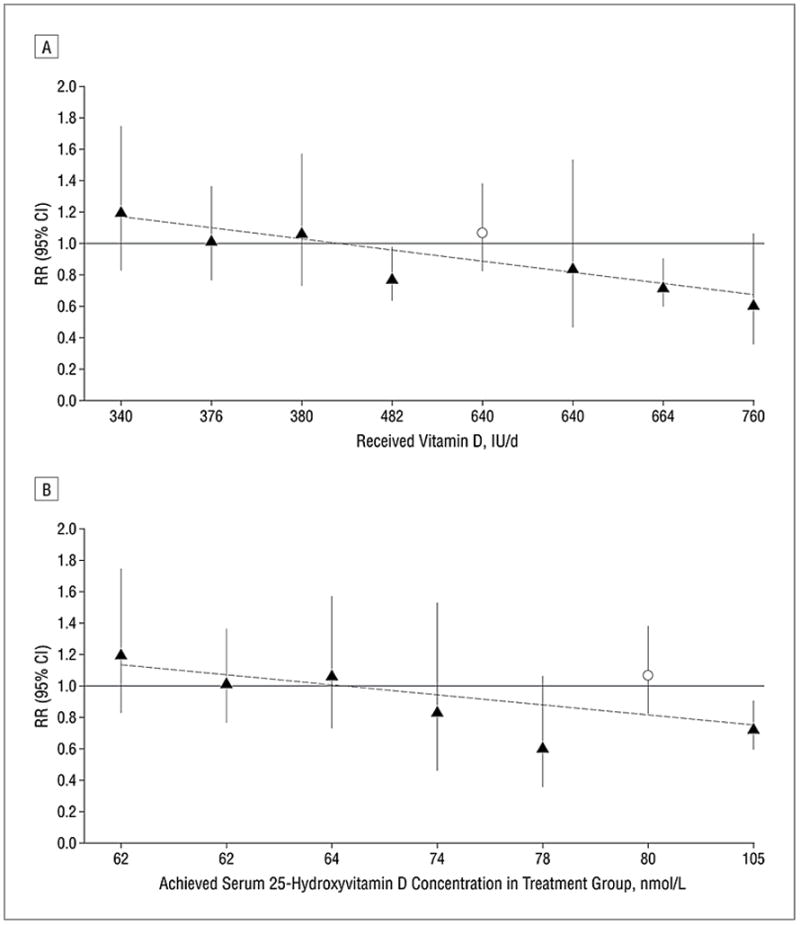
If the optimal serum 25(OH)D level for skeletal health is 30 ng/mL or greater, then vitamin D insufficiency is widespread, affecting about 75% of adults based on a recent survey of more than 20,000 Americans. However, after a comprehensive analysis of existing research studies, the Institute of Medicine recently concluded that nearly all individuals are vitamin D replete when their 25(OH)D levels are 20 ng/mL or greater. Furthermore, two recent publications challenge the belief that 25(OH)D levels greater than 30 ng/mL are optimal for bone health. In a randomized, placebo-controlled trial, high-dose, once-yearly vitamin D therapy increased the incidence of fractures and falls. The second study reported that high-dose vitamin D did not reduce levels of parathyroid hormone or bone resorption among adults with 25(OH)D levels less than 32 ng/mL at baseline. It is time to question whether serum 25(OH)D levels of 30 ng/mL or greater are necessary for all individuals.
Figures
References
-
- Institute of Medicine. Dietary reference intakes for calcium and vitamin D. Washington, DC: The National Academies Press; 2011. The Institute of Medicine undertook a comprehensive evaluation of existing literature reporting the relationship between vitamin D intake and/or 25(OH)D levels and numerous health outcomes. The 2011 report represents the committee’s conclusions regarding the recommended daily allowance of vitamin D for North Americans. - PubMed
-
- Hofbauer LC, Heufelder AE. Clinical review 114: Hot Topic. The role of receptor activator of nuclear factor-kappaB ligand and osteoprotegerin in the pathogenesis and treatment of metabolic bone diseases. J Clin Endocrinol Metab. 2000;85:2355–63. - PubMed
-
- Tsukii K, Shima N, Mochizuki S, et al. Osteoclast differentiation factor mediates an essential signal for bone resorption induced by 1 alpha,25-dihydroxyvitamin D3, prostaglandin E2, or parathyroid hormone in the microenvironment of bone. Biochem Biophys Res Commun. 1998;246:337–41. - PubMed
-
- Sorensen OH, Lund B, Saltin B, et al. Myopathy in bone loss of ageing: improvement by treatment with 1 alpha-hydroxycholecalciferol and calcium. Clin Sci (Lond) 1979;56:157–61. - PubMed
Publication types
MeSH terms
Substances
Grants and funding
LinkOut - more resources
Full Text Sources
Medical
