


Application of carbodiimide derivatized synovial fluid to enhance extrasynovial tendon gliding ability
- PMID: 21371626
- PMCID: PMC3625936
- DOI: 10.1016/j.jhsa.2010.12.015
Application of carbodiimide derivatized synovial fluid to enhance extrasynovial tendon gliding ability
Abstract
Purpose: To investigate the effects of surface modification of extrasynovial tendon with a carbodiimide derivatized synovial fluid (SF) on the gliding ability of extrasynovial tendon for a possible tendon graft application.
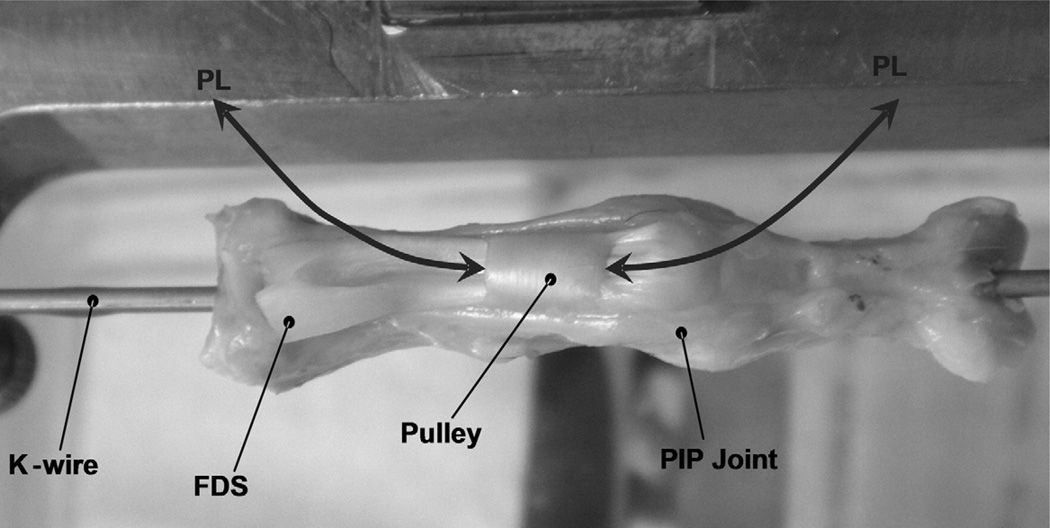
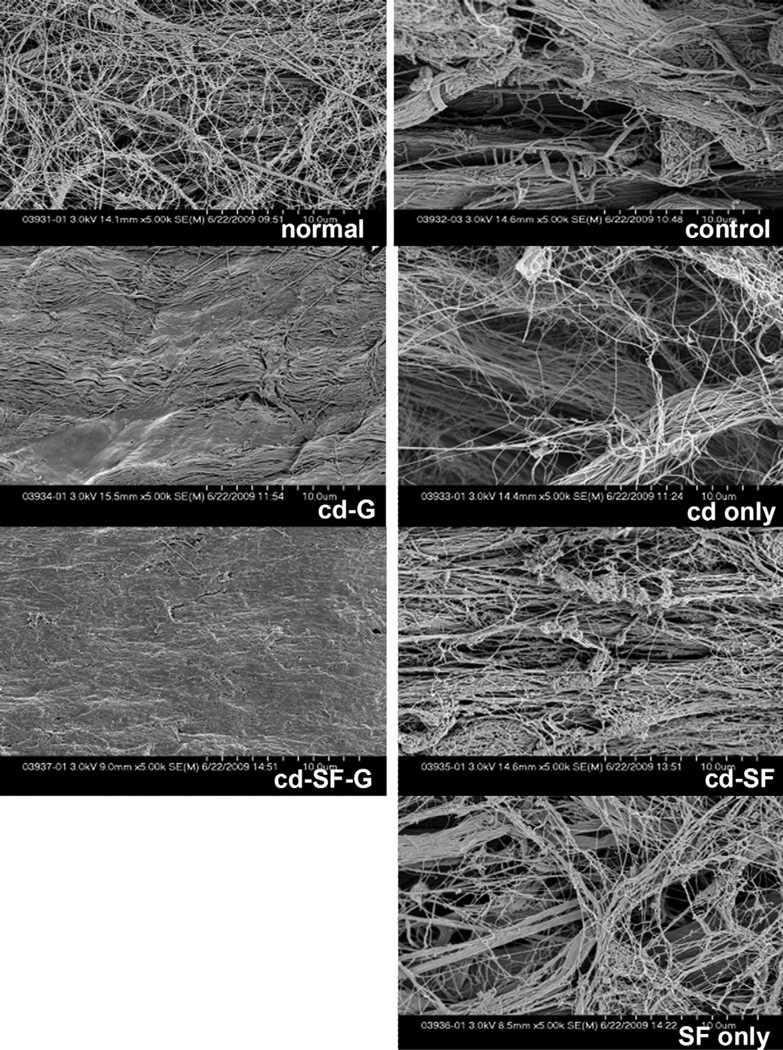
Methods: We used 63 peroneus longus tendons from canine hind legs. We immediately assessed 3 tendons morphologically using a scanning electron microscope (SEM); these served as the normal tendon group. The other 60 tendons were randomly assigned to each of 6 experimental groups treated with (1) control (saline); (2) 1% 1-ethyl-3-(3-dimethylaminopropyl) carbodiimide hydrochloride (EDC) plus 1% N-hydroxysuccinimide (NHS) (cd only); (3) 1% EDC/NHS plus 10% gelatin (cd-G); (4) SF plus 1% EDC/NHS plus 10% gelatin (cd-SF-G); (5) SF only; or (6) SF plus 1% EDC/NHS (cd-SF). We measured the gliding resistance for 1,000 cycles of simulated flexion-extension motion. We also observed the tendon surface smoothness by SEM.
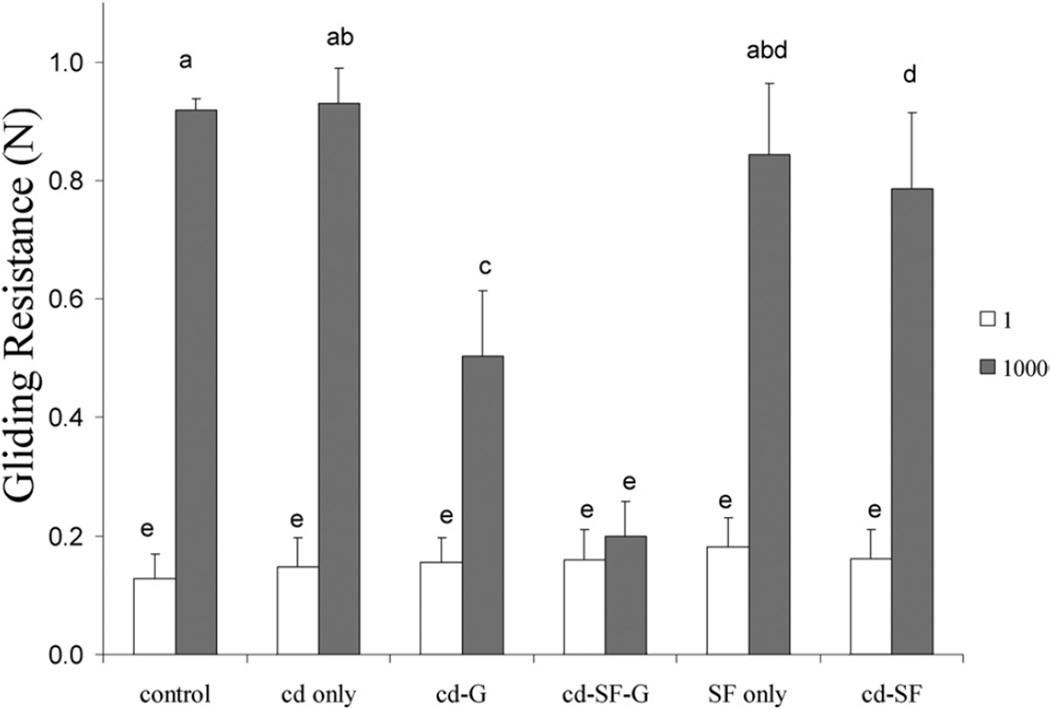
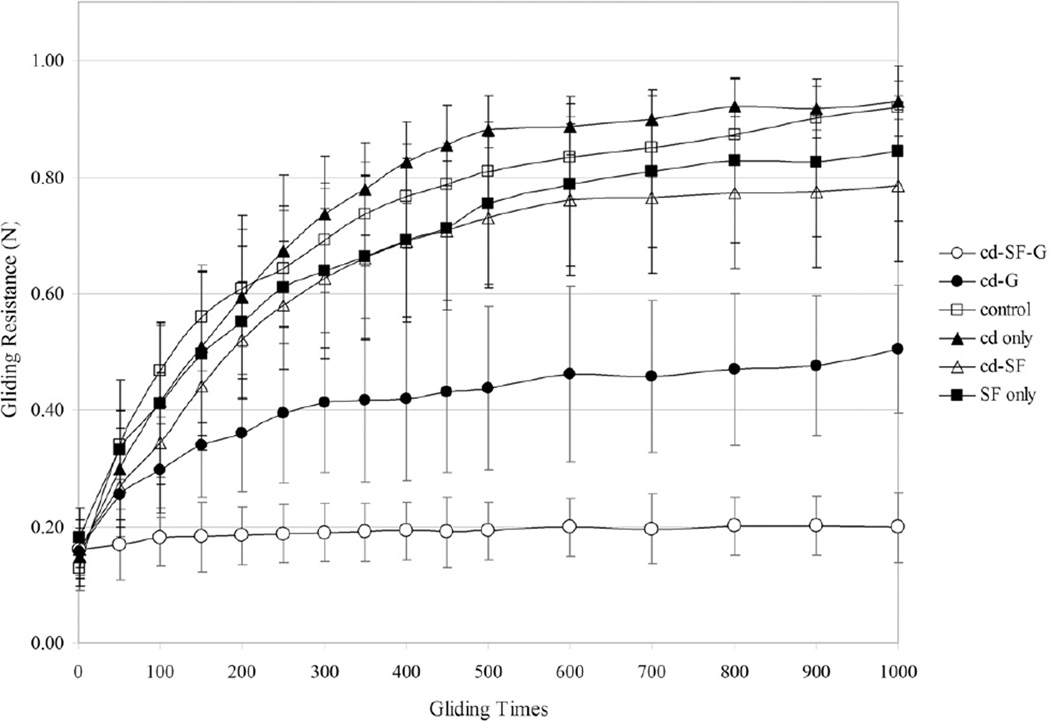
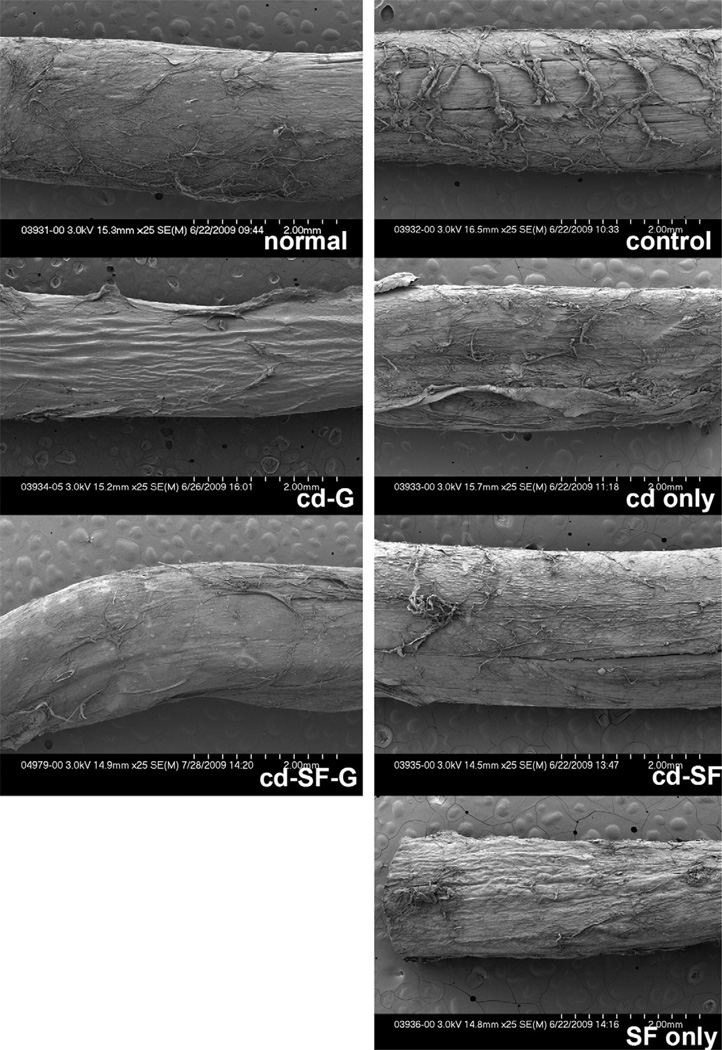
Results: Compared with the first cycle in each group, the gliding resistance after 1,000 cycles of tendon motion was significantly increased in the control, cd only, cd-gelatin, SF only, and cd-SF groups (p<.05). In contrast, we found no significant difference in gliding resistance between the first cycle and 1,000 cycles for the cd-SF-G-treated group. In addition, the gliding resistance in the cd-SF, cd-G, and cd-SF-G groups was significantly lower than the control group after 1,000 cycles of tendon motion (p<.05) and the gliding resistance of the cd-SF-G group was significantly lower than both the cd-G and cd-SF groups (p<.05). On SEM, the surface treated with cd-SF-G was smooth after 1,000 cycles, whereas the other surfaces were rough.
Conclusions: Surface modification of extrasynovial tendon with cd-SF-G improves tendon gliding ability. This treatment may be useful clinically in improving the outcomes of tendon autografts.
Copyright © 2011 American Society for Surgery of the Hand. All rights reserved.
Figures

References
-
- Kleinert HE, Schepel S, Gill T. Flexor tendon injuries. Surg Clin North Am. 1981;61:267–286. - PubMed
-
- Lister GD, Kleinert HE, Kutz JE, Atasoy E. Primary flexor tendon repair followed by immediate controlled mobilization. J Hand Surg. 1977;2:441–451. - PubMed
-
- Chow JA, Thomes LJ, Dovelle S, Milnor WH, Seyfer AE, Smith AC. A combined regimen of controlled motion following flexor tendon repair in “no man’s land”. Plast Reconstr Surg. 1987;79:447–455. - PubMed
-
- Small JO, Brennen MD, Colville J. Early active mobilisation following flexor tendon repair in zone 2. J Hand Surg. 1989;14B:383–391. - PubMed
-
- Amadio PC, Wood MB, Cooney WP, 3rd, Bogard SD. Staged flexor tendon reconstruction in the fingers and hand. J Hand Surg. 1988;13A:559–562. - PubMed
MeSH terms
Substances
Grants and funding
LinkOut - more resources
Full Text Sources
