


Implementation of External Quality Assurance Trials for Immunohistochemically Determined Breast Cancer Biomarkers in Germany
- PMID: 21373217
- PMCID: PMC2931088
- DOI: 10.1159/000121885
Implementation of External Quality Assurance Trials for Immunohistochemically Determined Breast Cancer Biomarkers in Germany
Abstract
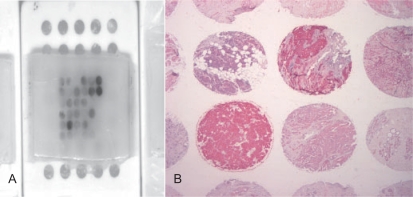
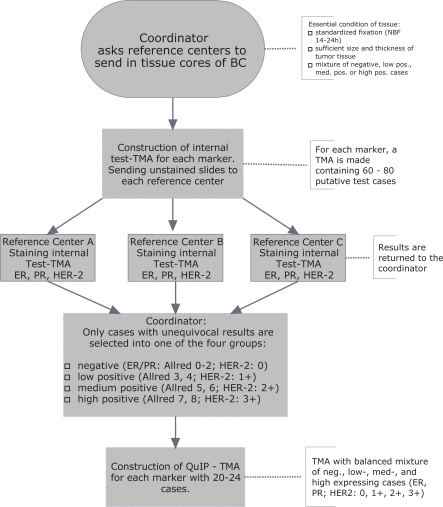
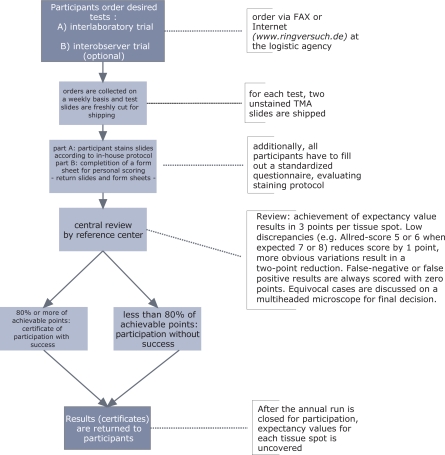
Besides typing and grading of breast cancer, Pathologists are involved in the determination of biomarkers, such as steroid hormone receptors and HER2, which are of utmost importance in adjuvant therapy. There have been concerns with regard to security and reproducibility of the biomarker assays done on tissue sections applying either immunohistochemistry or in-situ hybridisation. In order to assure the quality of these biomarker assays, a number of measures are required, among them external proficiency testing. Therefore, external quality assurance trials have been implemented in Germany. In the period of 2002-2007, 5 consecutive trials were conducted with up to 180 participating laboratories. Tissue microarrays with 20-24 different breast cancer samples including cell lines enabled that a huge number of pathologists were challenged with identical samples which provides the prerequisite for comparability. Because there is no legal duress to undergo external proficiency testing in histopathology, all laboratories that took part volunteered to do so. These innovative quality assurance trials (Qualitätsinitiative Pathologie, QuIP) will be continued in the future on an annual or bi-annual basis. Participation is recommended for pathology departments involved in the service for breast units. The organisational frame work of the trials is described here.
Über die histologische Typisierung und Graduierung hinaus, hat die Pathologie in der Brustkrebsdiagnostik die Aufgabe, Zielstrukturen, die in der adjuvanten Therapie von groβer Bedeutung sind, wie Steroidhormonrezeptoren und HER2, zu bestimmen. Die Reproduzierbarkeit dieser quantitativ bzw. semiquantitativ durch Immunhistochemie oder In-situ-Hybridisierung ermittelten Parameter wird zunehmend als eine Aufgabe der Qualitätssicherung wahrgenommen. Um die Qualität dieser Biomarker-Assays zu gewährleisten, kommen verschiedene Maβnahmen in Betracht, unter anderem die Teilnahme an externen Ringversuchen. In Deutschland wurden derartige Ringversuche ins Leben gerufen und fanden in den Jahren 2002-2007 bereits fünfmal mit bis zu 180 teilnehmenden Laboren statt. Dabei kommen “Gewebe-Arrays” (Tissue microarrays) mit 20-24 Gewebeproben von verschiedenen Mammakarzinomen und auch Zelllinien zum Einsatz. Hiermit gelingt es, ein hinsichtlich der Zusammensetzung vielfältiges, hinsichtlich der Anforderungen an die einzelnen Teilnehmer jedoch nahezu identisches Testmaterial an eine hohe Teilnehmerzahl zu distri-buieren, wodurch Vergleichbarkeit hergestellt werden kann. Da für eine Ringversuchsteilnahme in der diagnostischen Pathologie keine gesetzlichen Verpflichtungen bestehen, erfolgt die Teilnahme freiwillig. Diese innovative Form von Ringversuchen (Qualitätsinitiative Pathologie, QuIP) wird auch in Zukunft mit einem ein- oder halbjährigen Turnus fortgesetzt werden. Die Teilnahme ist für zertifizierte Brustzentren empfohlen. Hier werden Voraussetzungen und der organisatorische Rahmen dargestellt.
Figures
References
-
- Cheson BD. Monoclonal antibody therapy for B-cell malignancies. Semin Oncol. 2006;33(suppl 5):S2–14. - PubMed
-
- Taylor CR, Levenson RM. Quantification of immunohistochemistry – issues concerning methods, utility and semiquantitative assessment II. Histopathology. 2006;49:411–24. - PubMed
-
- Wolff AC, Hammond ME, Schwartz JN, Hagerty KL, Allred DC, Cote RJ, Dowsett M, Fitzgibbons PL, Hanna WM, Langer A, McShane LM, Paik S, Pegram MD, Perez EA, Press MF, Rhodes A, Sturgeon C, Taube SE, Tubbs R, Vance GH, van de Vijver M, Wheeler TM, Hayes DF, American Society of Clinical Oncology, College of America Pathologists American Society of Clinical Oncology/ College of American Pathologists guideline recommendations for human epidermal growth factor receptor 2 testing in breast cancer. J Clin Oncol. 2007;25:118–45. - PubMed
-
- Ross JS, Symmans WF, Pusztai L, Hortobagyi GN. Standardizing slide-based assays in breast cancer: hormone receptors, HER2, and sentinel lymph nodes. Clin Cancer Res. 2007;13:2831–5. - PubMed
-
- Viale G, Regan MM, Maiorano E, Mastropasqua MG, Dell'Orto P, Rasmussen BB, Raffoul J, Neven P, Orosz Z, Braye S, Ohlschlegel C, Thürlimann B, Gelber RD, Castiglione-Gertsch M, Price KN, Goldhirsch A, Gusterson BA, Coates AS. Prognostic and predictive value of centrally reviewed expression of estrogen and progesterone receptors in a randomized trial comparing letrozole and tamoxifen adjuvant therapy for postmenopausal early breast cancer: BIG 1-98. J Clin Oncol. 2007;25:3846–52. - PubMed
LinkOut - more resources
Full Text Sources
Research Materials
Miscellaneous
