


Cross-axis adaptation improves 3D vestibulo-ocular reflex alignment during chronic stimulation via a head-mounted multichannel vestibular prosthesis
- PMID: 21374081
- PMCID: PMC3270066
- DOI: 10.1007/s00221-011-2591-5
Cross-axis adaptation improves 3D vestibulo-ocular reflex alignment during chronic stimulation via a head-mounted multichannel vestibular prosthesis
Abstract
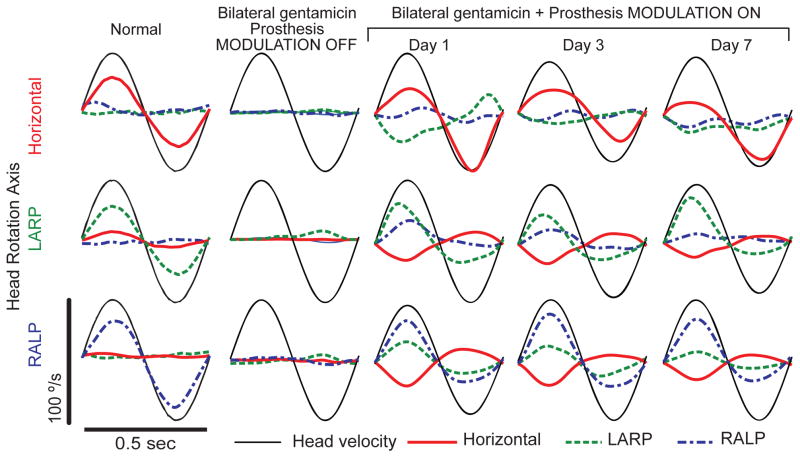
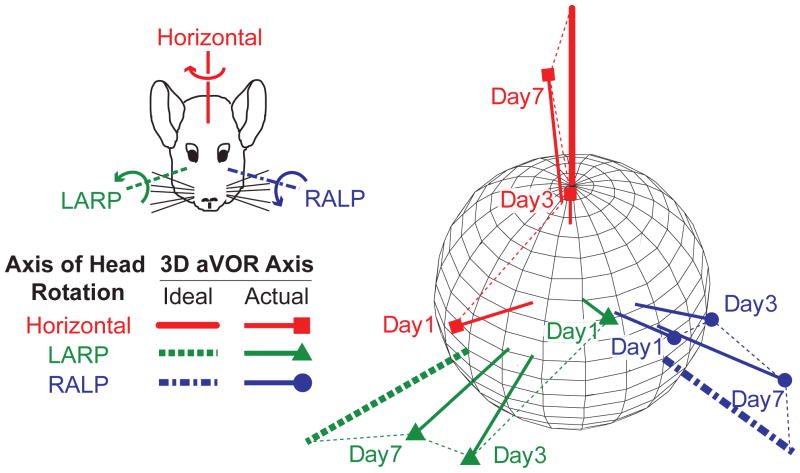
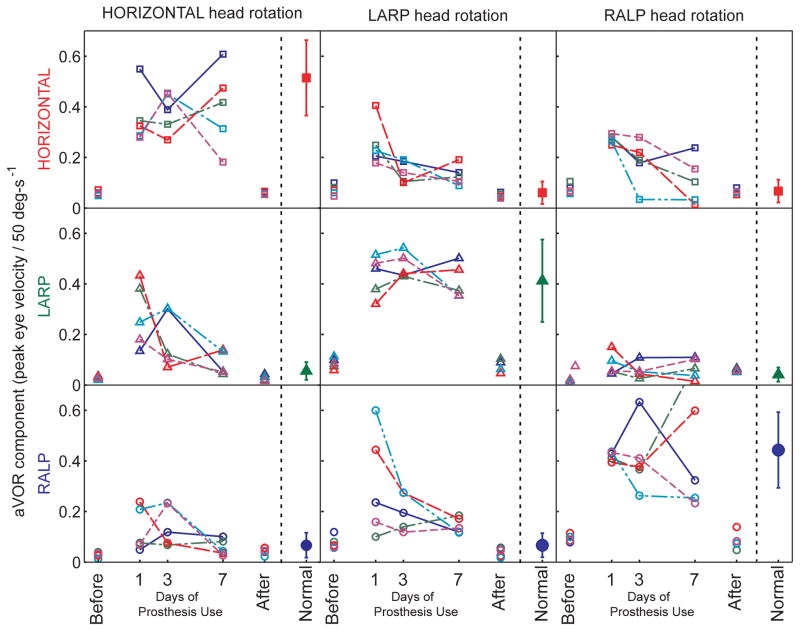
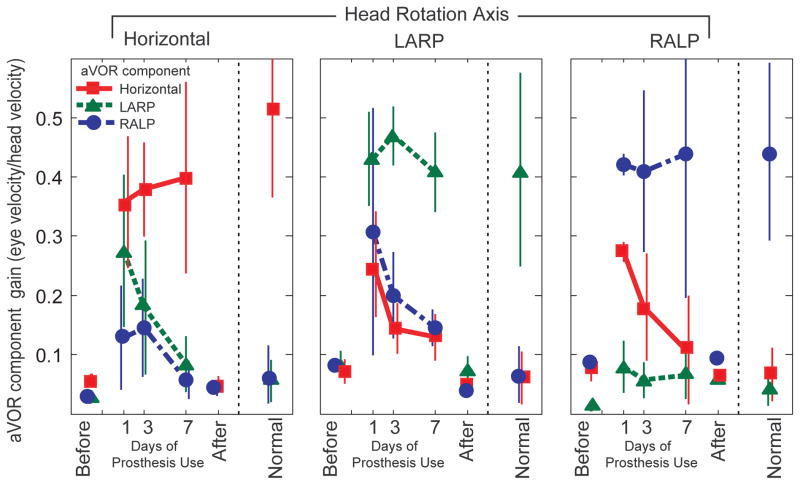
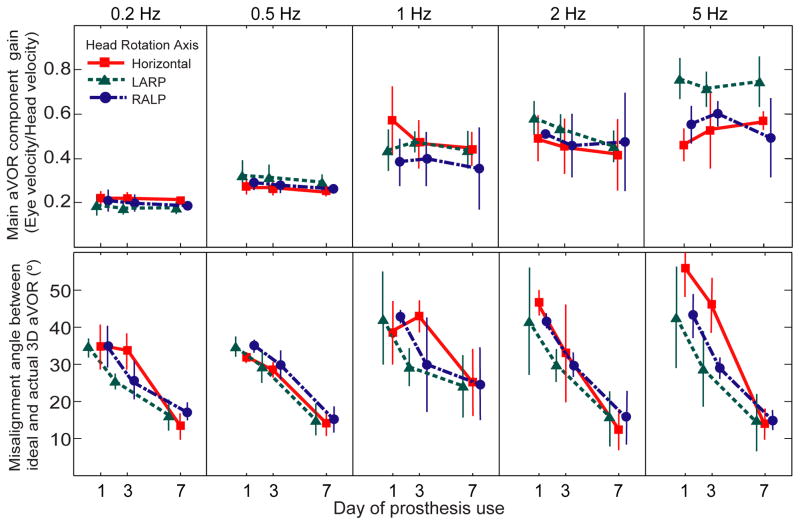
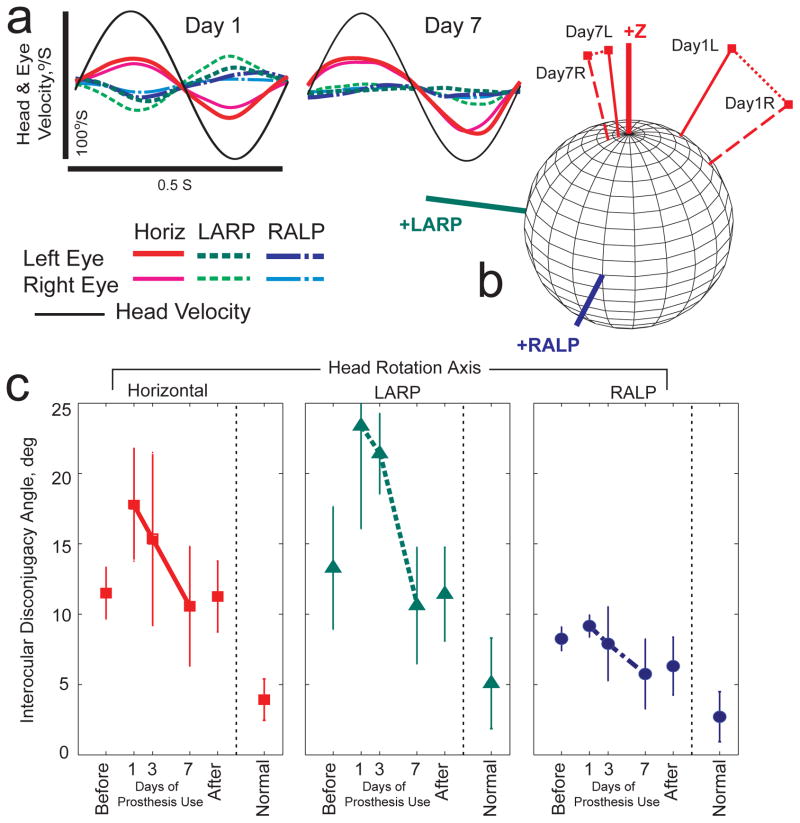
By sensing three-dimensional (3D) head rotation and electrically stimulating the three ampullary branches of a vestibular nerve to encode head angular velocity, a multichannel vestibular prosthesis (MVP) can restore vestibular sensation to individuals disabled by loss of vestibular hair cell function. However, current spread to afferent fibers innervating non-targeted canals and otolith end organs can distort the vestibular nerve activation pattern, causing misalignment between the perceived and actual axis of head rotation. We hypothesized that over time, central neural mechanisms can adapt to correct this misalignment. To test this, we rendered five chinchillas vestibular deficient via bilateral gentamicin treatment and unilaterally implanted them with a head-mounted MVP. Comparison of 3D angular vestibulo-ocular reflex (aVOR) responses during 2 Hz, 50°/s peak horizontal sinusoidal head rotations in darkness on the first, third, and seventh days of continual MVP use revealed that eye responses about the intended axis remained stable (at about 70% of the normal gain) while misalignment improved significantly by the end of 1 week of prosthetic stimulation. A comparable time course of improvement was also observed for head rotations about the other two semicircular canal axes and at every stimulus frequency examined (0.2-5 Hz). In addition, the extent of disconjugacy between the two eyes progressively improved during the same time window. These results indicate that the central nervous system rapidly adapts to multichannel prosthetic vestibular stimulation to markedly improve 3D aVOR alignment within the first week after activation. Similar adaptive improvements are likely to occur in other species, including humans.
Figures
References
-
- Angelaki DE, Hess BJ. Visually induced adaptation in three-dimensional organization of primate vestibuloocular reflex. J Neurophysiol. 1998;79(2):791–807. - PubMed
-
- Aw ST, Halmagyi GM, Haslwanter T, Curthoys IS, Yavor RA, Todd MJ. Three-dimensional vector analysis of the human vestibuloocular reflex in responseto high-acceleration head rotations. II. responses in subjects with unilateral vestibular loss and selective semicircular canal occlusion. J Neurophysiol. 1996;76(6):4021–30. - PubMed
-
- Baird RA, Desmadryl G, Fernandez C, Goldberg JM. The vestibular nerve of the chinchilla 2. Relation between afferent response properties and peripheral innervation patterns in the semicircular canals. J Neurophysiol. 1988;60:182–203. - PubMed
-
- Baker JF, Wickland C, Peterson B. Dependence of cat vestibulo-ocular reflex direction adaptation on animal orientation during adaptation and rotation in darkness. Brain Res. 1987;408:339–343. - PubMed
-
- Baker J, Harrison RE, Isu N, Wickland C, Peterson B. Dynamics of adaptive change in vestibulo-ocular reflex direction. II. Sagittal plane rotations. Brain Res. 1986;371(1):166–170. - PubMed
Publication types
MeSH terms
Grants and funding
LinkOut - more resources
Full Text Sources
Other Literature Sources
Medical
Miscellaneous
