


Glucagon protects against impaired NMDA-mediated cerebrovasodilation and cerebral autoregulation during hypotension after brain injury by activating cAMP protein kinase A and inhibiting upregulation of tPA
- PMID: 21375400
- PMCID: PMC3057207
- DOI: 10.1089/neu.2010.1659
Glucagon protects against impaired NMDA-mediated cerebrovasodilation and cerebral autoregulation during hypotension after brain injury by activating cAMP protein kinase A and inhibiting upregulation of tPA
Abstract
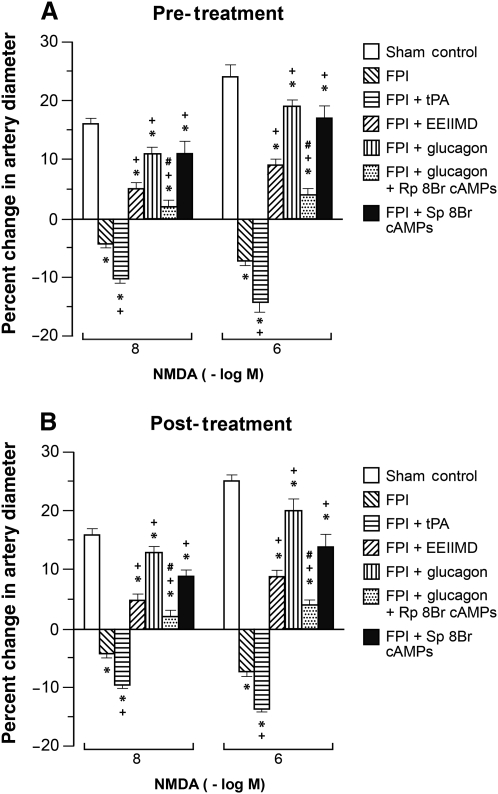
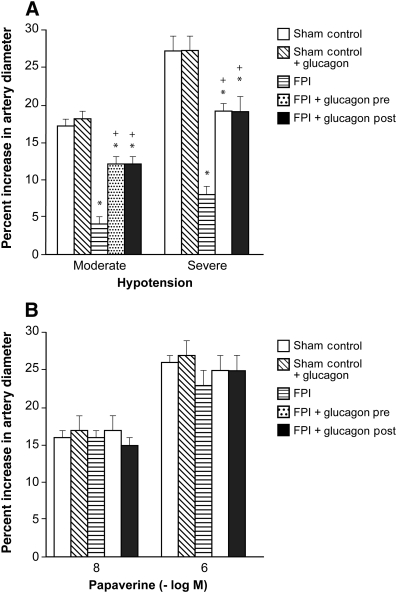
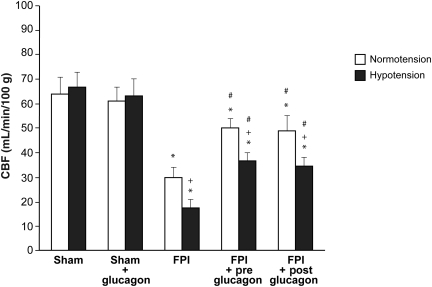
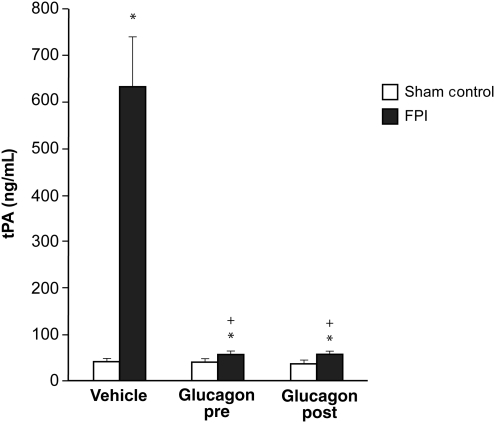
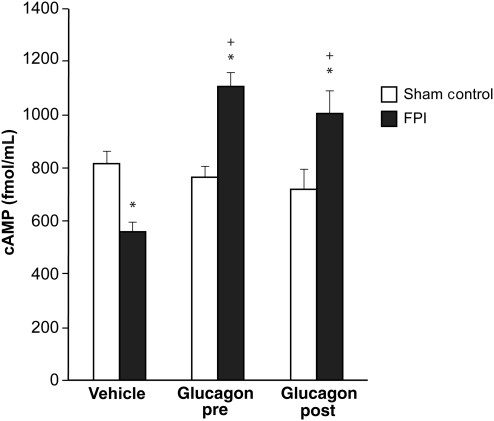
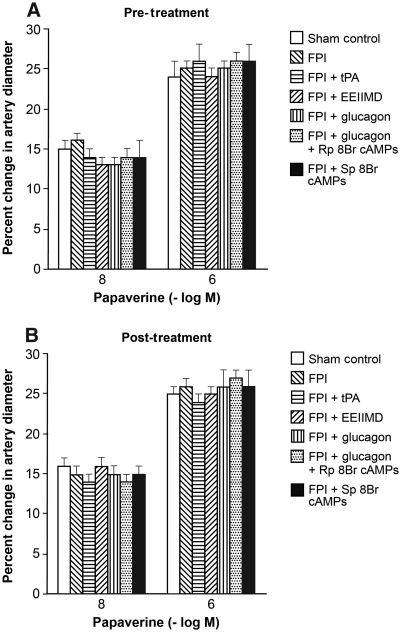
Outcome of traumatic brain injury (TBI) is impaired by hyperglycemia, hypotension, and glutamate, and improved by insulin. Insulin reduces glutamate concentration, making it uncertain whether its beneficial effect accrues from euglycemia. Glucagon decreases CNS glutamate, lessens neuronal cell injury, and improves neurological scores in mice after TBI. In vitro, glucagon limits NMDA-mediated excitotoxicity by increasing cAMP and protein kinase A (PKA). NMDA receptor activation couples cerebral blood flow (CBF) to metabolism. Dilation induced by NMDA is impaired after fluid percussion brain injury (FPI) due to upregulation of endogenous tPA, which further disturbs cerebral autoregulation during hypotension after fluid percussion injury (FPI). We hypothesized that glucagon prevents impaired NMDA receptor-mediated dilation after FPI by upregulating cAMP, which decreases release of tPA. NMDA-induced pial artery dilation (PAD) was reversed to vasoconstriction after FPI. Glucagon 30 min before or 30 min after FPI blocked NMDA-mediated vasoconstriction and restored the response to vasodilation. PAD during hypotension was blunted after FPI, but protected by glucagon. Glucagon prevented FPI-induced reductions in CSF cAMP, yielding a net increase in cAMP, and blocked FPI-induced elevation of CSF tPA. Co-administration of the PKA antagonist Rp 8Br cAMPs prevented glucagon-mediated preservation of NMDA-mediated dilation after FPI. The pKA agonist Sp 8Br cAMPs prevented impairment of NMDA-induced dilation. These data indicate that glucagon protects against impaired cerebrovasodilation by upregulating cAMP, which decreases release of tPA, suggesting that it may provide neuroprotection when given after TBI, or prior to certain neurosurgical or cardiac interventions in which the incidence of perioperative ischemia is high.
Figures
References
-
- Armstead W.M. Age dependent NMDA contribution to impaired hypotensive cerebral hemodynamics following brain injury. Develop. Brain Res. 2002;139:19–28. - PubMed
-
- Armstead W.M. Cines D.B. Higazi A.A.R. Plasminogen activators contribute to age dependent impairment of NMDA cerebrovasodilation after brain injury. Develop. Brain Res. 2005;156:139–146. - PubMed
-
- Armstead W.M. Role of impaired cAMP and calcium-sensitive K channel function in altered cerebral hemodynamics following brain injury. Brain Res. 1997;768:177–184. - PubMed
Publication types
MeSH terms
Substances
Grants and funding
LinkOut - more resources
Full Text Sources
Medical
