


A trial on unruptured intracranial aneurysms (the TEAM trial): results, lessons from a failure and the necessity for clinical care trials
- PMID: 21375745
- PMCID: PMC3060834
- DOI: 10.1186/1745-6215-12-64
A trial on unruptured intracranial aneurysms (the TEAM trial): results, lessons from a failure and the necessity for clinical care trials
Abstract
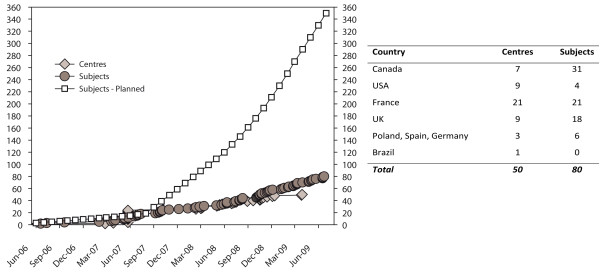
The trial on endovascular management of unruptured intracranial aneurysms (TEAM), a prospective randomized trial comparing coiling and conservative management, initiated in September 2006, was stopped in June 2009 because of poor recruitment (80 patients). Aspects of the trial design that may have contributed to this failure are reviewed in the hope of identifying better ways to successfully complete this special type of pragmatic trial which seeks to test two strategies that are in routine clinical use. Cultural, conceptual and bureaucratic hurdles and difficulties obstruct all trials. These obstacles are however particularly misplaced when the trial aims to identify what a good medical practice should be. A clean separation between research and practice, with diverging ethical and scientific requirements, has been enforced for decades, but it cannot work when care needs to be provided in the presence of pervasive uncertainty. Hence valid and robust scientific methods need to be legitimately re-integrated into clinical practice when reliable knowledge is in want. A special status should be reserved for what we would call 'clinical care trials', if we are to practice in a transparent and prospective fashion a medicine that leads to demonstrably better patient outcomes.
Figures
References
-
- Molyneux A, Kerr R, Stratton I, Sandercock P, Clarke M, Shrimpton J, Holman R. International Subarachnoid Aneurysm Trial (ISAT) of neurosurgical clipping versus endovascular coiling in 2143 patients with ruptured intracranial aneurysms: A randomised trial. Lancet. 2002;360:1267–1274. doi: 10.1016/S0140-6736(02)11314-6. - DOI - PubMed
-
- Molyneux AJ, Kerr RS, Birks J, Ramzi N, Yarnold J, Sneade M, Rischmiller J, Collaborators ISAT. Risk of recurrent subarachnoid haemorrhage, death, or dependence and standardised mortality ratios after clipping or coiling of an intracranial aneurysm in the International Subarachnoid Aneurysm Trial (ISAT): long-term follow-up. Lancet Neurol. 2009;8(5):427–433. doi: 10.1016/S1474-4422(09)70080-8. - DOI - PMC - PubMed
-
- Wiebers DO, Whisnant JP, Huston J, Meissner I, Brown RD Jr, Piepgras DG, Forbes GS, Thielen K, Nichols D, O'Fallon WM, Peacock J, Jaeger L, Kassell NF, Kongable-Beckman GL, Torner JC. International Study of Unruptured Intracranial Aneurysms Investigators. Unruptured intracranial aneurysms: Natural history, clinical outcome, and risks of surgical and endovascular treatment. Lancet. 2003;362:103–110. doi: 10.1016/S0140-6736(03)13860-3. - DOI - PubMed
Publication types
MeSH terms
Grants and funding
LinkOut - more resources
Full Text Sources
Medical
Miscellaneous
