


Does dog-ownership influence seasonal patterns of neighbourhood-based walking among adults? A longitudinal study
- PMID: 21375754
- PMCID: PMC3087680
- DOI: 10.1186/1471-2458-11-148
Does dog-ownership influence seasonal patterns of neighbourhood-based walking among adults? A longitudinal study
Abstract
Background: In general dog-owners are more physically active than non-owners, however; it is not known whether dog-ownership can influence seasonal fluctuations in physical activity. This study examines whether dog-ownership influences summer and winter patterns of neighbourhood-based walking among adults living in Calgary, Canada.
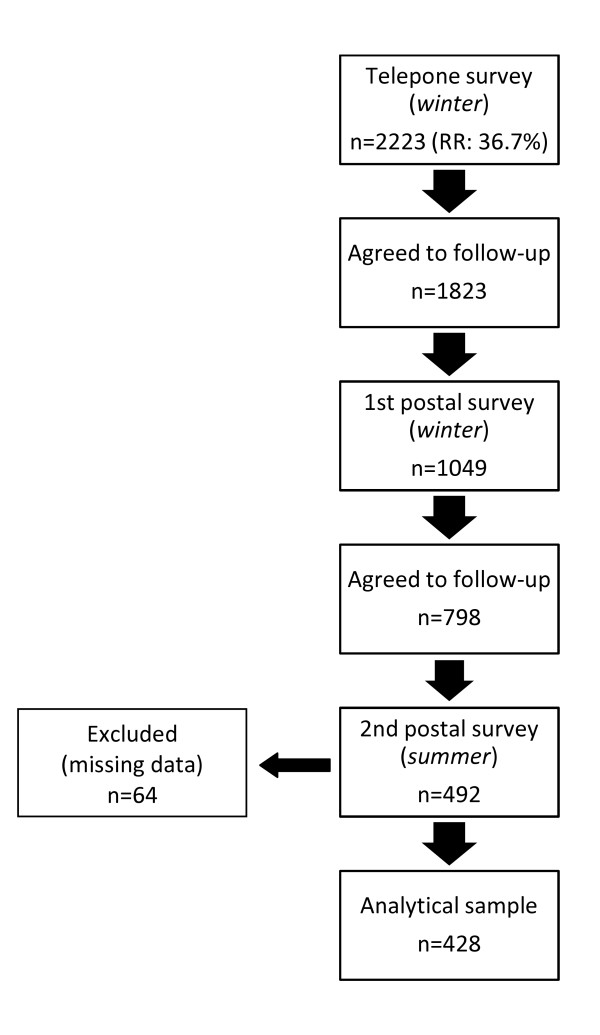
Methods: A cohort of adults, randomly sampled from the Calgary metropolitan area, completed postal surveys in winter and summer 2008. Both winter and summer versions of the survey included questions on dog-ownership, walking for recreation, and walking for transportation in residential neighbourhoods. Participation in neighbourhood-based walking was compared, among dog-owners and non-owners, and in summer and winter, using general linear modeling. Stability of participation in neighbourhood-based walking across summer and winter among dog-owners and non-owners was also assessed, using logistic regression.
Results: A total of 428 participants participated in the study, of whom 115 indicated owning dogs at the time of both surveys. Dog-owners reported more walking for recreation in their neighbourhoods than did non-owners, both in summer and in winter. Dog-owners were also more likely than non-owners to report participation in walking for recreation in their neighbourhoods, in summer as well as in winter. Dog-owners and non-owners did not differ in the amount of walking that they reported for transportation, either in summer or in winter.
Conclusions: By acting as cues for physical activity, dogs may help their owners remain active across seasons. Policies and programs related to dog-ownership and dog-walking, such as dog-supportive housing and dog-supportive parks, may assist in enhancing population health by promoting physical activity.
Figures
References
-
- Kohl HW III. Physical activity and cardiovascular disease: evidence for a dose response. Med Sci Sports Exerc. 2001;33(6):S472–S483. - PubMed
-
- Johannesson E, Simren M, Strid H, Bajor A, Sadik R. Physical Activity Improves Symptoms in Irritable Bowel Syndrome: A Randomized Controlled Trial. Am J Gastroenterol. 2011. p. 4. - PubMed
-
- Jacka FN, Pasco JA, Williams LJ, Leslie ER, Dodd S, Nicholson GC, Kotowicz MA, Berk M. Lower levels of physical activity in childhood associated with adult depression. J Sci Med Sport. 2010. p. 10. - PubMed
Publication types
MeSH terms
LinkOut - more resources
Full Text Sources
