


The structural neuroanatomy of music emotion recognition: evidence from frontotemporal lobar degeneration
- PMID: 21385617
- PMCID: PMC3092986
- DOI: 10.1016/j.neuroimage.2011.03.002
The structural neuroanatomy of music emotion recognition: evidence from frontotemporal lobar degeneration
Abstract
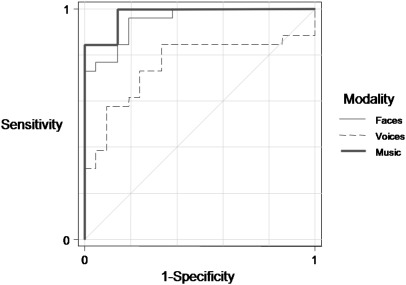
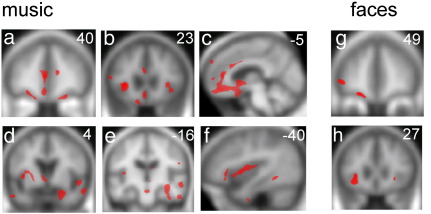
Despite growing clinical and neurobiological interest in the brain mechanisms that process emotion in music, these mechanisms remain incompletely understood. Patients with frontotemporal lobar degeneration (FTLD) frequently exhibit clinical syndromes that illustrate the effects of breakdown in emotional and social functioning. Here we investigated the neuroanatomical substrate for recognition of musical emotion in a cohort of 26 patients with FTLD (16 with behavioural variant frontotemporal dementia, bvFTD, 10 with semantic dementia, SemD) using voxel-based morphometry. On neuropsychological evaluation, patients with FTLD showed deficient recognition of canonical emotions (happiness, sadness, anger and fear) from music as well as faces and voices compared with healthy control subjects. Impaired recognition of emotions from music was specifically associated with grey matter loss in a distributed cerebral network including insula, orbitofrontal cortex, anterior cingulate and medial prefrontal cortex, anterior temporal and more posterior temporal and parietal cortices, amygdala and the subcortical mesolimbic system. This network constitutes an essential brain substrate for recognition of musical emotion that overlaps with brain regions previously implicated in coding emotional value, behavioural context, conceptual knowledge and theory of mind. Musical emotion recognition may probe the interface of these processes, delineating a profile of brain damage that is essential for the abstraction of complex social emotions.
Copyright © 2011 Elsevier Inc. All rights reserved.
Figures
References
-
- Adenzato M., Cavallo M., Enrici I. Theory of mind ability in the behavioural variant of frontotemporal dementia: an analysis of the neural, cognitive, and social levels. Neuropsychologia. 2010;48(1):2–12. Jan. - PubMed
-
- Adolphs R., Tranel D., Damasio H., Damasio A. Impaired recognition of emotion in facial expressions following bilateral damage to the human amygdala. Nature. 1994;372:669–672. - PubMed
-
- Anderson A.K., Spencer D.D., Fulbright R.K., Phelps E.A. Contribution of the anteromedial temporal lobes to the evaluation of facial emotion. Neuropsychology. 2000;14:526–536. - PubMed
-
- Baron-Cohen S., Wheelwright S., Hill J., Raste Y., Plumb I. The “Reading the Mind in the Eyes” test revised version: a study with normal adults, and adults with Asperger syndrome or high-functioning autism. J. Child Psychol. Psychiatry. 2001;42:241–251. - PubMed
-
- Baumgartner T., Lutz K., Schmidt C.F., Jäncke L. The emotional power of music: how music enhances the feeling of affective pictures. Brain Res. 2006;1075(1):151–164. - PubMed
Publication types
MeSH terms
Grants and funding
LinkOut - more resources
Full Text Sources
