


Regular exercise reverses sensory hypersensitivity in a rat neuropathic pain model: role of endogenous opioids
- PMID: 21386701
- PMCID: PMC6345518
- DOI: 10.1097/ALN.0b013e318210f880
Regular exercise reverses sensory hypersensitivity in a rat neuropathic pain model: role of endogenous opioids
Abstract
Background: Exercise is often prescribed as a therapy for chronic pain. Short-term exercise briefly increases the production of endogenous analgesics, leading to transient antinociception. In limited studies, exercise produced sustained increases in endogenous opioids, sustained analgesia, or diminished measures of chronic pain. This study tests the hypothesis that regular aerobic exercise leads to sustained reversal of neuropathic pain by activating endogenous opioid-mediated pain modulatory systems.
Methods: After baseline measurements, the L5 and L6 spinal nerves of male Sprague-Dawley rats were tightly ligated. Animals were randomized to sedentary or 5-week treadmill exercise-trained groups. Thermal and tactile sensitivities were assessed 23 h after exercise, using paw withdrawal thresholds to von Frey filaments and withdrawal latencies to noxious heat. Opioid receptor antagonists were administered by subcutaneous, intrathecal, or intracerebroventricular injection. Opioid peptides were quantified using immunohistochemistry with densitometry.
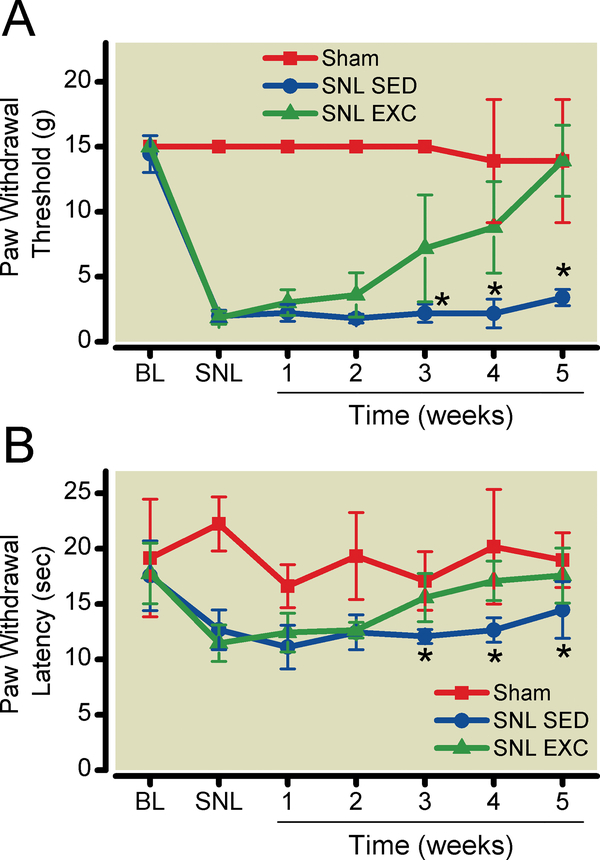
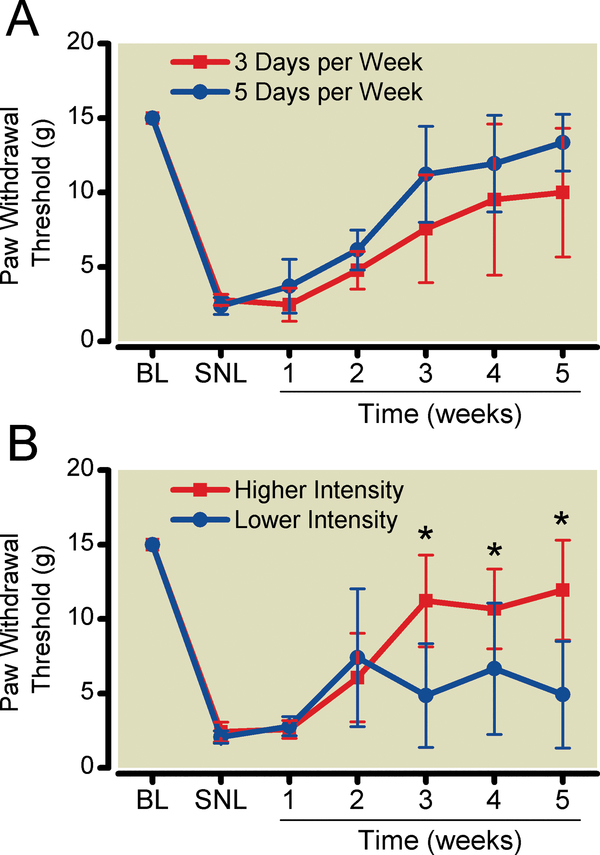
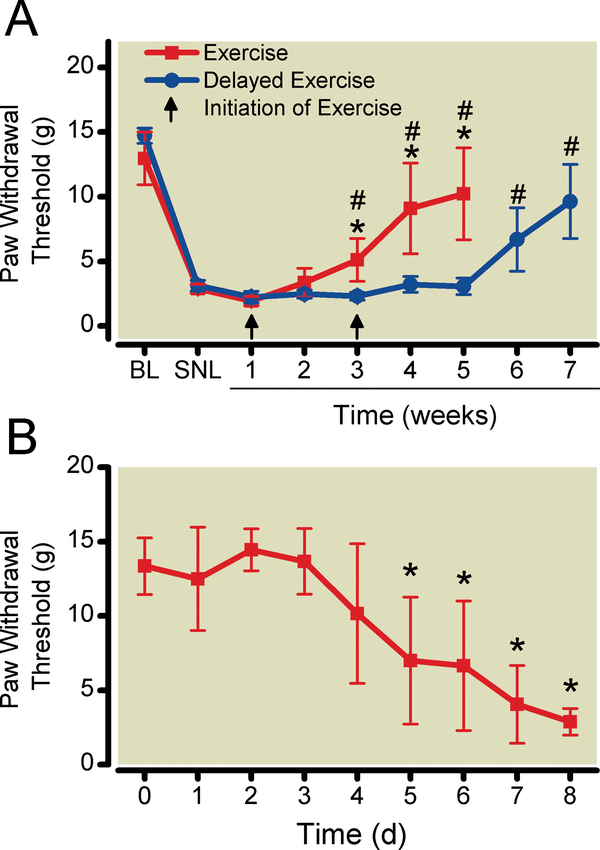
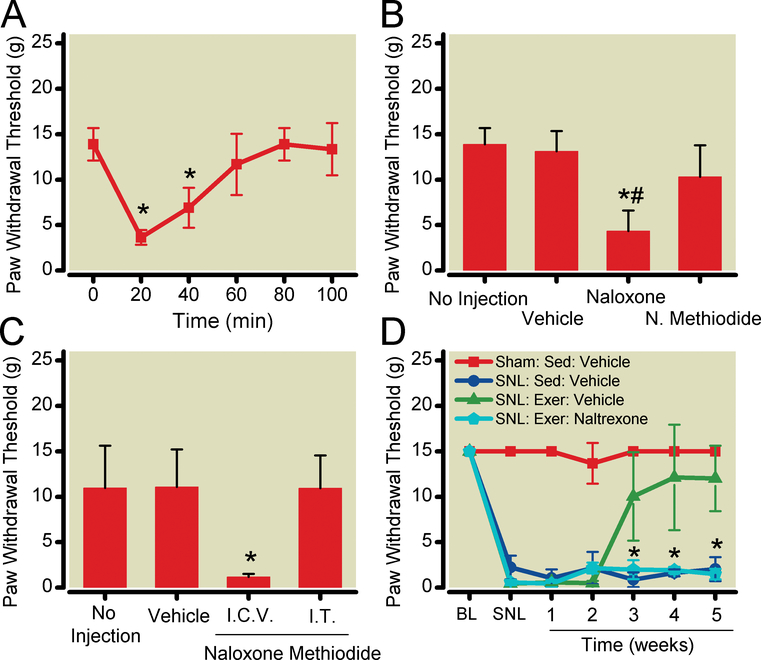
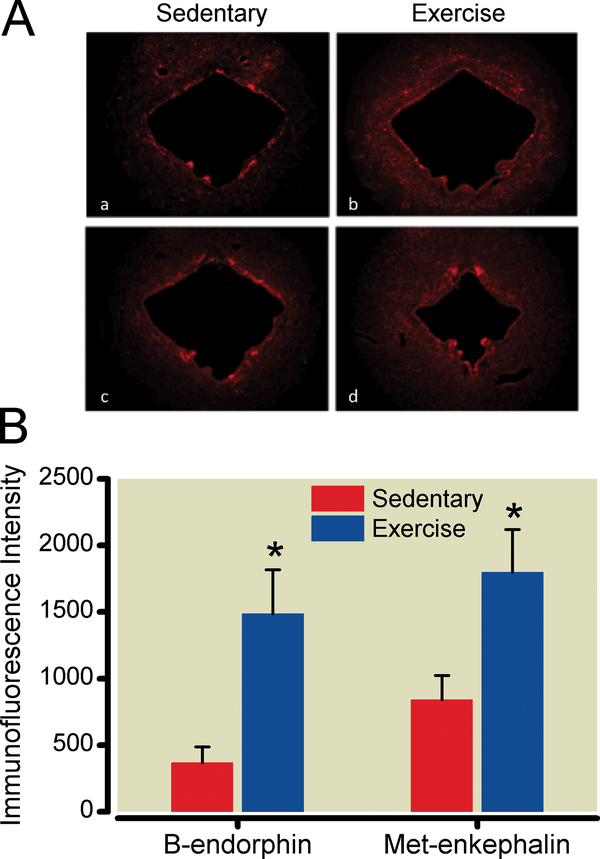
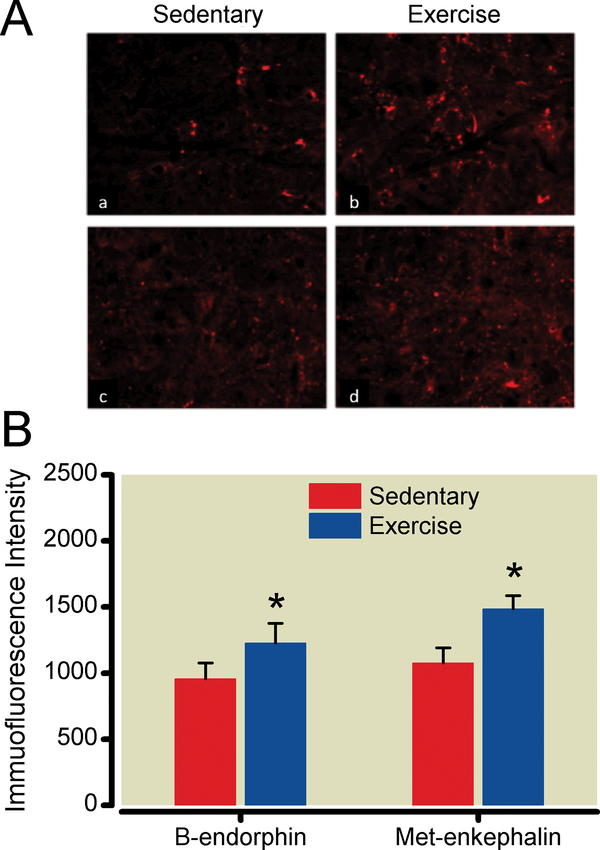
Results: Exercise training ameliorated thermal and tactile hypersensitivity in spinal nerve-ligated animals within 3 weeks. Sensory hypersensitivity returned 5 days after discontinuation of exercise training. The effects of exercise were reversed by using systemically or intracerebroventricularly administered opioid receptor antagonists and prevented by continuous infusion of naltrexone. Exercise increased β-endorphin and met-enkephalin content in the rostral ventromedial medulla and the mid-brain periaqueductal gray area.
Conclusions: Regular moderate aerobic exercise reversed signs of neuropathic pain and increased endogenous opioid content in brainstem regions important in pain modulation. Exercise effects were reversed by opioid receptor antagonists. These results suggest that exercise-induced reversal of neuropathic pain results from an up-regulation of endogenous opioids.
Figures
References
-
- Malmros B, Mortensen L, Jensen MB, Charles P.Positive effects of physiotherapy on chronic pain and performance in osteoarthritis.OsteoporosInt 1998; 8: 215–21. - PubMed
-
- McCain GA, Bell DA, Mai FM, Halliday PD. A controlled study of the effects of a supervised cardiovascular fitness training program on the manifestations of primary fibromyalgia. Arthritis Rheum 1988; 31:1135–41. - PubMed
-
- Ferrell BA, Josephson KR, Pollan AM, Loy S, Ferrell BR. A randomized trial of walking versus physical methods for chronic pain management. Aging (Milano) 1997;9: 99–105. - PubMed
-
- Gowans SE, Dehueck A, Voss S, Silaj A, Abbey SE. Six-month and one-year followup of 23 weeks of aerobic exercise for individuals with fibromyalgia. Arthritis Rheum 2004; 51: 890–8. - PubMed
-
- Hayden JA, Van Tulder MW, Malmivaara AV, Koes BW. Meta-analysis: Exercise therapy for nonspecific low back pain. Ann Intern Med 2005; 142: 765–75. - PubMed
Publication types
MeSH terms
Substances
Grants and funding
LinkOut - more resources
Full Text Sources
Medical
Miscellaneous
