


On the origin of Tibetans and their genetic basis in adapting high-altitude environments
- PMID: 21386899
- PMCID: PMC3046130
- DOI: 10.1371/journal.pone.0017002
On the origin of Tibetans and their genetic basis in adapting high-altitude environments
Abstract
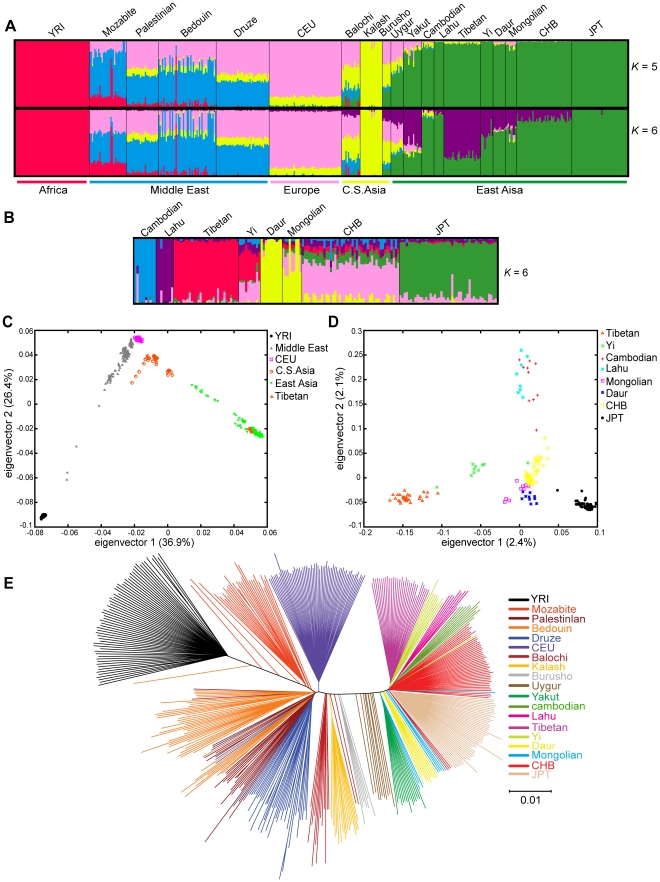
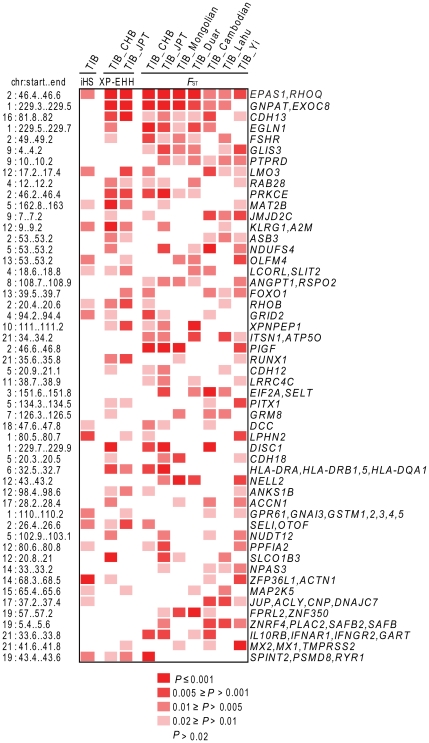
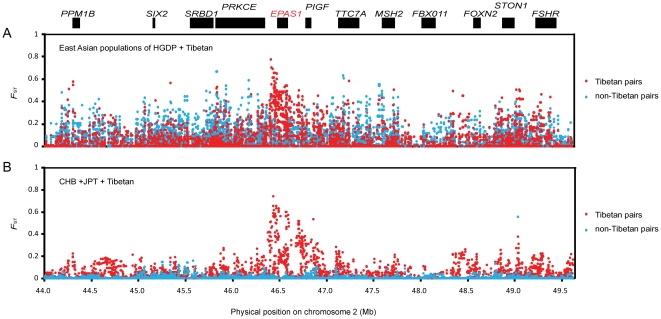
Since their arrival in the Tibetan Plateau during the Neolithic Age, Tibetans have been well-adapted to extreme environmental conditions and possess genetic variation that reflect their living environment and migratory history. To investigate the origin of Tibetans and the genetic basis of adaptation in a rigorous environment, we genotyped 30 Tibetan individuals with more than one million SNP markers. Our findings suggested that Tibetans, together with the Yi people, were descendants of Tibeto-Burmans who diverged from ancient settlers of East Asia. The valleys of the Hengduan Mountain range may be a major migration route. We also identified a set of positively-selected genes that belong to functional classes of the embryonic, female gonad, and blood vessel developments, as well as response to hypoxia. Most of these genes were highly correlated with population-specific and beneficial phenotypes, such as high infant survival rate and the absence of chronic mountain sickness.
Conflict of interest statement
Figures
References
-
- Zhang DD, Li SH. Optical dating of Tibetan human hand- and footprints: An implication for the palaeoenvironment of the last glaciation of the Tibetan Plateau. Geophys Res Lett. 2002;29:1072–1074.
-
- Su B, Xiao C, Deka R, Seielstad MT, Kangwanpong D, et al. Y chromosome haplotypes reveal prehistorical migrations to the Himalayas. Hum Genet. 2000;107:582–590. - PubMed
-
- Kang L, Li S, Gupta S, Zhang Y, Liu K, et al. Genetic structures of the Tibetans and the Deng people in the Himalayas viewed from autosomal STRs. J Hum Genet. 2010;55:270–277. - PubMed
Publication types
MeSH terms
LinkOut - more resources
Full Text Sources
Molecular Biology Databases
