Driving while intoxicated among individuals initially untreated for alcohol use disorders: one- and sixteen-year follow-ups
- PMID: 21388590
- PMCID: PMC3052888
- DOI: 10.15288/jsad.2011.72.173
Driving while intoxicated among individuals initially untreated for alcohol use disorders: one- and sixteen-year follow-ups
Abstract
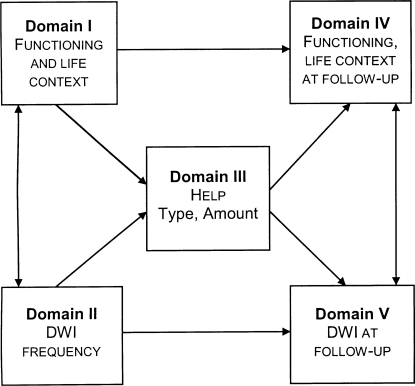
Objective: This study examined associations between frequency of driving while intoxicated (DWI) at baseline and obtaining alcohol-related help at follow-up, and between obtaining help and subsequent reductions in DWI. It also examined improvements on personal functioning and life context indices as mediators between obtaining help and reduced occurrences of DWI.
Method: A total of 628 individuals who were initially untreated for alcohol use problems completed a baseline inventory; follow-ups were 1, 3, and 16 years later.
Results: More extended participation in outpatient treatment and Alcoholics Anonymous (AA) during Year 1 was associated with a lower likelihood of DWI at the 1-year follow-up. More extended participation in AA through Year 3 was associated with a lower likelihood of DWI at the 16-year follow-up. Improvement on personal functioning and life context indices was associated with reduced risk of subsequent occurrences of DWI. Decreases in drinking-related problems, impulsivity, and drinking to reduce tension mediated associations between more AA participation and reductions in DWI at 1 year.
Conclusions: Among initially untreated individuals, sustained mutual help may be associated with a reduced number of occurrences of DWI via fewer drinking consequences and improved psychological functioning and coping. Treatment providers should attend to these concomitants of DWI and consider actively referring individuals to AA to ensure ongoing AA affiliation.
Figures


References
-
- Adair EB, Craddock SG, Miller HG, Turner CF. Quality of treatment data: Reliability over time of self-reports given by clients in treatment for substance abuse. Journal of Substance Abuse Treatment. 1996;13:145–149. - PubMed
-
- Adamson SJ, Sellman JD, Frampton CMA. Patient predictors of alcohol treatment outcome: A systematic review. Journal of Substance Abuse Treatment. 2009;36:75–86. - PubMed
-
- Annis HM, Graham JM. Situational Confidence Questionnaire (SCQ-39) user's guide. Toronto, Canada: Addiction Research Foundation; 1988.
-
- Babor TF, Steinberg K, Anton R, Del Boca F. Talk is cheap: Measuring drinking outcomes in clinical trials. Journal of Studies on Alcohol. 2000;61:55–63. - PubMed
-
- Baron RM, Kenny DA. The moderator-mediator variable distinction in social psychological research: Conceptual, strategic, and statistical considerations. Journal of Personality and Social Psychology. 1986;51:1173–1182. - PubMed
Publication types
MeSH terms
Substances
Grants and funding
LinkOut - more resources
Full Text Sources
Medical