


Helper activity of natural killer cells during the dendritic cell-mediated induction of melanoma-specific cytotoxic T cells
- PMID: 21389871
- PMCID: PMC3057371
- DOI: 10.1097/CJI.0b013e31820b370b
Helper activity of natural killer cells during the dendritic cell-mediated induction of melanoma-specific cytotoxic T cells
Abstract
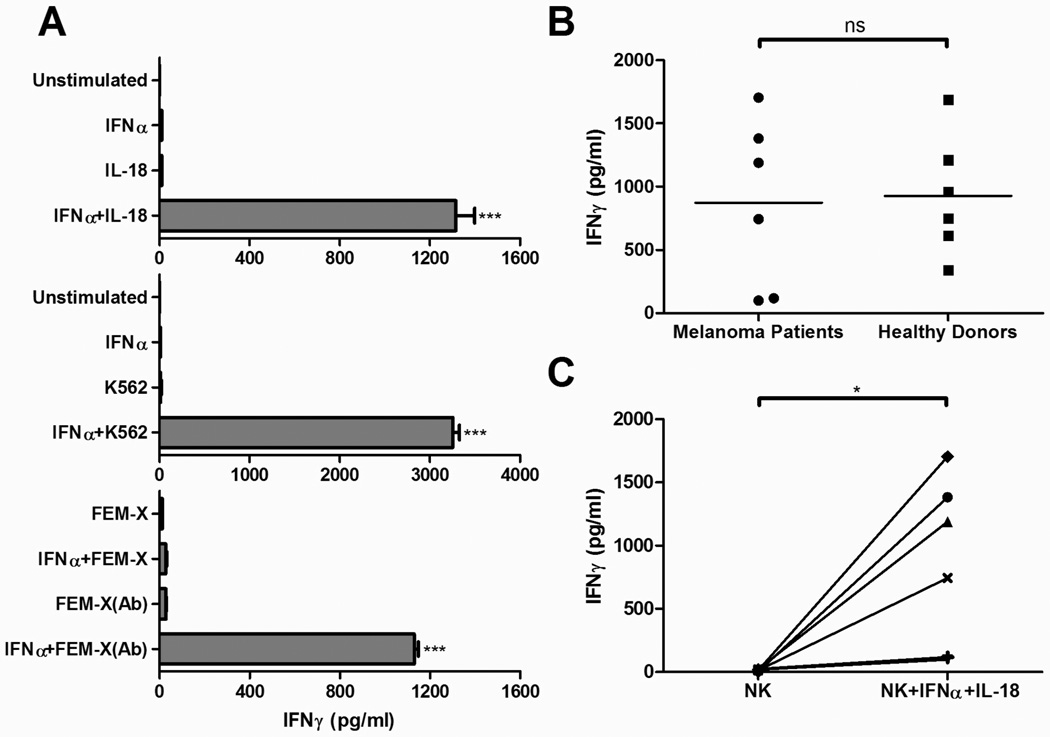
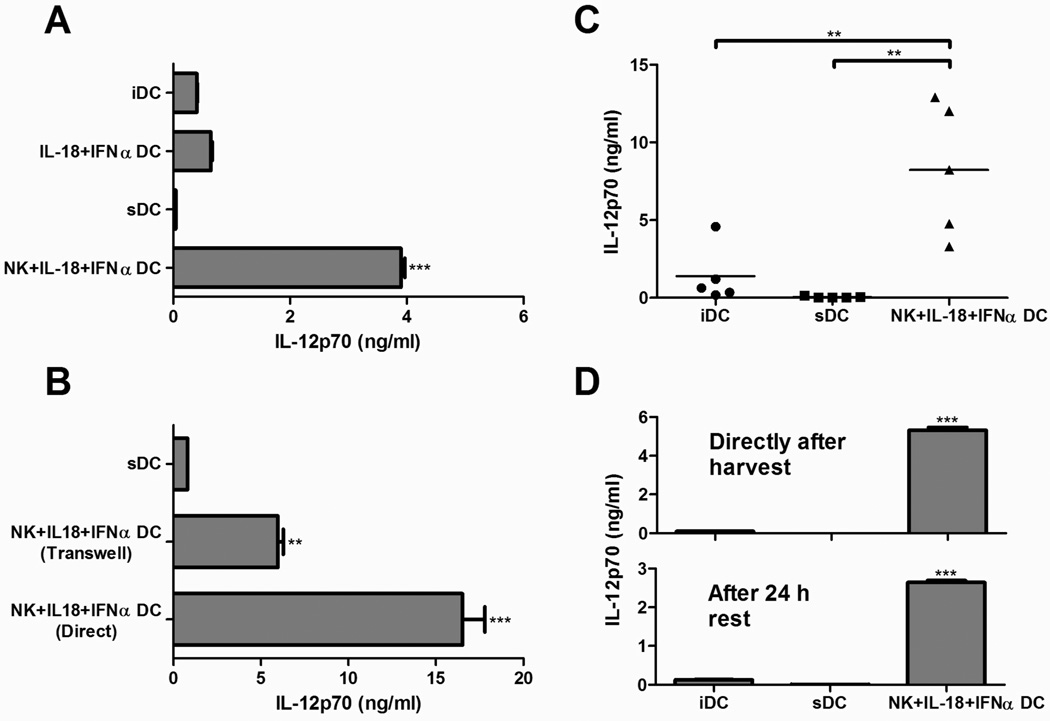
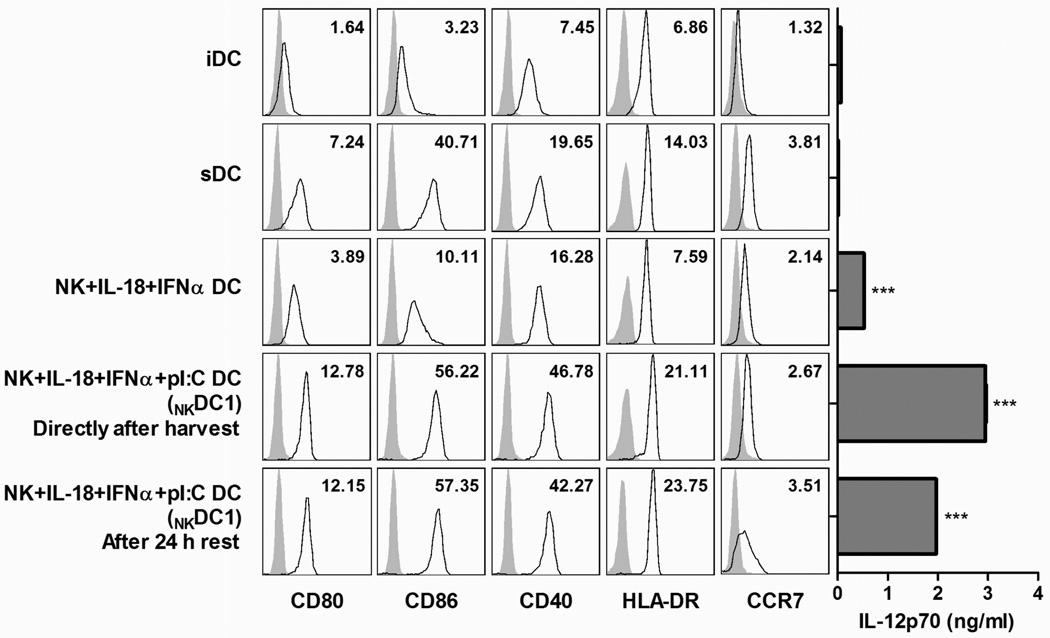
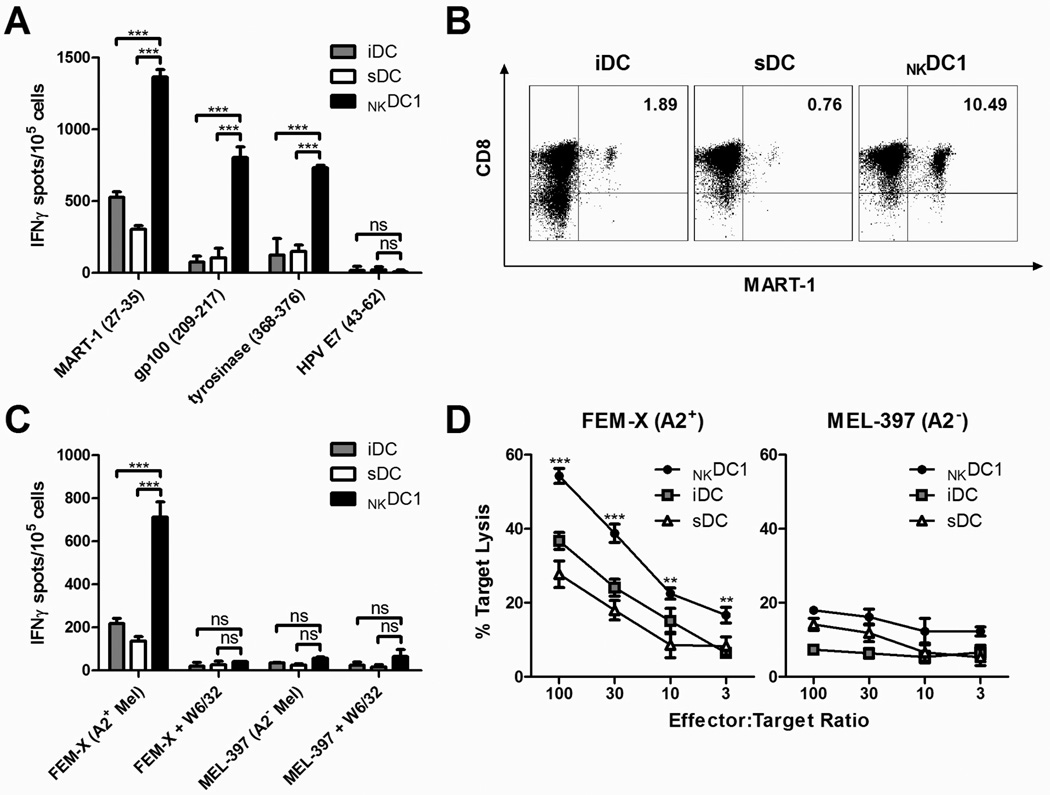
Natural killer (NK) cells have been shown to mediate important immunoregulatory "helper" functions in addition to their cytolytic activity. In particular, NK cells are capable of preventing maturation-related dendritic cell (DC) "exhaustion," inducing the development of "type-1 polarized" mature DCs (DC1) with an enhanced ability to produce interleukin (IL)-12p70, a factor essential for type-1 immunity and effective anticancer responses. Here we show that the NK cell-mediated type-1 polarization of DCs can be applied in the context of patients with advanced cancer to enhance the efficacy of DCs in inducing tumor-specific cytotoxic T lymphocytes. NK cells isolated from patients with late-stage (stage III and IV) melanoma responded with high interferon-γ production and the induction of type-1-polarized DCs on exposure to defined combinations of stimulatory agents, including interferon-α and IL-18. The resulting DCs showed strongly-enhanced IL-12p70 production on subsequent T-cell interaction compared with immature DCs (average of 19-fold enhancement) and nonpolarized IL-1β/TNF-α/IL-6/PGE(2)-matured "standard" DCs (average of 215-fold enhancement). Additional inclusion of polyinosinic: polycytidylic acid during NK-DC cocultures optimized the expression of CD80, CD86, CD40, and HLA-DR on the resulting (NK)DC1, increased their CCR7-mediated migratory responsiveness to the lymph node-associated chemokine CCL21, and further enhanced their IL-12-producing capacity. When compared in vitro with immature DCs and nonpolarized standard DCs, (NK)DC1 were superior in inducing functional melanoma-specific cytotoxic T lymphocytes capable of recognizing multiple melanoma-associated antigens and killing melanoma cells. These results indicate that the helper function of NK cells can be used in clinical settings to improve the effectiveness of DC-based cancer vaccines.
Conflict of interest statement
Figures
References
-
- Banchereau J, Steinman RM. Dendritic cells and the control of immunity. Nature. 1998;392:245–252. - PubMed
-
- Kalinski P, Hilkens CM, Wierenga EA, Kapsenberg ML. T-cell priming by type-1 and type-2 polarized dendritic cells: the concept of a third signal. Immunol Today. 1999;20:561–567. - PubMed
-
- Moser M, Murphy KM. Dendritic cell regulation of TH1-TH2 development. Nat Immunol. 2000;1:199–205. - PubMed
-
- Kapsenberg ML. Dendritic-cell control of pathogen-driven T-cell polarization. Nat Rev Immunol. 2003;3:984–993. - PubMed
-
- van Beelen AJ, Zelinkova Z, Taanman-Kueter EW, et al. Stimulation of the intracellular bacterial sensor NOD2 programs dendritic cells to promote interleukin-17 production in human memory T cells. Immunity. 2007;27:660–669. - PubMed
Publication types
MeSH terms
Substances
Grants and funding
LinkOut - more resources
Full Text Sources
Other Literature Sources
Medical
Research Materials
Miscellaneous
