


Human-specific loss of regulatory DNA and the evolution of human-specific traits
- PMID: 21390129
- PMCID: PMC3071156
- DOI: 10.1038/nature09774
Human-specific loss of regulatory DNA and the evolution of human-specific traits
Abstract
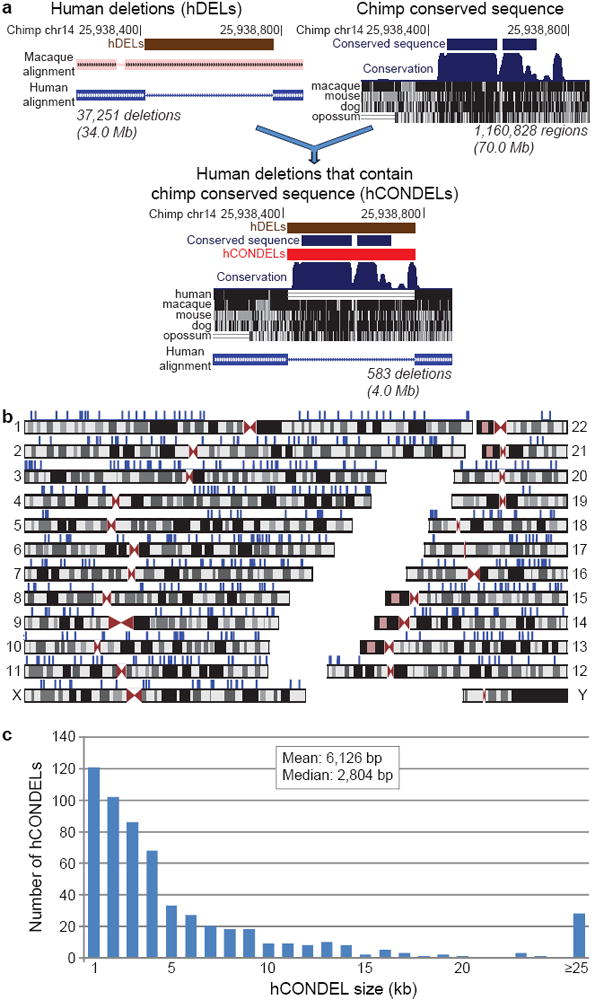
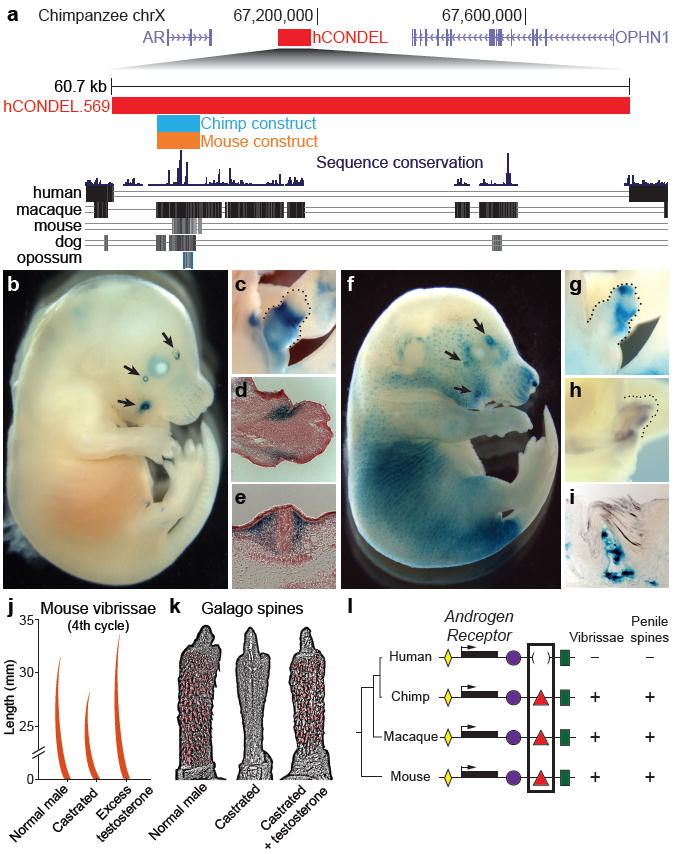
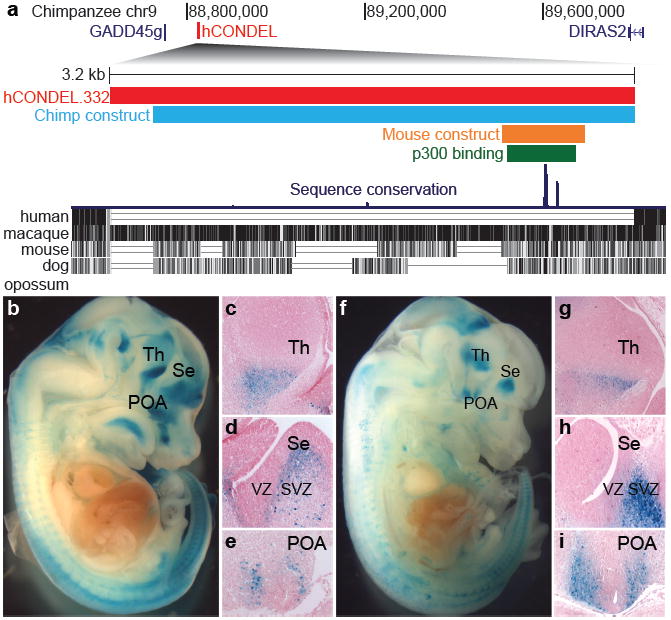
Humans differ from other animals in many aspects of anatomy, physiology, and behaviour; however, the genotypic basis of most human-specific traits remains unknown. Recent whole-genome comparisons have made it possible to identify genes with elevated rates of amino acid change or divergent expression in humans, and non-coding sequences with accelerated base pair changes. Regulatory alterations may be particularly likely to produce phenotypic effects while preserving viability, and are known to underlie interesting evolutionary differences in other species. Here we identify molecular events particularly likely to produce significant regulatory changes in humans: complete deletion of sequences otherwise highly conserved between chimpanzees and other mammals. We confirm 510 such deletions in humans, which fall almost exclusively in non-coding regions and are enriched near genes involved in steroid hormone signalling and neural function. One deletion removes a sensory vibrissae and penile spine enhancer from the human androgen receptor (AR) gene, a molecular change correlated with anatomical loss of androgen-dependent sensory vibrissae and penile spines in the human lineage. Another deletion removes a forebrain subventricular zone enhancer near the tumour suppressor gene growth arrest and DNA-damage-inducible, gamma (GADD45G), a loss correlated with expansion of specific brain regions in humans. Deletions of tissue-specific enhancers may thus accompany both loss and gain traits in the human lineage, and provide specific examples of the kinds of regulatory alterations and inactivation events long proposed to have an important role in human evolutionary divergence.
Figures
Comment in
-
Words of wisdom. Re: Human-specific loss of regulatory DNA and the evolution of human-specific traits.Eur Urol. 2011 Nov;60(5):1123-4. doi: 10.1016/j.eururo.2011.08.037. Eur Urol. 2011. PMID: 21961744 No abstract available.
References
-
- Varki A, Altheide T. Comparing the human and chimpanzee genomes: searching for needles in a haystack. Genome Res. 2005;15:1746–1758. - PubMed
-
- Bustamante CD, et al. Natural selection on protein-coding genes in the human genome. Nature. 2005;437:1153–1157. - PubMed
-
- Khaitovich P, et al. Parallel patterns of evolution in the genomes and transcriptomes of humans and chimpanzees. Science. 2005;309:1850–1854. - PubMed
-
- Pollard KS, et al. An RNA gene expressed during cortical development evolved rapidly in humans. Nature. 2006;443:167–172. - PubMed
Publication types
MeSH terms
Substances
Grants and funding
LinkOut - more resources
Full Text Sources
Other Literature Sources
Research Materials
