


Microbial ecology of the murine gut associated with the development of dextran sodium sulfate-induced colitis
- PMID: 21391286
- PMCID: PMC3058753
- DOI: 10.1002/ibd.21462
Microbial ecology of the murine gut associated with the development of dextran sodium sulfate-induced colitis
Abstract
Background: Dextran sodium sulfate (DSS) is used to induce murine colitis. Although the exact mechanism by which DSS administration causes disease is unknown, evidence suggests that the resident bacteria play a role in the development of murine DSS colitis, analogous to their role in human inflammatory bowel diseases.
Methods: C57BL/6 mice received 5% DSS in the drinking water and were euthanized 3 days and 14 days after the initiation of DSS treatment. Culture-independent methods were used to follow changes in the community structure of the gut's microbiota following DSS treatment. Histologic evidence of disease and changes in host gene expression were assessed.
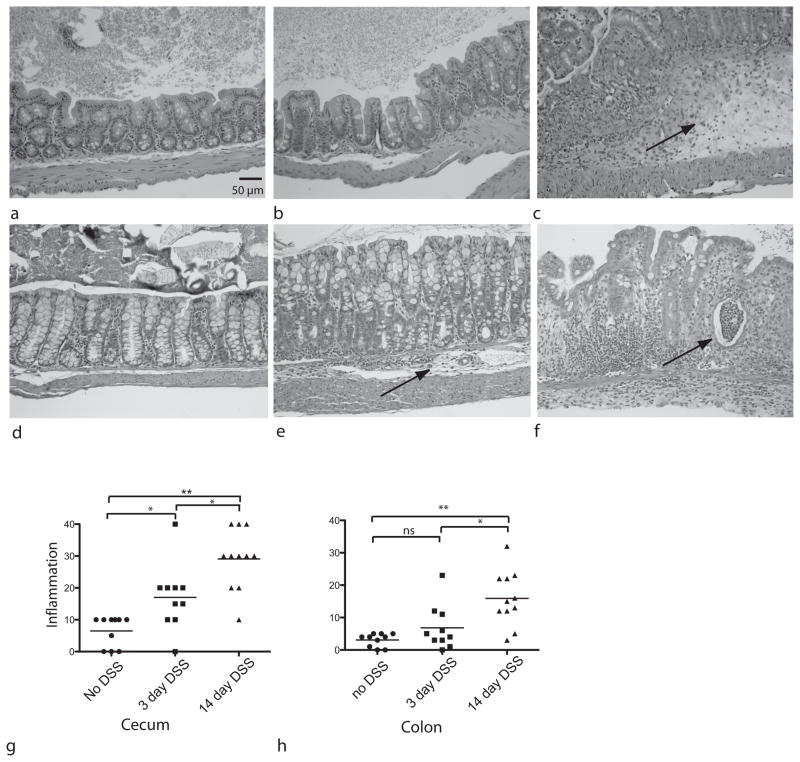
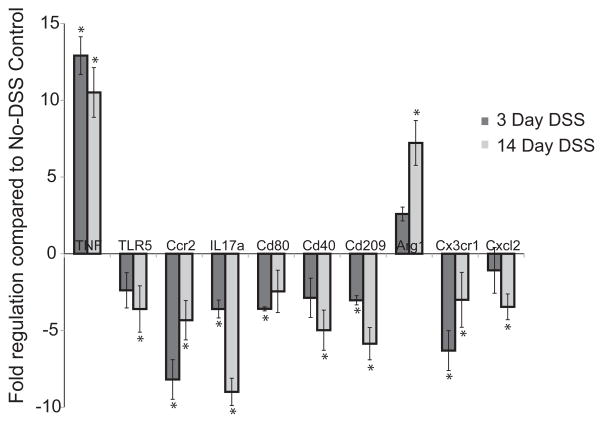
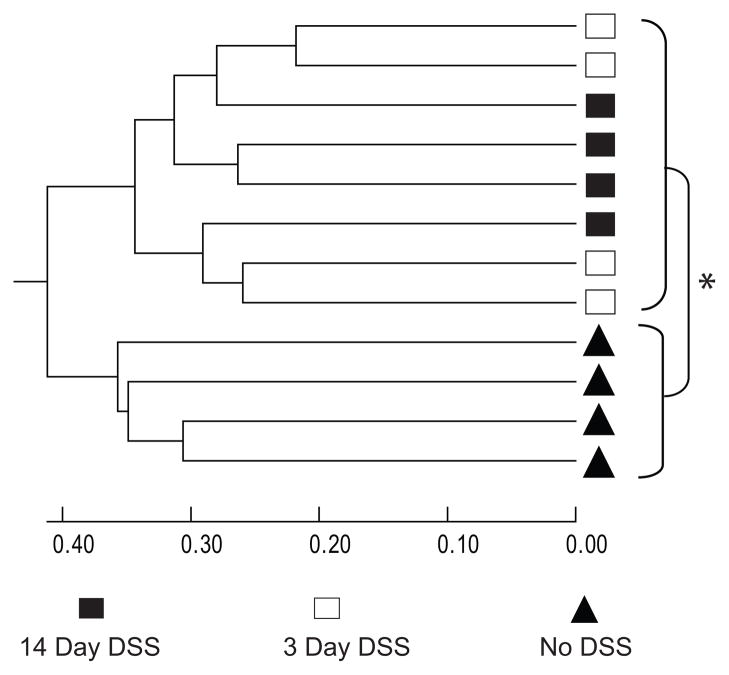
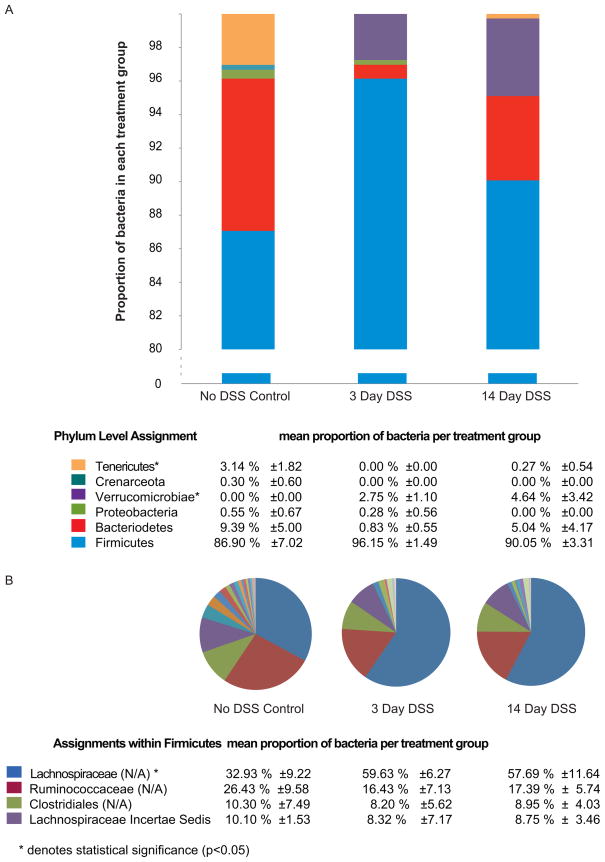
Results: Histologic colitis was minimal in DSS-treated animals at 3 days, but severe after 14 days. Analysis of 16S rRNA-encoding gene clone libraries demonstrated that the microbial communities in the ceca of DSS-treated mice were distinct from those in control mice. The microbiota in the cecum of DSS-treated animals was characterized by an overall decrease in microbial richness, an increase in members of the phylum Verrucomicrobia, and decrease in Tenericutes. Changes in the host's inflammatory response and microbial communities occurred before the histologic appearance of severe disease in the colon, but were seen concurrently in the cecum.
Conclusions: DSS administration is associated with reproducible changes in the gut microbial diversity of mice. Microbial and immunological changes appeared before the development of severe inflammation in the colon. This indicates that these changes in microbial community may play role in the potentiation of the abnormal inflammatory response seen in DSS-treated animals.
Copyright © 2010 Crohn's & Colitis Foundation of America, Inc.
Figures
References
-
- Ley RE, Peterson DA, Gordon JI. Ecological and Evolutionary Forces Shaping Microbial Diversity in the Human Intestine. Cell. 2006;24:837–848. - PubMed
-
- Subramanian S, Campbell BJ, Rhodes JM. Bacteria in the pathogenesis of inflammatory bowel disease. Curr Opin Infect Dis. 2006:475–484. - PubMed
-
- Packey C, Sartor R. Interplay of commensal and pathogenic bacteria, genetic mutations, and immunoregulatory defects in the pathogenesis of inflammatory bowel diseases. J Intern Med. 2008;263:597–606. - PubMed