


Overcoming drug resistance in pancreatic cancer
- PMID: 21391891
- PMCID: PMC3111812
- DOI: 10.1517/14728222.2011.566216
Overcoming drug resistance in pancreatic cancer
Abstract
Introduction: Pancreatic cancer has the worst survival rate of all cancers. The current standard care for metastatic pancreatic cancer is gemcitabine, however, the success of this treatment is poor and overall survival has not improved for decades. Drug resistance (both intrinsic and acquired) is thought to be a major reason for the limited benefit of most pancreatic cancer therapies.
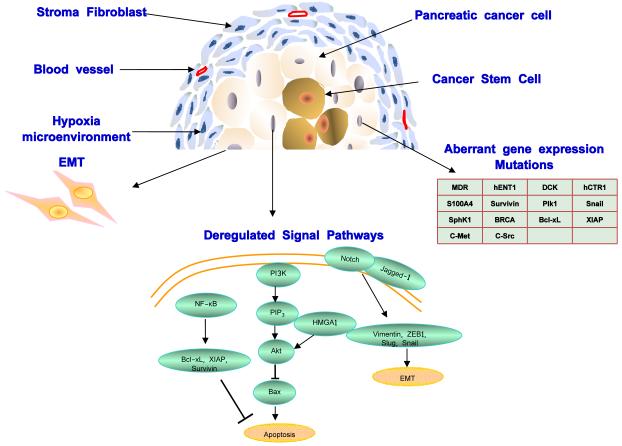
Areas covered: Previous studies have indicated various mechanisms of drug resistance in pancreatic cancer, including changes in individual genes or signaling pathways, the influence of the tumor microenvironment, and the presence of highly resistant stem cells. This review summarizes recent advances in the mechanisms of drug resistance in pancreatic cancer and potential strategies to overcome this.
Expert opinion: Increasing drug delivery efficiency and decreasing drug resistance is the current aim in pancreatic cancer treatment, and will also benefit the treatment of other cancers. Understanding the molecular and cellular basis of drug resistance in pancreatic cancer will lead to the development of novel therapeutic strategies with the potential to sensitize pancreatic cancer to chemotherapy, and to increase the efficacy of current treatments in a wide variety of human cancers.
Figures
References
-
- Jemal A, Siegel R, Ward E, et al. Cancer statistics, 2009. CA Cancer J Clin. 2009 Jul-Aug;59(4):225–49. - PubMed
-
- Landis SH, Murray T, Bolden S, et al. Cancer statistics, 1998. CA Cancer J Clin. 1998 Jan-Feb;48(1):6–29. - PubMed
-
- Torrisani J, Buscail L. Molecular pathways of pancreatic carcinogenesis. Ann Pathol. 2002 Oct;22(5):349–55. - PubMed
-
- Warshaw AL, Fernandez-del Castillo C. Pancreatic carcinoma. N Engl J Med. 1992 Feb 13;326(7):455–65. - PubMed
-
- Fisher WE, Berger DH. Angiogenesis and antiangiogenic strategies in pancreatic cancer. Int J Gastrointest Cancer. 2003;33(1):79–88. - PubMed
Publication types
MeSH terms
Substances
Grants and funding
LinkOut - more resources
Full Text Sources
Other Literature Sources
Medical
