


Depressive symptoms and physical performance in the lifestyle interventions and independence for elders pilot study
- PMID: 21391940
- PMCID: PMC3086832
- DOI: 10.1111/j.1532-5415.2011.03319.x
Depressive symptoms and physical performance in the lifestyle interventions and independence for elders pilot study
Abstract
Objectives: To determine whether the presence of high depressive symptoms (Center for Epidemiologic Studies Depression Scale (CES-D) score ≥ 14) diminished physical performance benefits after a comprehensive physical activity intervention in older adults.
Design: A post hoc analysis of data from the Lifestyle Interventions and Independence for Elders Pilot (LIFE-P) study, a single-blind randomized controlled trial comparing a moderate-intensity physical activity intervention (PA) with a successful aging control (SA).
Setting: Multicenter U.S. institutions participating in the LIFE-P trial.
Participants: Four hundred twenty-four sedentary, noninstitutionalized adults aged 70 to 89.
Measurements: Depressive symptoms were assessed using the CES-D. Physical performance tests included the Short Physical Performance Battery (SPPB) and 400-m walk time (400 mw) at baseline and 6 and 12 months.
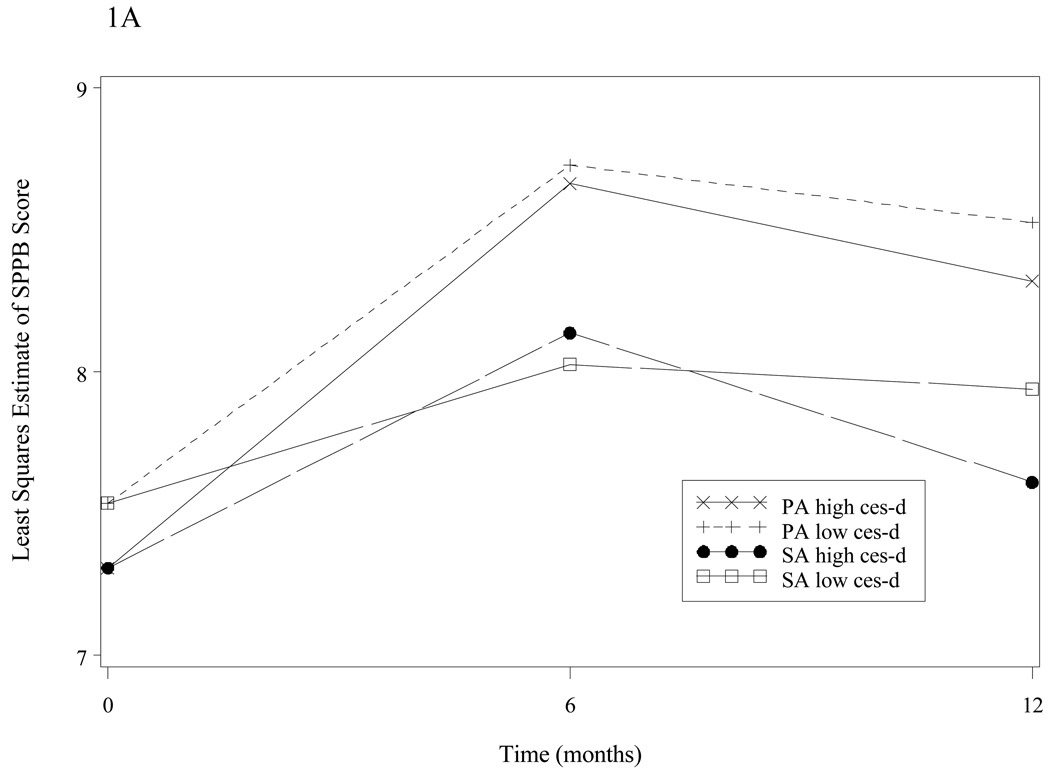
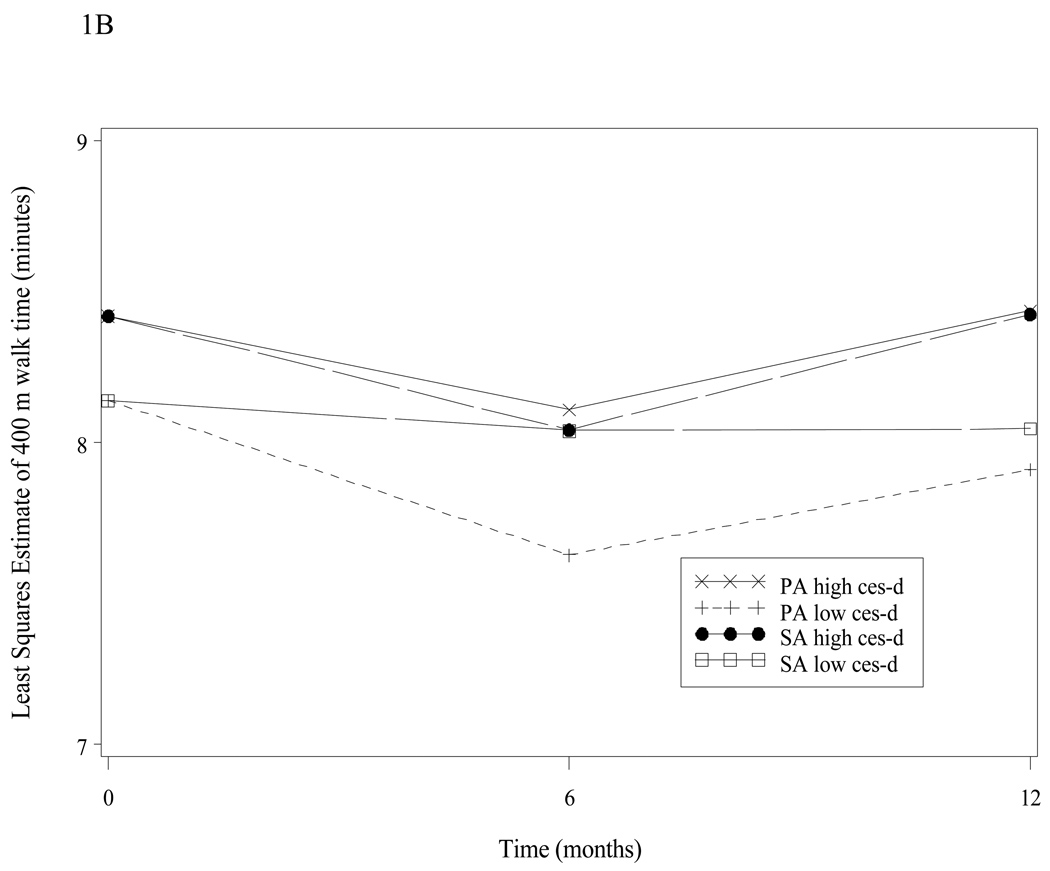
Results: Of the participants, 15.8% had high depressive symptom scores (CES-D ≥ 14). For participants with low depressive symptoms, SPPB scores improved more in the PA than the SA group over 12 months (adjusted score difference +0.70; P < .001 at 6 months and +0.58; P = .004 at 12 months), and 400 mw times improved in the PA group at 6 months (adjusted score difference -0.41 minutes; P = .02). For participants with high depressive symptoms, the difference in improvement fell short of statistical significance on the SPPB between the PA and SA groups (adjusted score difference +0.76 (P = .18) at 6 months and +0.94 (P = .12) at 12 months).
Conclusion: The presence of high depressive symptoms did not substantially diminish physical performance benefits realized after a PA intervention in sedentary older adults.
© 2011, Copyright the Authors. Journal compilation © 2011, The American Geriatrics Society.
Conflict of interest statement
Figures
References
-
- Stuck AE, Walthert JM, Nikolaus T, et al. Risk factors for functional status decline in community-living elderly people: A systematic literature review. Soc Sci Med. 1999;48:445–469. - PubMed
-
- Penninx BW, Guralnik JM, Ferrucci L, et al. Depressive symptoms and physical decline in community-dwelling older persons. JAMA. 1998;279:1720–1726. - PubMed
-
- Lenze EJ, Schulz R, Martire LM, et al. The course of functional decline in older people with persistently elevated depressive symptoms: Longitudinal findings from the Cardiovascular Health Study. J Am Geriatr Soc. 2005;53:569–575. - PubMed
-
- Hassmen P, Koivula N, Uutela A. Physical exercise and psychological well-being: A population study in Finland. Prev Med. 2000;30:17–25. - PubMed
-
- Farmer ME, Locke BZ, Moscicki EK, et al. Physical activity and depressive symptoms: The NHANES I epidemiologic follow-up study. Am J Epidemiol. 1988;128:1340–1351. - PubMed
Publication types
MeSH terms
Grants and funding
LinkOut - more resources
Full Text Sources
Medical
