


Molecular epidemiology of Fonsecaea species
- PMID: 21392438
- PMCID: PMC3165995
- DOI: 10.3201/eid1703.100555
Molecular epidemiology of Fonsecaea species
Abstract
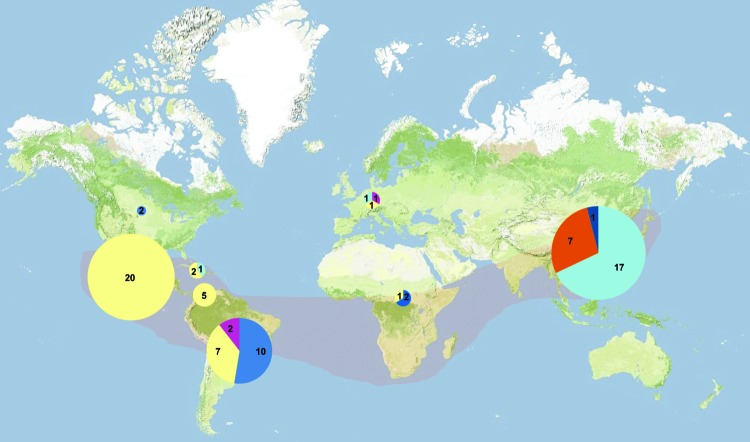
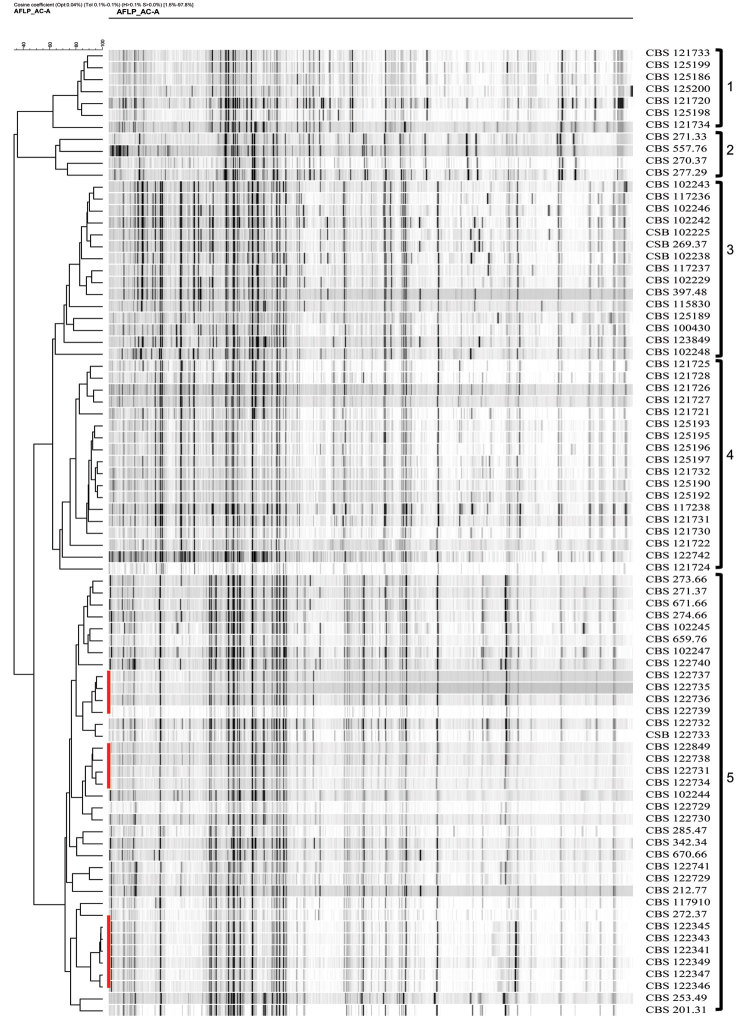
To assess population diversities among 81 strains of fungi in the genus Fonsecaea that had been identified down to species level, we applied amplified fragment-length polymorphism (AFLP) technology and sequenced the internal transcribed spacer regions and the partial cell division cycle, beta-tubulin, and actin genes. Many species of the genus Fonsecaea cause human chromoblastomycosis. Strains originated from a global sampling of clinical and environmental sources in the Western Hemisphere, Asia, Africa, and Europe. According to AFLP fingerprinting, Fonsecaea isolates clustered in 5 groups corresponding with F. pedrosoi, F. monophora, and F. nubica: the latter 2 species each comprised 2 groups, and F. pedrosoi appeared to be of monophyletic origin. F. pedrosoi was found nearly exclusively in Central and South America. F. monophora and F. nubica were distributed worldwide, but both showed substantial geographic structuring. Clinical cases outside areas where Fonsecaea is endemic were probably distributed by human migration.
Figures
References
-
- Yegres FR-YN, Medina-Ruiz E, González-Vivas R. Cromomicosis por Cladosporium carrionii en criadores de caprinos del estado Falcon. Investigaciόn. Clinica. 1985;26:235–46.
-
- Yegüez-Rodriguez J R-YN, Yegres F, Rodríguez Larralde A. Cromomicosis: susceptibilidad genética en grupos familiares de la zona endémica en Venezuela. Acta Cientίfica Venezuelana 1992;43:98–102.
Publication types
MeSH terms
Substances
LinkOut - more resources
Full Text Sources