


INTERPERSONAL CALLOUSNESS TRAJECTORIES ACROSS ADOLESCENCE: Early Social Influences and Adult Outcomes
- PMID: 21394215
- PMCID: PMC3049897
- DOI: 10.1177/0093854807310157
INTERPERSONAL CALLOUSNESS TRAJECTORIES ACROSS ADOLESCENCE: Early Social Influences and Adult Outcomes
Abstract
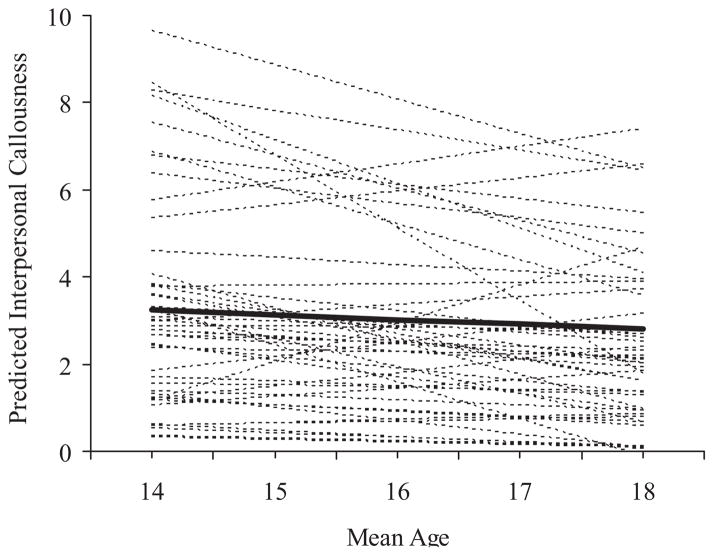
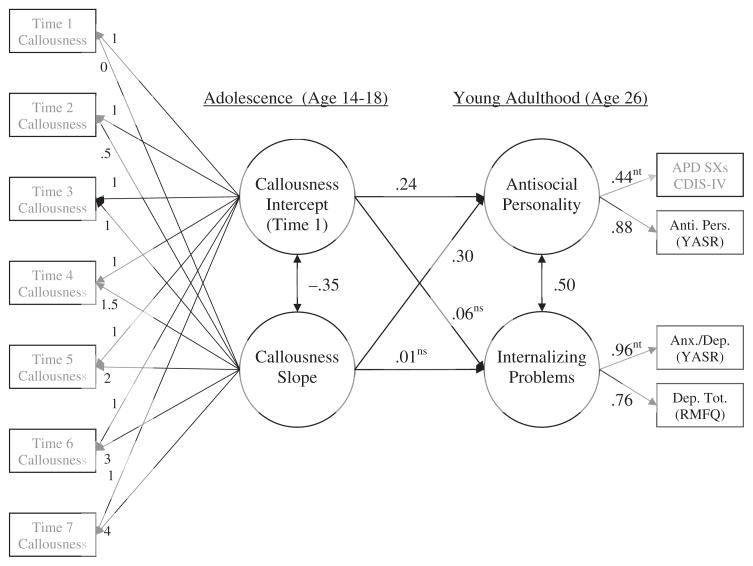
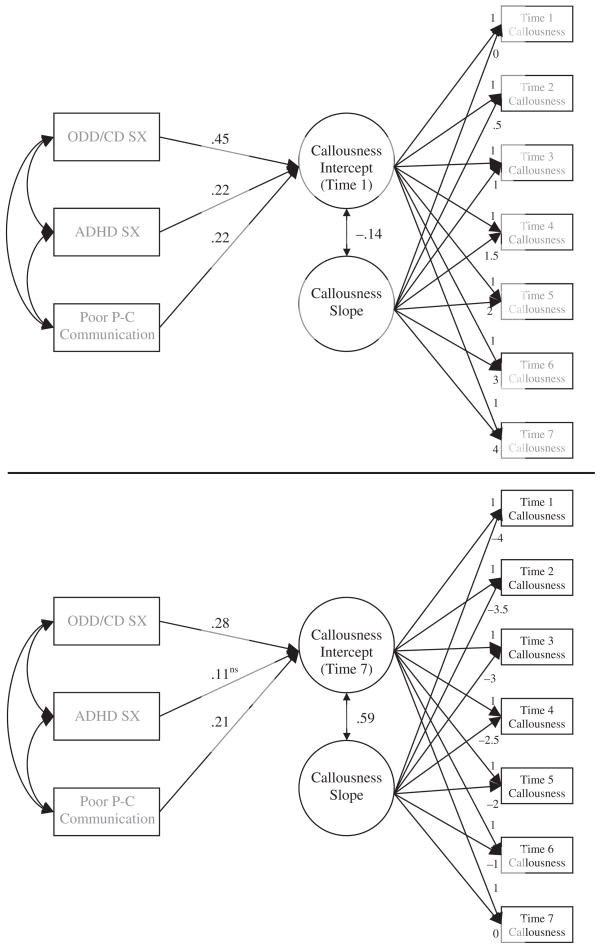
The current study examined the relation between interpersonal callousness trajectories during adolescence (ages 14 to 18) and characteristics of antisocial personality and internalizing problems in young adulthood (age 26), using a community sample of 506 boys. The influence of several parent and peer factors on callousness trajectories during adolescence was also explored. Although the mean interpersonal callousness trajectory for the entire sample was relatively flat, there was substantial individual variability in both the initial status and rate of change of interpersonal callousness over time. Trajectories of interpersonal callousness were associated with higher levels of antisocial personality features in early adulthood but were unrelated to adult internalizing problems. Conduct problems and parent-child communication difficulties were the best predictors of elevated levels of interpersonal callousness throughout adolescence. However, none of the parenting and peer factors examined predicted substantive changes in interpersonal callousness over time.
Figures
References
-
- Achenbach TM. Manual for the Child Behavior Checklist/4-18 and 1991 profiles. Burlington: University of Vermont, Department of Psychiatry; 1991.
-
- Achenbach TM. Manual for the Young Adult Self-Report and Young Adult Behavior Checklist. Burlington: University of Vermont, Department of Psychiatry; 1997.
-
- Achenbach TM, Bernstein A, Dumenci L. DSM-oriented scales and statistically based syndromes for ages 18 to 59: Linking taxonomic paradigms to facilitate multitaxonomic approaches. Journal of Personality Assessment. 2005;84:49–63. - PubMed
-
- Achenbach TM, Howell CT, McConaughy SH, Stanger C. Six-year predictors of problems in a national sample: III. Transition to young adult syndromes. Journal of the American Academy of Child and Adolescent Psychiatry. 1995;34:658–669. - PubMed
-
- American Psychiatric Association. Diagnostic and statistical manual of mental disorders. 3. Washington, DC: Author; 1987. revision.
Grants and funding
LinkOut - more resources
Full Text Sources