


Childhood Cryptosporidium infection among aboriginal communities in Peninsular Malaysia
- PMID: 21396250
- PMCID: PMC4084658
- DOI: 10.1179/136485911X12899838683368
Childhood Cryptosporidium infection among aboriginal communities in Peninsular Malaysia
Abstract
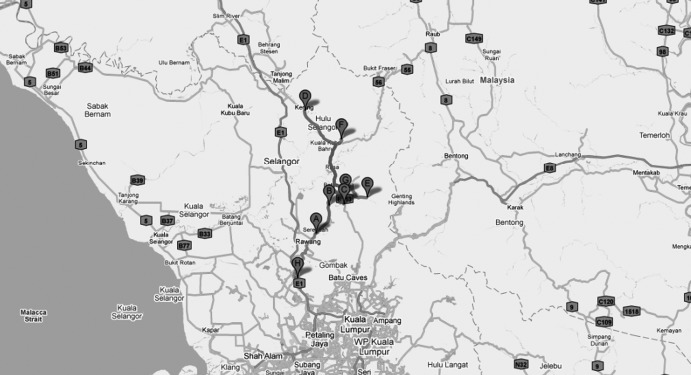
Cryptosporidium is a coccidian parasite that is prevalent worldwide, some species of which cause morbidity in both immunocompromised and immunocompetent individuals. The prevalence and predictors of Cryptosporidium infection, and its effect on nutritional status, have recently been explored among 276 children (141 boys and 135 girls, aged 2-15 years) in aboriginal (Orang Asli) villages in the Malaysian state of Selangor. Faecal smears were examined by the modified Ziehl-Neelsen staining technique while socio-economic data were collected using a standardized questionnaire. Nutritional status was assessed by anthropometric measurements. Cryptosporidium infection, which was detected in 7.2% of the aboriginal children, was found to be significantly associated with low birthweight (≤2.5 kg), being part of a large household (with more than seven members) and prolonged breast feeding (>2 years). The output of a binary logistic regression confirmed that large household size was a significant predictor of Cryptosporidium infection (giving an odds ratio of 2.15, with a 95% confidence interval of 1.25-5.02). Cryptosporidium infection is clearly a public-health problem among the aboriginal children of Selangor, with person-to-person the most likely mode of transmission.
Figures
References
-
- Agnew DG, Lima AA, Newman RD, Wuhib T, Moore RD, Guerrant RL, Sears CL.(1998)Cryptosporidiosis in northeastern Brazilian children: association with increased diarrhea morbidity. Journal of Infectious Diseases 177754–760. - PubMed
-
- Al-Mekhlafi HM, Azlin M, Aini UN, Shaik A, Sa’iah A, Fatmah MS, Ismail MG, Ahmad F, Aisah MY, Rozlida AR, Norhayatiy M.(2005a)Protein-energy malnutrition and soil-transmitted helminthiases among Orang Asli children in Selangor, Malaysia. Asia Pacific Journal of Clinical Nutrition 14188–194. - PubMed
-
- Al-Mekhlafi MS, Azlin M, Nor Aini U, Shaik A, Sa’iah A, Fatmah MS, Ismail MG, Ahmad Firdaus MS, Aisah MY, Rozlida AR, Norhayati M.(2005b)Giardiasis as a predictor of childhood malnutrition in Orang Asli children in Malaysia. Transactions of the Royal Society of Tropical Medicine and Hygiene 99686–691. - PubMed
-
- Anon(2005)Summary of HIV and AIDS Cases Reported by Year. Malaysia: 1986 until June 2005Kuala Lumpur: Ministry of Health
-
- Aye T, Moe K, Nyein MM, Swe T.(1994)Cryptosporidiosis in Myanmar infants with acute diarrhea. Southeast Asian Journal of Tropical Medicine and Public Health 25654–656. - PubMed
Publication types
MeSH terms
LinkOut - more resources
Full Text Sources
Medical