


Novel murine model of chronic granulomatous lung inflammation elicited by carbon nanotubes
- PMID: 21398620
- PMCID: PMC5460893
- DOI: 10.1165/rcmb.2010-0401OC
Novel murine model of chronic granulomatous lung inflammation elicited by carbon nanotubes
Abstract
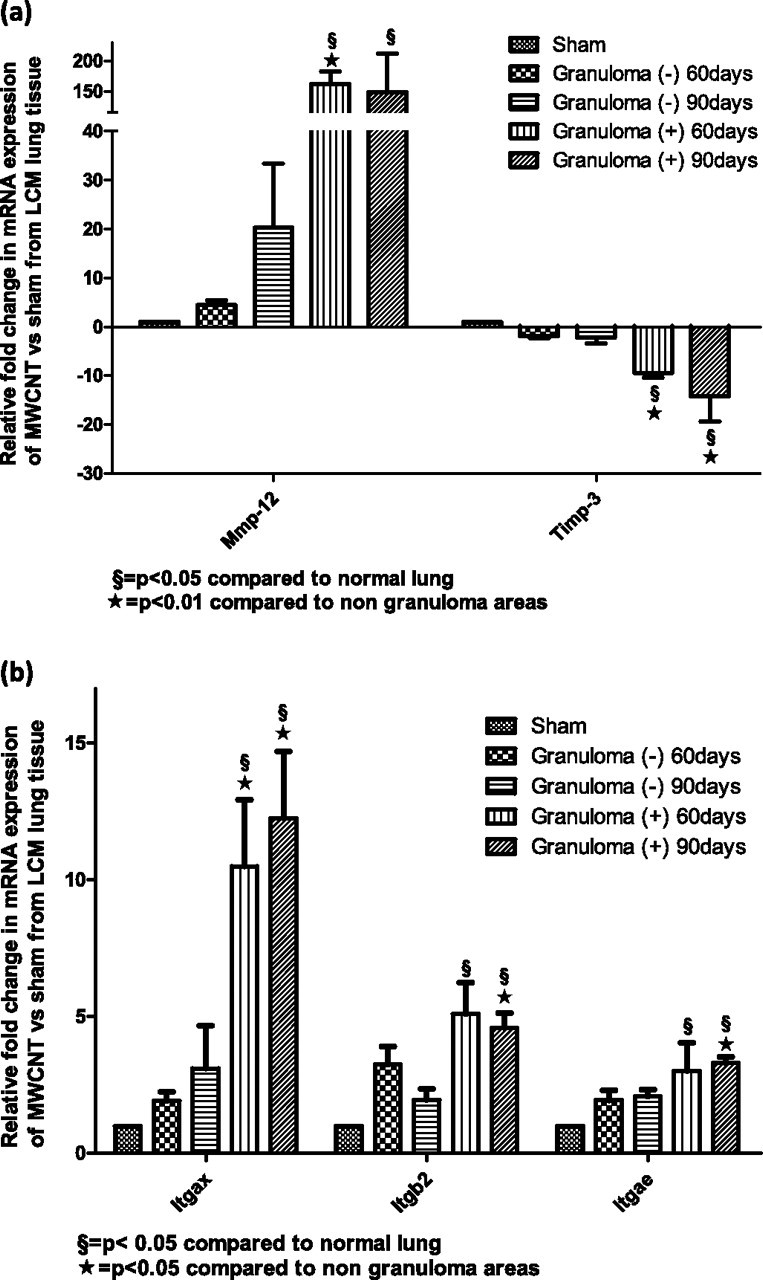
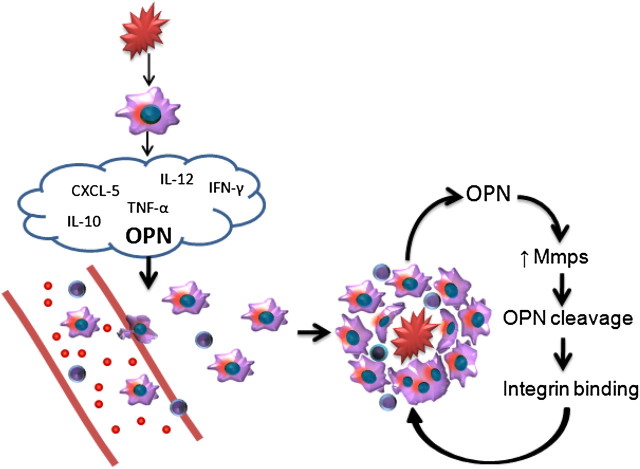
Lung granulomas are associated with numerous conditions, including inflammatory disorders, exposure to environmental pollutants, and infection. Osteopontin is a chemotactic cytokine produced by macrophages, and is implicated in extracellular matrix remodeling. Furthermore, osteopontin is up-regulated in granulomatous disease, and osteopontin null mice exhibit reduced granuloma formation. Animal models currently used to investigate chronic lung granulomatous inflammation bear a pathological resemblance, but lack the chronic nature of human granulomatous disease. Carbon nanoparticles are generated as byproducts of combustion. Interestingly, experimental exposures to carbon nanoparticles induce pulmonary granuloma-like lesions. However, the recruited cellular populations and extracellular matrix gene expression profiles within these lesions have not been explored. Because of the rapid resolution of granulomas in current animal models, the mechanisms responsible for persistence have been elusive. To overcome the limitations of previous models, we investigated whether a model using multiwall carbon nanoparticles would resemble chronic human lung granulomatous inflammation. We hypothesized that pulmonary exposure to multiwall carbon nanoparticles would induce granulomas, elicit a macrophage and T-cell response, and mimic other granulomatous disorders with an up-regulation of osteopontin. This model demonstrates: (1) granulomatous inflammation, with macrophage and T-cell infiltration; (2) resemblance to the chronicity of human granulomas, with persistence up to 90 days; and (3) a marked elevation of osteopontin, metalloproteinases, and cell adhesion molecules in granulomatous foci isolated by laser-capture microdissection and in alveolar macrophages from bronchoalveolar lavage. The establishment of such a model provides an important platform for mechanistic studies on the persistence of granuloma.
Figures
References
-
- Helming L, Gordon S. The molecular basis of macrophage fusion. Immunobiology 2007;212:785–793. - PubMed
-
- Castranova V. Signaling pathways controlling the production of inflammatory mediators in response to crystalline silica exposure: role of reactive oxygen/nitrogen species. Free Radic Biol Med 2004;37:916–925. - PubMed
-
- Baughman RP, Lower EE. du Bois RM. Sarcoidosis. Lancet 2003;361:1111–1118. - PubMed
-
- Pagnoux C. Churg-Strauss syndrome: evolving concepts. Discov Med 2010;9:243–252. - PubMed
-
- Wieczorek S, Holle JU, Epplen JT. Recent progress in the genetics of Wegener's granulomatosis and Churg-Strauss syndrome. Curr Opin Rheumatol 2010;22:8–14. - PubMed
Publication types
MeSH terms
Substances
Grants and funding
LinkOut - more resources
Full Text Sources
Medical
Research Materials
