Using SMS text messaging to assess moderators of smoking reduction: Validating a new tool for ecological measurement of health behaviors
- PMID: 21401252
- PMCID: PMC3071638
- DOI: 10.1037/a0022201
Using SMS text messaging to assess moderators of smoking reduction: Validating a new tool for ecological measurement of health behaviors
Abstract
Objective: Understanding the psychological processes that contribute to smoking reduction will yield population health benefits. Negative mood may moderate smoking lapse during cessation, but this relationship has been difficult to measure in ongoing daily experience. We used a novel form of ecological momentary assessment to test a self-control model of negative mood and craving leading to smoking lapse.
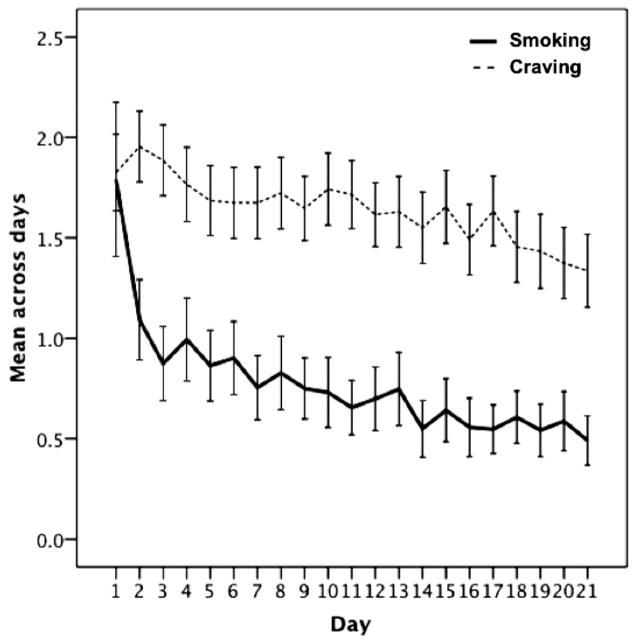
Design: We validated short message service (SMS) text as a user-friendly and low-cost option for ecologically measuring real-time health behaviors. We sent text messages to cigarette smokers attempting to quit eight times daily for the first 21 days of cessation (N-obs = 3,811).
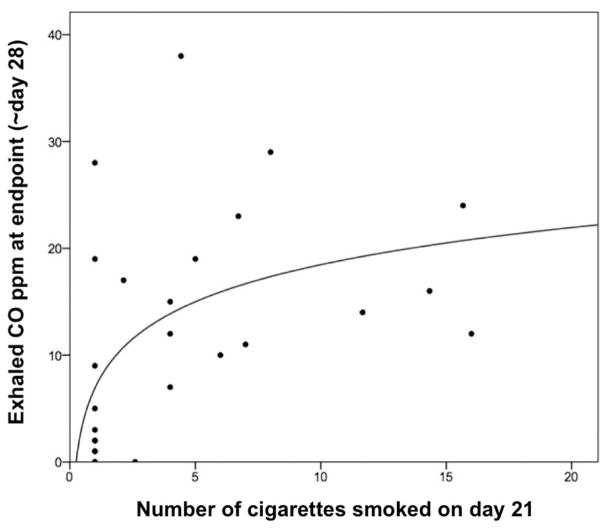
Main outcome measures: Approximately every two hours, we assessed cigarette count, mood, and cravings, and examined between- and within-day patterns and time-lagged relationships among these variables. Exhaled carbon monoxide was assessed pre- and posttreatment.
Results: Negative mood and craving predicted smoking two hours later, but craving mediated the mood-smoking relationship. Also, this mediation relationship predicted smoking over the next two, but not four, hours.
Conclusion: Results clarify conflicting previous findings on the relation between affect and smoking, validate a new low-cost and user-friendly method for collecting fine-grained health behavior assessments, and emphasize the importance of rapid, real-time measurement of smoking moderators.
(c) 2011 APA, all rights reserved
Figures


References
-
- al’Absi M, Hatsukami D, Davis GL, Wittmers LE. Prospective examination of effects of smoking abstinence on cortisol and withdrawal symptoms as predictors of early smoking relapse. Drug and Alcohol Dependence. 2004;73(3):267–278. - PubMed
-
- Biener L, Abrams DB. The Contemplation Ladder: Validation of a measure of readiness to consider smoking cessation. Health Psychology. 1991;10:360–365. - PubMed
-
- Borland R, Balmford J. Perspectives on relapse prevention: An exploratory study. Psychology and Health. 2005;20:661–671.
-
- Chandra S, Shiffman S, Scharf DM, Dang Q, Shadel WG. Daily smoking patterns, their determinants, and implications for quitting. Experimental and Clinical Psychopharmacology. 2007;15:67–80. - PubMed