


Role of the accessory gene regulator agr in community-associated methicillin-resistant Staphylococcus aureus pathogenesis
- PMID: 21402769
- PMCID: PMC3088142
- DOI: 10.1128/IAI.00046-11
Role of the accessory gene regulator agr in community-associated methicillin-resistant Staphylococcus aureus pathogenesis
Abstract
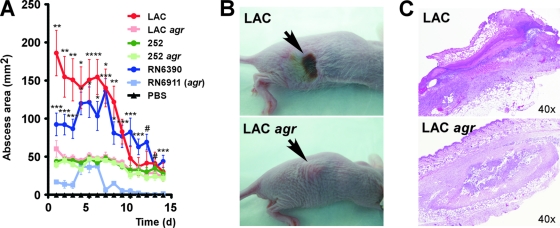
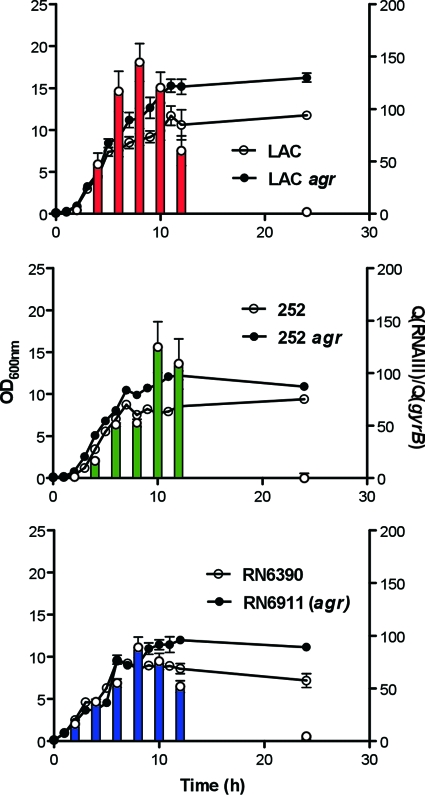
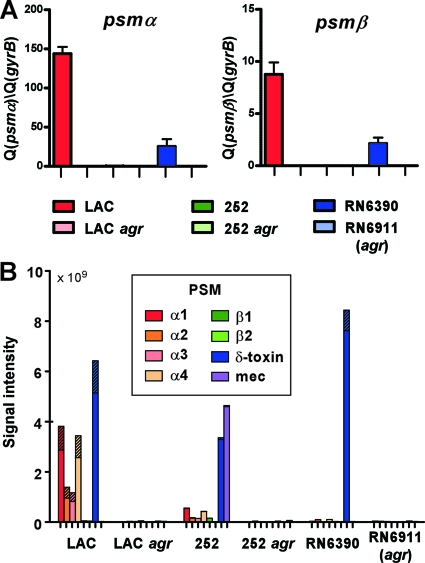
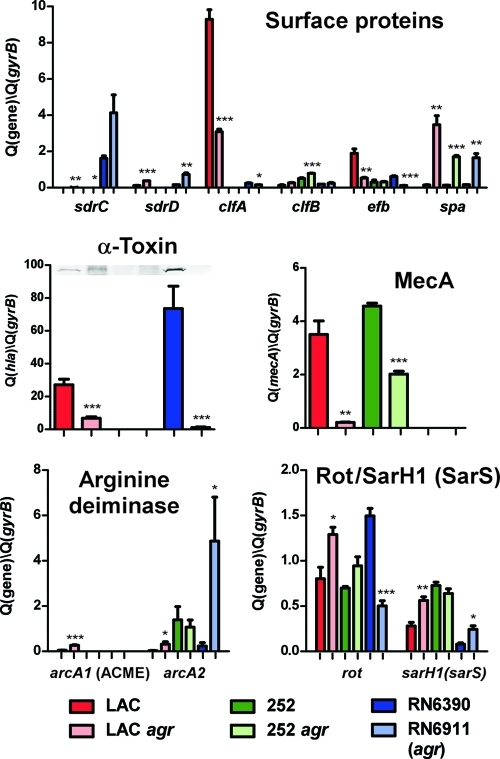
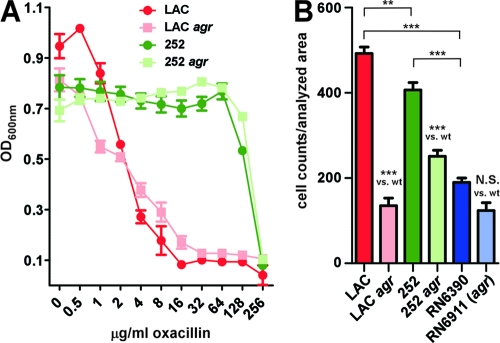
The molecular basis underlying the pathogenic success of community-associated methicillin-resistant Staphylococcus aureus (CA-MRSA) is not completely understood, but differential gene expression has been suggested to account at least in part for the high virulence of CA-MRSA strains. Here, we show that the agr gene regulatory system has a crucial role in the development of skin infections in the most prevalent CA-MRSA strain USA300. Importantly, our data indicate that this is due to discrepancies between the agr regulon of CA-MRSA and those of hospital-associated MRSA and laboratory strains. In particular, agr regulation in strain USA300 led to exceptionally strong expression of toxins and exoenzymes, upregulation of fibrinogen-binding proteins, increased capacity to bind fibrinogen, and increased expression of methicillin resistance genes. Our findings demonstrate that agr functionality is critical for CA-MRSA disease and indicate that an adaptation of the agr regulon contributed to the evolution of highly pathogenic CA-MRSA.
Figures
References
Publication types
MeSH terms
Substances
Grants and funding
LinkOut - more resources
Full Text Sources
Other Literature Sources
Medical
Molecular Biology Databases
