


New developments in the treatment of hyperammonemia: emerging use of carglumic acid
- PMID: 21403788
- PMCID: PMC3056327
- DOI: 10.2147/IJGM.S10490
New developments in the treatment of hyperammonemia: emerging use of carglumic acid
Abstract
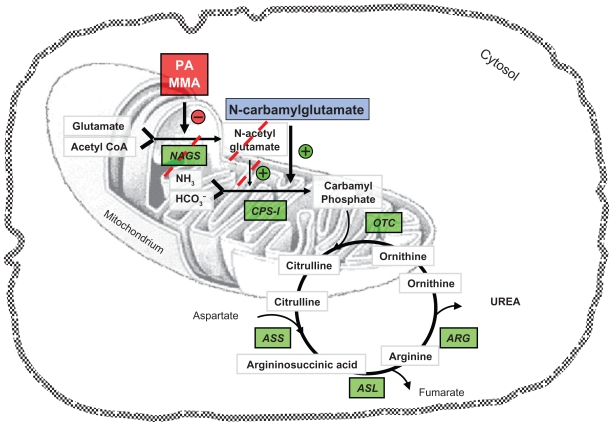
Hyperammonemia is a true neonatal emergency with high toxicity for the central nervous system and developmental delay. The causes of neonatal hyperammonemia are genetic defects of urea cycle enzymes, organic acidemias, lysinuric protein intolerance, hyperammonemia-hyperornithinemia- homocitrullinemia syndrome, transient hyperammonemia of the newborn, and congenital hyperinsulinism with hyperammonemia. In some of these conditions the high blood ammonia levels are due to the reduction of N-acetylglutamate, an essential cofactor necessary for the function of the urea cycle, or to the reduction of carbamoyl-phosphate synthase-I activity. In these cases, N-carbamylglutamate (carglumic acid) can be administered together with the conventional therapy. Carglumic acid is an analog of N-acetylglutamate that has a direct action on carbamoyl-phosphate synthase-I. Its effects are reactivation of the urea cycle and reduction of plasma ammonia levels. As a consequence it improves the traditional treatment, avoiding the need of hemodialysis and peritoneal dialysis. In this review we evaluate the possible field of application of carglumic acid and its effectiveness and safety.
Keywords: N-carbamylglutamate; carglumic acid; hyperammonemia; metabolic disorders; urea cycle disorder.
Figures
References
-
- Leonard JV, Ward Platt MP, Morris AA. Hypothesis: proposals for the management of a neonate at risk of hyperammonaemia due to a urea cycle disorder. Eur J Pediatr. 2008;167(3):305–309. - PubMed
-
- O’Connor JE, Jordá A, Grisolía S. Acute and chronic effects of carbamyl glutamate on blood urea and ammonia. Eur J Pediatr. 1985;143(3):196–197. - PubMed
-
- Reglero A, Rivas J, Mendelson J, Wallace R, Grisolia S. Deacylation and transacetylation of acetyl glutamate and acetyl ornithine in rat liver. FEBS Lett. 1977;81(1):13–17. - PubMed
LinkOut - more resources
Full Text Sources
Other Literature Sources
Molecular Biology Databases
