


Molecular mechanisms in exercise-induced cardioprotection
- PMID: 21403846
- PMCID: PMC3051318
- DOI: 10.4061/2011/972807
Molecular mechanisms in exercise-induced cardioprotection
Abstract
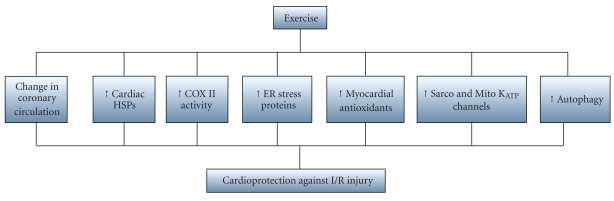
Physical inactivity is increasingly recognized as modifiable behavioral risk factor for cardiovascular diseases. A partial list of proposed mechanisms for exercise-induced cardioprotection include induction of heat shock proteins, increase in cardiac antioxidant capacity, expression of endoplasmic reticulum stress proteins, anatomical and physiological changes in the coronary arteries, changes in nitric oxide production, adaptational changes in cardiac mitochondria, increased autophagy, and improved function of sarcolemmal and/or mitochondrial ATP-sensitive potassium channels. It is currently unclear which of these protective mechanisms are essential for exercise-induced cardioprotection. However, most investigations focus on sarcolemmal KATP channels, NO production, and mitochondrial changes although it is very likely that other mechanisms may also exist. This paper discusses current information about these aforementioned topics and does not consider potentially important adaptations within blood or the autonomic nervous system. A better understanding of the molecular basis of exercise-induced cardioprotection will help to develop better therapeutic strategies.
Figures
References
-
- Sofi F, Capalbo A, Cesari F, Abbate R, Gensini GF. Physical activity during leisure time and primary prevention of coronary heart disease: an updated meta-analysis of cohort studies. European Journal of Cardiovascular Prevention and Rehabilitation. 2008;15(3):247–257. - PubMed
-
- Berlin JA, Colditz GA. A meta-analysis of physical activity in the prevention of coronary heart disease. American Journal of Epidemiology. 1990;132(4):612–628. - PubMed
-
- Nocon M, Hiemann T, Müller-Riemenschneider F, Thalau F, Roll S, Willich SN. Association of physical activity with all-cause and cardiovascular mortality: a systematic review and meta-analysis. European Journal of Cardiovascular Prevention and Rehabilitation. 2008;15(3):239–246. - PubMed
-
- Myers J, Prakash M, Froelicher V, Do D, Partington S, Edwin Atwood J. Exercise capacity and mortality among men referred for exercise testing. The New England Journal of Medicine. 2002;346(11):793–801. - PubMed
-
- Kokkinos P, Myers J, Faselis C, et al. Exercise capacity and mortality in older men: a 20-year follow-up study. Circulation. 2010;122(8):790–797. - PubMed
LinkOut - more resources
Full Text Sources