


Can wedge osteotomy correct depression of the lateral tibial plateau mimicking posterolateral rotatory knee instability?
- PMID: 21403986
- PMCID: PMC3293977
- DOI: 10.1007/s11999-011-1855-5
Can wedge osteotomy correct depression of the lateral tibial plateau mimicking posterolateral rotatory knee instability?
Abstract
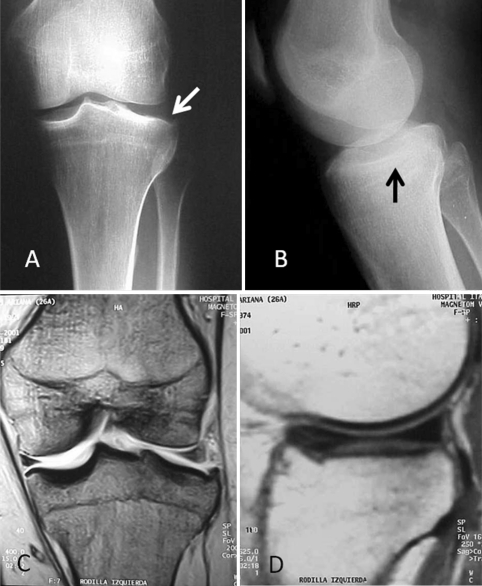
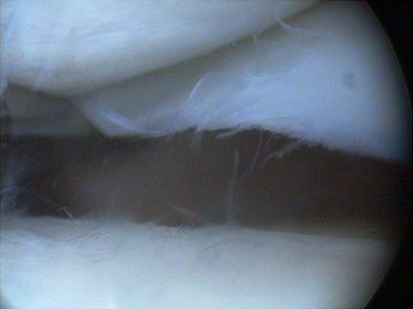
Background: The literature suggests rotatory knee instability (pseudolaxity) can be associated with depressions of the lateral tibial plateau in patients despite an intact arcuate ligament complex. Correcting this bone deformity by an open-wedge osteotomy of the lateral tibia plateau, elevating the depressed bone may restore knee stability.
Questions/purposes: We therefore asked whether: (1) knee stability is restored after this procedure; (2) Lysholm functional scores improve after this treatment; and (3) the limb alignment changes.
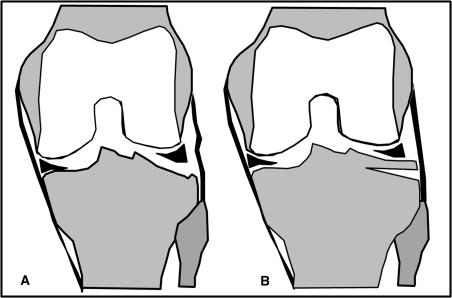
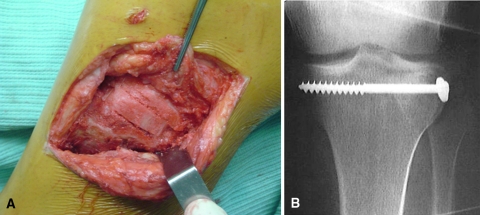
Patients and methods: We retrospectively evaluated 12 patients who underwent a subchondral open-wedge osteotomy of the lateral tibial plateau combined with a knee arthroscopic procedure for the treatment of a knee rotational instability secondary to a lateral compartment bone deficit between 2000 and 2007. Eleven patients with a mean age of 35 years were available for followup at a minimum of 2 years (average, 5.4 years; range, 2-9 years). Preoperatively and at last followup, patients were clinically and radiographically evaluated by the Lysholm score and with comparative knee radiographs. Complications were recorded.
Results: At last followup all patients rated their knees as stable. All osteotomies healed uneventfully. The Lysholm score improved from 62 to 87. Followup radiographs showed no changes in the femorotibial axis as result of the osteotomy.
Conclusions: Patients with chronic depression of the posterolateral tibial plateau may exhibit symptoms of posterolateral knee instability, a sort of pseudolaxity. In these patients, an open-wedge osteotomy of the lateral tibia plateau, elevating the depressed bone, and tensioning posterolateral structures improves this secondary posterolateral knee instability.
Level of evidence: Level IV, therapeutic study. See Guidelines for Authors for a complete description of levels of evidence.
Figures
References
-
- Baker CL, Jr, Norwood LA, Hughston JC. Acute posterolateral rotatory instability of the knee. J Bone Joint Surg Am. 1983;65:614–618. - PubMed
MeSH terms
LinkOut - more resources
Full Text Sources
Research Materials
