Engineering the ABA plant stress pathway for regulation of induced proximity
- PMID: 21406691
- PMCID: PMC3110149
- DOI: 10.1126/scisignal.2001449
Engineering the ABA plant stress pathway for regulation of induced proximity
Abstract
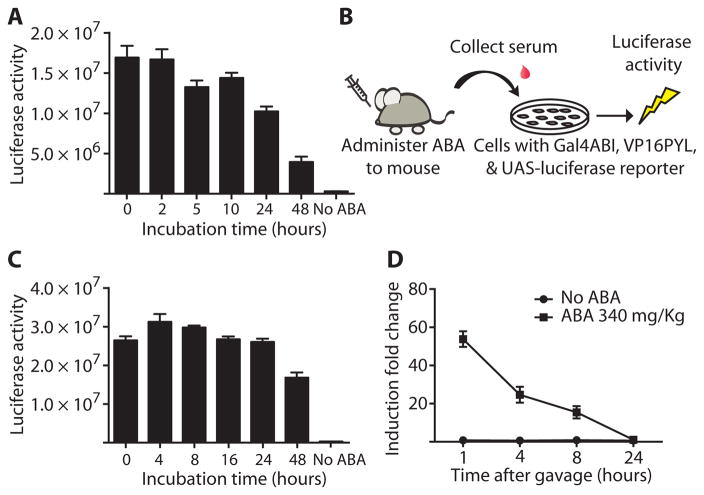
Chemically induced proximity (CIP) systems use small molecules and engineered proteins to control and study biological processes. However, small molecule-based systems for controlling protein abundance or activities have been limited by toxicity, instability, cost, and slow clearance of the small molecules in vivo. To address these problems, we modified proteins of the plant abscisic acid (ABA) stress response pathway to control the proximity of cellular proteins and showed that the system could be used to regulate transcription, signal transduction, and subcellular localization of proteins in response to exogenously applied ABA. We also showed that the ABA CIP system can be combined with other CIP systems to simultaneously control multiple processes. We found that, when given to mice, ABA was orally available and had a 4-hour half-life. These properties, along with its lack of toxicity and low cost, suggest that ABA may be well suited for therapeutic applications and as an experimental tool to control diverse cellular activities in vivo.
Conflict of interest statement
Figures


References
-
- Austin DJ, Crabtree GR, Schreiber SL. Proximity versus allostery: The role of regulated protein dimerization in biology. Chem Biol. 1994;1:131–136. - PubMed
-
- Spencer DM, Wandless TJ, Schreiber SL, Crabtree GR. Controlling signal transduction with synthetic ligands. Science. 1993;262:1019–1024. - PubMed
-
- Ho SN, Biggar SR, Spencer DM, Schreiber SL, Crabtree GR. Dimeric ligands define a role for transcriptional activation domains in reinitiation. Nature. 1996;382:822–826. - PubMed
MeSH terms
Substances
Grants and funding
LinkOut - more resources
Full Text Sources
Other Literature Sources
Research Materials