. 2011 Mar 9;6(3):e17721.
doi: 10.1371/journal.pone.0017721.

Cross fostering experiments suggest that mice songs are innate

Affiliations

Cross fostering experiments suggest that mice songs are innate

Takefumi Kikusui et al. PLoS One. .

Abstract

Background: Vocal learning is a central functional constituent of human speech, and recent studies showing that adult male mice emit ultrasonic sound sequences characterized as "songs" have suggested that the ultrasonic courtship sounds of mice provide a mammalian model of vocal learning.

Objectives: We tested whether mouse songs are learned, by examining the relative role of rearing environment in a cross-fostering experiment.

Methods and findings: We found that C57BL/6 and BALB/c males emit a clearly different pattern of songs with different frequency and syllable compositions; C57BL/6 males showed a higher peak frequency of syllables, shorter intervals between syllables, and more upward frequency modulations with jumps, whereas BALB/c males produced more "chevron" and "harmonics" syllables. To establish the degree of environmental influences in mouse song development, sons of these two strains were cross-fostered to another strain of parents. Songs were recorded when these cross-fostered pups were fully developed and their songs were compared with those of male mice reared by the genetic parents. The cross-fostered animals sang songs with acoustic characteristics--including syllable interval, peak frequency, and modulation patterns--similar to those of their genetic parents. In addition their song elements retained sequential characteristics similar to those of their genetic parents' songs.

Conclusion: These results do not support the hypothesis that mouse "song" is learned; we found no evidence for vocal learning of any sort under the conditions of this experiment. Our observation that the strain-specific character of the song profile persisted even after changing the developmental auditory environment suggests that the structure of these courtship sound sequences is under strong genetic control. Thus, the usefulness of mouse "song" as a model of mammalian vocal learning is limited, but mouse song has the potential to be an indispensable model to study genetic mechanisms for vocal patterning and behavioral sequences.


Conflict of interest statement

Competing Interests: The authors have declared that no competing interests exist.

Figures

Figure 1
Figure 1. Strain-specific characteristics of male mice songs.
(a) Sound spectrograms of ultrasonic songs in B6 (upper) and BALB (lower) male mice. B6 males showed a higher peak frequency of syllables ranging from 70–110 kHz, shorter intervals between syllables, and more upward frequency modulations with jumps (arrows), whereas BALB males produced more “chevron” and “harmonics” syllables (arrow head). (b) The mean syllable peak frequency and inter-syllable interval significantly differed between B6 and BALB mice, but syllable duration was not. Data are expressed as mean ± SEM; *p<0.05 between strains. (c) Pie graphs showing percentages of the 10 categories of song syllables in B6 and BALB mice. Percentages were calculated in each strain as the number of syllables in each category for each subject/total number of syllables analyzed in each subject. The number of total syllables analyzed was: 6179 for B6 mice and 6244 for BALB mice. B6 mice produced more “short,” “one jump,” and “more jumps” syllables than BALB mice, whereas BALB mice produced more “flat”, “chevron”, “complex”, and “harmonics” syllables; *p<0.05 between strains. (d) In the sequential analysis, we divided all syllable types into 2 categories, namely, A (syllables with frequency jumps) and B (syllables without jumps). Z indicates silent gaps longer than 0.25 s. Circles represent the percentage of syllable types, and the thickness of the arrows represents the transition probabilities. The sequential analyses of syllables demonstrated strain-specific patterns; B6 mice showed more transition from A to A, A to B, A to Z, B to A, and Z to A than BALB mice and BALB mice showed more B to B self transition compared to that in B6 mice; *p<0.05 between strains.
Figure 2
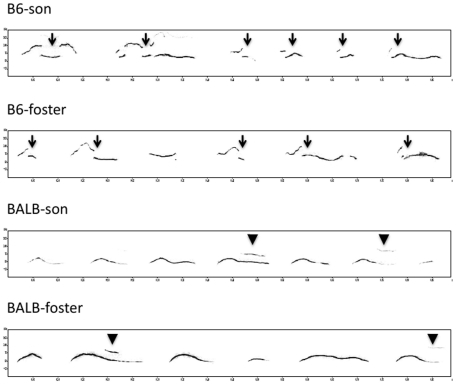
Figure 2. Sonograms of ultrasonic songs in fostered males.
Sonograms of ultrasonic songs recorded from B6-son, B6-foster, BALB-son, and BALB-foster male mice. Cross-fostered mice showed similar patterns to those of normally reared mice, and the effects of the rearing environment were not obvious. B6-son and B6-foster mice showed a higher peak frequency of syllables, shorter intervals between syllables, and more upward frequency modulations with jumps (arrows), whereas BALB-son and BALB-foster males produced more “chevron” and “harmonics” syllables (arrow head).
Figure 3
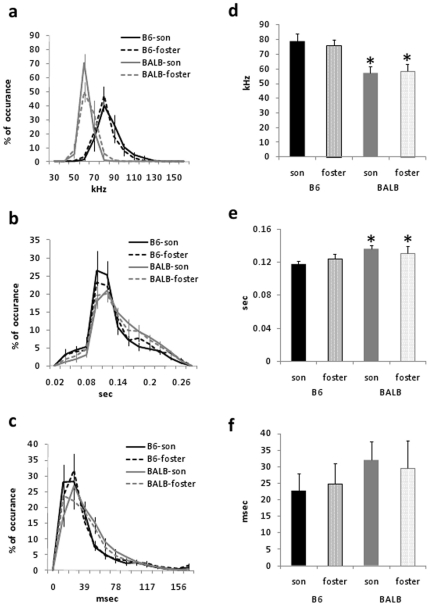
Figure 3. Song parameters of fostered males.
Song parameters in B6-son, B6-foster, BALB-son, and BALB-foster male mice. The distribution histogram of the peak frequency (a) and intervals (b), but not the duration (c), of the syllables demonstrated significant strain differences, regardless of the fostering. Mean peak frequency (d) and interval (e) significantly differed between genetic B6 and BALB groups. Data are expressed as mean ± SEM; *p<0.05 vs. B6-son and B6-foster mice.
Figure 4
Figure 4. Appearance ratio of the song syllables in fostered males.
The appearance ratio of each of the 10 syllable categories in B6-son, B6-foster, BALB-son, and BALB-foster mice. Genetic B6 groups produced more “short,” “one jump,” and “more jumps” syllables than BALB/c mice, whereas genetic BALB groups produced more “flat,” “chevron,” “complex,” and “harmonics” syllables. Data are expressed as mean ± SEM; *p<0.05 vs B6-son and B6-foster mice.
Figure 5
Figure 5. Distribution pattern of the song syllables in fostered males.
Pie graphs showing the percentages of the 10 categories of song syllables in B6-son (a), BALB-son (b), B6-foster (c), and BALB-foster (d) mice. Percentages were calculated in each strain as the number of syllables in each category for each subject/total number of syllables analyzed in each subject. The total syllables determined are as follows: 5487 syllables; B6-son; 6414 syllables, B6-foster; 4973 syllables, BALB-son; 6963 syllables, BALB-foster.
Figure 6
Figure 6. Sequential analysis of syllables in fostered males.
Sequential analyses of syllables demonstrated strain-specific patterns; BALB-son mice showed a greater occurrence of B to B self transitions, and B to Z and Z to B transitions, as well as a lower occurrence of A to A self-transitions and A to B, B to A, A to Z, and Z to A transitions compared to B6-son and B6-foster mice. BALB-foster mice demonstrated greater occurrence of type B to B self-transitions and a lower occurrence of A to A, A to B, B to A, A to Z, and Z to A transitions compared to B6-son and B6-foster mice. Circles represent the percentage of syllable types, and the thickness of the arrows represents the transition probabilities; *p<0.05 vs. B6-son and B6-foster mice.
Figure 7
Figure 7. Timeline of the cross-fostering procedure.
This figure illustrates the case of cross-fostering from BALB to B6. When newly born pups were found at the same time in both strains of parents, a part of the litter was reciprocally cross-fostered to parents of the other strain of mice. The control mice were handled in the same manner as fostered pups but returned to their own parents. All litters were left undisturbed until weaning (PD21). After weaning,they were housed with males of the non-cross fostered controls of the different strain until ultrasound recording at 10–20 weeks of age.

References

    1. Catchpole CK, Slater PJB, Mann N. Cambridge: Cambridge University Press; 2003. Bird song: Biological themes and variations.
    1. Fitch WT. The biology and evolution of music: A comparative perspective. Cognition. 2006;100:173–215. - PubMed
    1. Jarvis E. Brains and birdsongs. In: Marler P, Slabbekoorn HW, editors. Nature's music: The science of birdsong. Academic Press; 2004. pp. 239–275.
    1. Feng AS, Narins PM, Xu CH, Lin WY, Yu ZL, et al. Ultrasonic communication in frogs. Nature. 2006;440:333–336. - PubMed
    1. Janik V, Slater P. Vocal learning in mammals. Adv Stud Behav. 1997;26:59–99.

Publication types

LinkOut - more resources