. 2011 Mar 9;6(3):e17486.
doi: 10.1371/journal.pone.0017486.

Reactive oxygen species scavenging by catalase is important for female Lutzomyia longipalpis fecundity and mortality

Affiliations

Reactive oxygen species scavenging by catalase is important for female Lutzomyia longipalpis fecundity and mortality

Hector Diaz-Albiter et al. PLoS One. .

Abstract

The phlebotomine sand fly Lutzomyia longipalpis is the most important vector of American visceral leishmaniasis (AVL), the disseminated and most serious form of the disease in Central and South America. In the natural environment, most female L. longipalpis are thought to survive for less than 10 days and will feed on blood only once or twice during their lifetime. Successful transmission of parasites occurs when a Leishmania-infected female sand fly feeds on a new host. Knowledge of factors affecting sand fly longevity that lead to a reduction in lifespan could result in a decrease in parasite transmission. Catalase has been found to play a major role in survival and fecundity in many insect species. It is a strong antioxidant enzyme that breaks down toxic reactive oxygen species (ROS). Ovarian catalase was found to accumulate in the developing sand fly oocyte from 12 to 48 hours after blood feeding. Catalase expression in ovaries as well as oocyte numbers was found to decrease with age. This reduction was not found in flies when fed on the antioxidant ascorbic acid in the sugar meal, a condition that increased mortality and activation of the prophenoloxidase cascade. RNA interference was used to silence catalase gene expression in female Lu. longipalpis. Depletion of catalase led to a significant increase of mortality and a reduction in the number of developing oocytes produced after blood feeding. These results demonstrate the central role that catalase and ROS play in the longevity and fecundity of phlebotomine sand flies.


Conflict of interest statement

Competing Interests: The authors have declared that no competing interests exist.

Figures

Figure 1
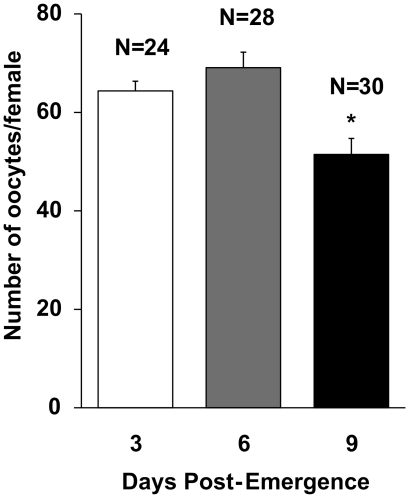
Figure 1. Effect of age at blood feed on subsequent fecundity of female Lu. longipalpis.
Bars represents average number of oocytes dissected 5 days after blood meal ± SEM. Sand flies were blood-fed at 3, 6 and 9 days Post-Emergence. Asterisk indicates statistical difference at P<0.005 (ANOVA). Results represent two independent biological replicates.
Figure 2
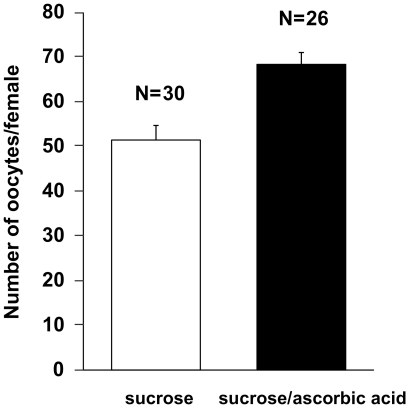
Figure 2. Effect of ascorbic acid supplementation on fecundity in Lu. longipalpis.
Flies were blood-fed 9 days Post-Emergence and bar chart represents average number of oocytes dissected 5 days after blood meal ± SEM (combined samples derived from 2 independent experiments). Sand flies fed on 20 mM ascorbic acid-supplemented 70% sucrose solution show significantly higher oocyte numbers in comparison to control sand flies (P<0.0001, t-test).
Figure 3
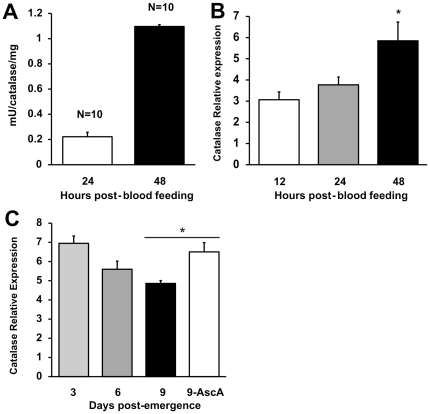
Figure 3. Changes in catalase in the developing oocyte of Lu. longipalpis.
(A) Catalase activity of developing oocytes after blood feeding. Six day old female Lu. longipalpis were blood-fed and dissected at 24 and 48 hours. Enzymatic activity in the developing oocytes was significantly higher at 48 hours compared to 24 hours after blood feeding (P<0.0001 , T-test). Bar charts represent mean ± SE of combined samples from 2 independent experiments. (B) Relative expression of catalase LlongKat1 mRNA in developing oocytes dissected at 12, 24 and 48 hours from 6 days-old blood-fed female Lu longipalpis, (n = three groups of 20 females each). Asterisk indicates statistical difference at P<0.05 (ANOVA). Bar charts represent mean ± SEM of combined samples from 2 independent experiments. (C) Age-related decrease of catalase mRNA relative expression in developing oocyte. Flies were blood-fed at 3, 6 and 9 days Post-Emergence (n = three groups of 15 females each) and whole ovaries were dissected 48 hours after blood feeding. Relative expression was statistically different in all 3, 6 and 9 days old flies (P = 0.001, ANOVA). A 4th group (n = 15 females) fed on an ascorbic acid-supplemented sugar solution upon emergence (9-AscA) showed catalase relative expression levels similar to groups of younger flies fed on 70% sucrose solution, and statistically higher than the non-treated, 9 DPE group (P<0.002, t-test). Bar charts represent mean ± SEM of combined samples from 2 independent experiments.
Figure 4
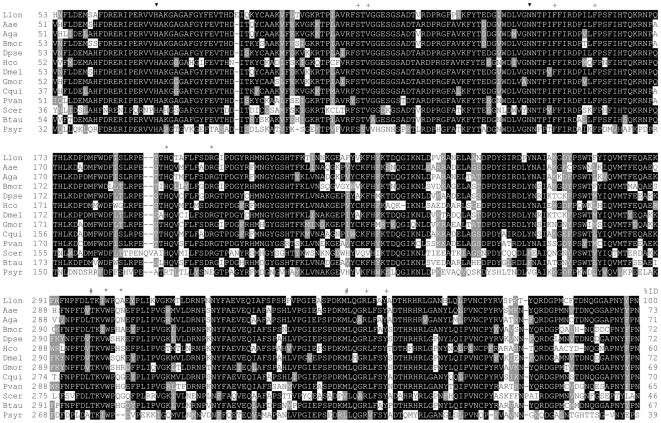
Figure 4. Amino acid sequence alignment of selected catalases.
Sequences were retrieved from GenBank (GB), Protein Data Bank (PDB) or from Peroxibase (PB). The listed proteins are respectively from Lutzomyia longipalpis (GB:ABV60342.1), Aedes aegypti (PB:5267), Anopheles gambiae (PB:5269), Bombyx mori (PB:5266), Drosophila pseudoobscura (PB:5273), Haemonchus contortus (PB:5270), D. melanogaster (GB:NP_536731.1), Glossina morsitans morsitans (GB:ADD20421.1), Culex quinquefasciatus (GB:XP_001848573.1), Penaeus vannamei (PB:5278), Saccharomyces cerevisiae (PDB:1A4E), Bos taurus (PDB:8CAT), Pseudomonas syringae (PDB:1M7S). Conserved residues in catalases are with black background, consensus alternatives are shaded. The symbols ▾, +, and * mark catalytic, heme binding and NADPH binding residues, respectively. The symbol # mark residues that define heme orientation. All sequences are from clade 3 of monofunctional catalases, with the exception of Psyr, which is a clade 2 enzyme. In catalases from clade 2 (Psyr numbering), heme orientation (His-IV) is defined by residues 301 (never Leu) and 350 (frequently Leu). In catalases from clade 3, these positions are commonly occupied by Leu and non-Leucine residues, respectively. NADPH binding catalases have the signature (Btau numbering) His 193, Arg 202, Val 301 and His 304, which is not present in catalases from clades 1 (not shown) and 2 (Psyr). Insect catalases share some of the NADPH binding residues, but not all. However, catalytic residues and heme binding residues are fully conserved in all sequences.
Figure 5
Figure 5. RNAi-mediated depletion of catalase LlonKat1 in female Lu. Longipalpis and its effect on fecundity.
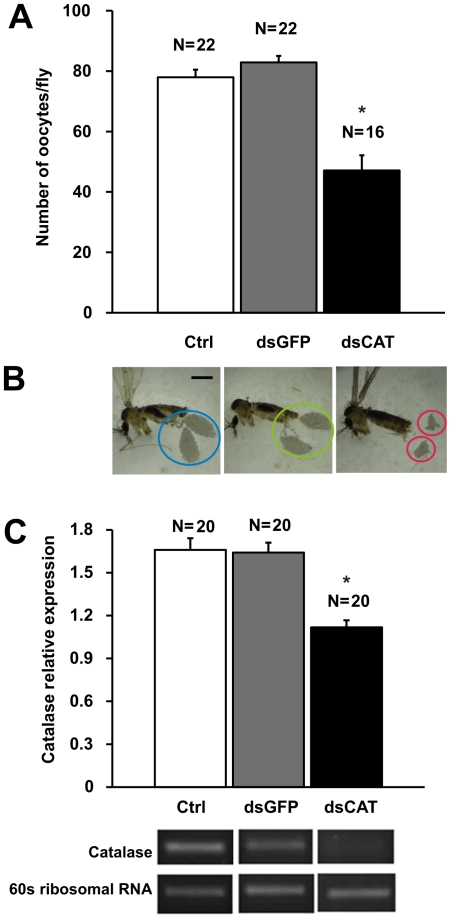
(A) Average number of developing oocytes dissected 48 hours days after blood meal ± SEM (combined samples derived from 2 independent experiments). Asterisk indicates statistical significance at P<0.005(ANOVA). (B) Relative development of female Lu. longipalpis ovaries observed upon catalase gene knockdown by RNAi, in comparison to mock-injected and uninjected control sand flies. Bar = 1 mm. (C) Relative expression of catalase LlongKat1 mRNA in whole fly homogenates from dsRNA-injected catalase knock-down sand flies. Bar charts represent mean ± SEM of combined samples from at least 2 independent experiments. Asterisk indicates statistical difference at P<0.05 (ANOVA).
Figure 6
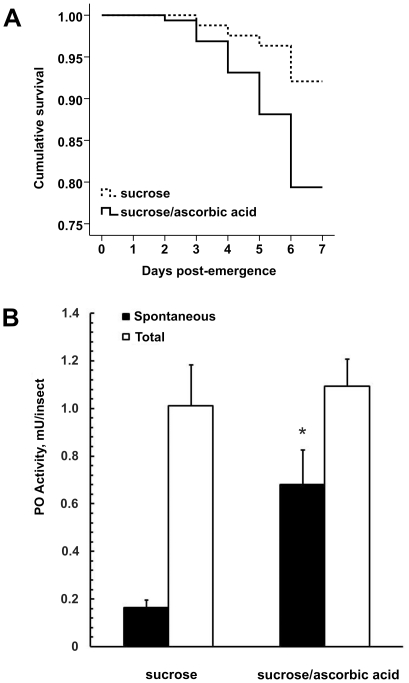
Figure 6. Effect of dietary supplementation of ascorbic acid on mortality of sugar fed Lu. longipalpis.
(A) Female sand flies were offered a 70% sucrose solution supplemented with 20 mM ascorbic acid or a non-supplemented sucrose solution. Experimental flies (sucrose +20 mM ascorbic acid) exhibited a significantly lower survival rate compared to control flies, (p<0.001, Kaplan-Meier, Log Rank χ2 test). (B) Spontaneous and total phenoloxidase (PO) activity in Lu. longipalpis females after 7 days of feeding with 70% sucrose solution or 70% sucrose solution supplemented with 20 mM ascorbic acid. Spontaneous PO activity in ascorbic acid supplemented flies was significantly higher than control flies (P<0.05 , T-test). Results are mean ± SEM from 2 independent experiments with 10 sand flies per experiment.
Figure 7
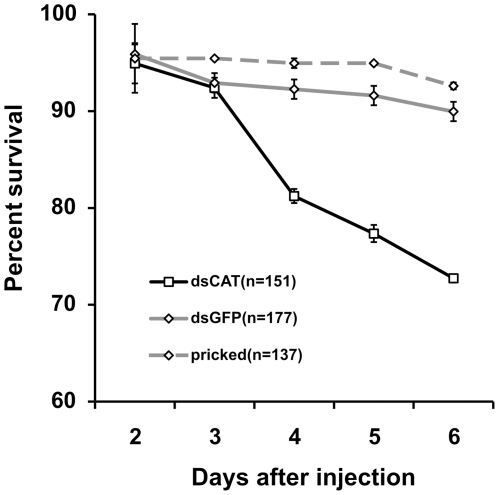
Figure 7. Survival in female Lu. Longipalpis after RNAi-mediated depletion of catalase LlonKat1.
Experimental group (dsCAT) exhibits a significantly lower survival rate compared to both dsGFP and pricked control groups, (P<0.0001, Kaplan-Meier, Log Rank χ2 test). Results represent mean ± SEM of 3 independent biological replicates.

References

    1. Lainson R, Rangel E. Lutzomyia longipalpis and the eco-epidemiology of American visceral leishmaniasis, with particular reference to Brazil: a review. Memórias do Instituto Oswaldo Cruz. 2005;100:811–827. - PubMed
    1. Soares RPP, Turco SJ. Lutzomyia longipalpis (Diptera: Psychodidae: Phlebotominae): a review. Anais da Academia Brasileira de Ciências. 2003;75:301–330. - PubMed
    1. Grimaldi G, Tesh RB. Leishmaniases of the New World: current concepts and implications for future research. Clinical Microbiology Reviews. 1993;6:230–250. - PMC - PubMed
    1. Romero GAS, Boelaert M. Control of Visceral Leishmaniasis in Latin America: A Systematic Review. PLoS Negl Trop Dis. 2010;4:e584. - PMC - PubMed
    1. Myskova J, Svobodova M, Beverley S, Volf P. A lipophosphoglycan-independent development of Leishmania in permissive sand flies. Microbes and infection. 2007;9:317–324. - PMC - PubMed

Publication types

MeSH terms