


Effects of insulin versus sulphonylurea on beta-cell secretion in recently diagnosed type 2 diabetes patients: a 6-year follow-up study
- PMID: 21409314
- PMCID: PMC3061612
- DOI: 10.1900/RDS.2010.7.225
Effects of insulin versus sulphonylurea on beta-cell secretion in recently diagnosed type 2 diabetes patients: a 6-year follow-up study
Abstract
Background: Early insulin treatment is considered more beneficial than anti-diabetic medication with sulphonylureas, because the latter may exert negative effects on beta-cell function, while the former may help preserve it. In a previous study, we found that C-peptide response was increased in the insulin-treated group, whereas it was decreased in the glibenclamide group. However, it was not certain whether the advantage remained in the longer term.
Aim: In this study, we tested whether early insulin treatment is more beneficial than glibenclamide against a 6-year follow-up perspective.
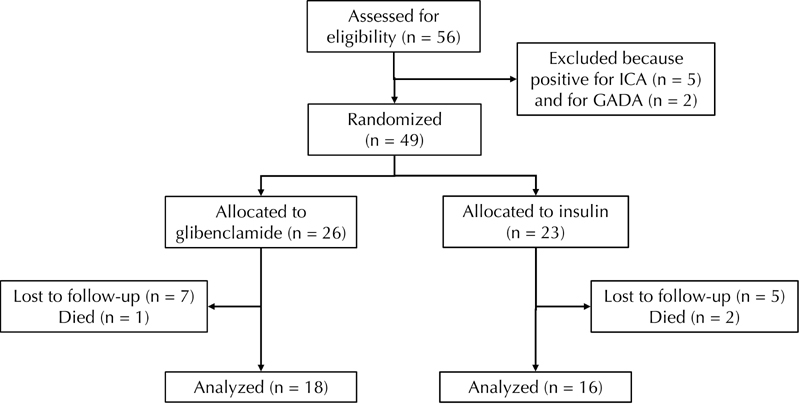
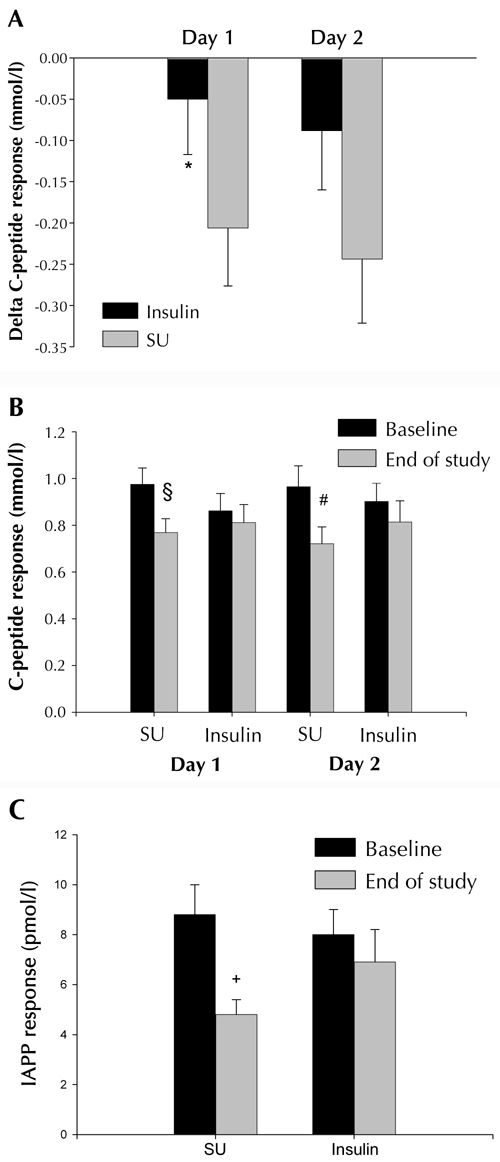
Methods: We designed a randomized clinical trial in subjects with newly diagnosed type 2 diabetes. Glucagon stimulatory tests, measuring C-peptide and islet amyloid polypeptide (IAPP), were performed after 2, and 3, days of temporary insulin and glibenclamide withdrawal.
Results: 18 subjects initially randomized to glibenclamide, and 16 randomized to two daily injections of insulin, participated in end-of-study investigations. C-peptide response to glucagon deteriorated (p < 0.01 vs. baseline) in initially glibenclamide-treated patients (n = 18), but not in insulin-treated patients (p < 0.05 for difference between groups, after 2 days of treatment withdrawal). The IAPP response to glucagon declined in the glibenclamide group (p < 0.001), but not in insulin-treated subjects (p = 0.05 for difference between groups).
Conclusions: Early insulin treatment preserves beta-cell secretory function better than glibenclamide even in a 6-year perspective.
Figures
References
-
- Grill V, Björklund A. Overstimulation and beta-cell function. Diabetes. 2001;50(Suppl 1):S122–S124. - PubMed
-
- Buchanan TA. Pancreatic beta-cell loss and preservation in type 2 diabetes. Clin Ther. 2003;25(Suppl B):B32–B46. - PubMed
-
- Fridlyand LE, Philipson LH. Does the glucose-dependent insulin secretion mechanism itself cause oxidative stress in pancreatic beta-cells? Diabetes. 2004;53:1942–1948. - PubMed
-
- Donath MY, Schumann DM, Faulenbach M, Ellingsgard H, Perren A, Ehses JA. Islet inflammation in type 2 diabetes: from metabolic stress to therapy. Diabetes Care. 2008;31(Suppl 2):S161–S164. - PubMed
Publication types
MeSH terms
Substances
LinkOut - more resources
Full Text Sources
Medical