


Determinants of infant feeding choices by Zambian mothers: a mixed quantitative and qualitative study
- PMID: 21410882
- PMCID: PMC6860822
- DOI: 10.1111/j.1740-8709.2010.00264.x
Determinants of infant feeding choices by Zambian mothers: a mixed quantitative and qualitative study
Abstract
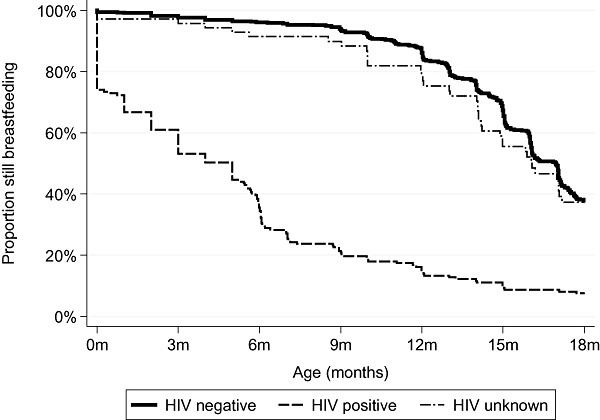
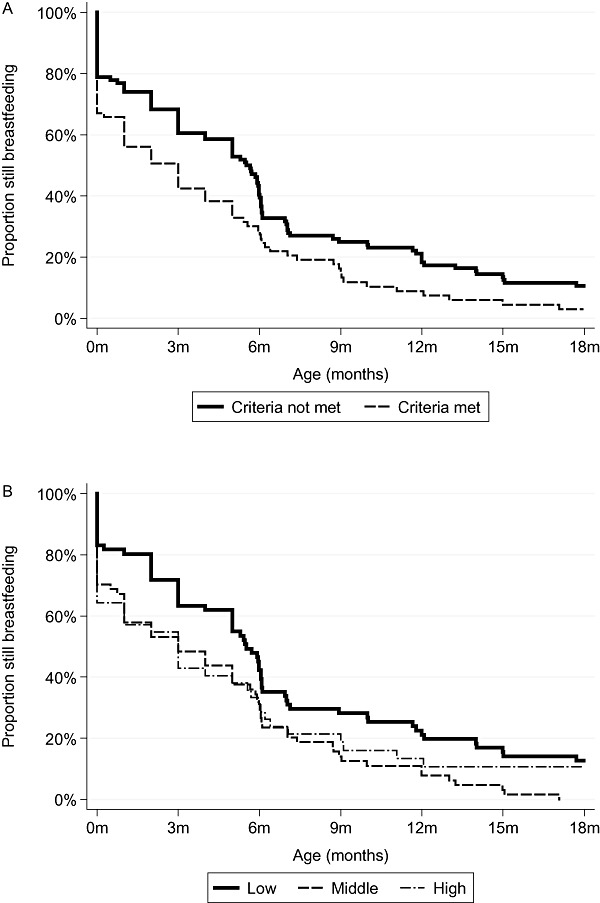
Choosing an infant feeding mode is complex for human immunodeficiency virus (HIV)-infected African women. We documented infant feeding choices by 811 mothers of infants aged less than 18 months enrolled in the Chilenje Infant Growth, Nutrition and Infection Study of fortified complementary or replacement foods. We also conducted 20 interviews and 4 focus group discussions among women and nurses to explore the issues in depth. Practices of most HIV-infected women did not closely follow national or international guidelines: 26% never initiated breastfeeding, and 55% were not breastfeeding by 6 months post partum. Women of lower socio-economic status and those not meeting criteria for safe replacement feeding were more likely to initiate breastfeeding, to continue longer and to stop at 6 months when provided with free food within the trial. Most HIV-negative women and women of unknown HIV status continued breastfeeding into the infant's second year, indicating limited 'spillover' of infant feeding messages designed for HIV-infected women into the uninfected population. Qualitative work indicated that the main factors affecting HIV-infected women's infant feeding decisions were the cost of formula, the advice of health workers, influence of relatives, stigma and difficulties with using an exclusive feeding mode. Rapidly changing international recommendations confused both mothers and nurses. Many HIV-infected women chose replacement feeding without meeting criteria to do this safely. Women were influenced by health workers but, for several reasons, found it difficult to follow their advice. The recently revised international HIV and infant feeding recommendations may make the counselling process simpler for health workers and makes following their advice easier for HIV-infected women.
© 2010 Blackwell Publishing Ltd.
Conflict of interest statement
The authors declare that they have no conflicts of interest.
Figures
References
-
- Breastfeeding and HIV International Transmission Study Group ( 2004. ) Late postnatal transmission of HIV‐1 in breast‐fed children: an individual patient data meta‐analysis . Journal of Infectious Diseases 189 , 2154 – 2166 . - PubMed
-
- Central Statistical Office, Ministry of Health, Tropical Diseases Research Centre, University of Zambia & Macro International Inc ( 2009. ) Zambia Demographic and Health Survey 2007 . CSO and Macro International Inc; : Calveton, Maryland, USA .
-
- Chilenje Infant Growth Nutrition and Infection (CIGNIS) Study Team ( 2010. ) Microutrient fortification to improve growth and health of maternally HIV‐unexposed and exposed Zambian infants: a randomised controlled trial . PLoS One Available at: http://www.plosone.org/article/info%3Adoi%2F10.1371%2Fjournal.pone.0011165 . - PMC - PubMed
-
- Chopra M. , Doherty T. , Jackson D. & Ashworth A. ( 2005. ) Preventing HIV transmission to children: quality of counselling of mothers in South Africa . Acta Paediatrica 94 , 357 – 363 . - PubMed
-
- Chopra M. , Doherty T. , Mehatru S. & Tomlinson M. ( 2009. ) Rapid assessment of infant feeding support to HIV‐positive women accessing prevention of mother‐to‐child transmission services in Kenya, Malawi and Zambia . Public Health Nutrition 12 , 2323 – 2328 . - PubMed
