


The hardening hypothesis: is the ability to quit decreasing due to increasing nicotine dependence? A review and commentary
- PMID: 21411244
- PMCID: PMC3133840
- DOI: 10.1016/j.drugalcdep.2011.02.009
The hardening hypothesis: is the ability to quit decreasing due to increasing nicotine dependence? A review and commentary
Abstract
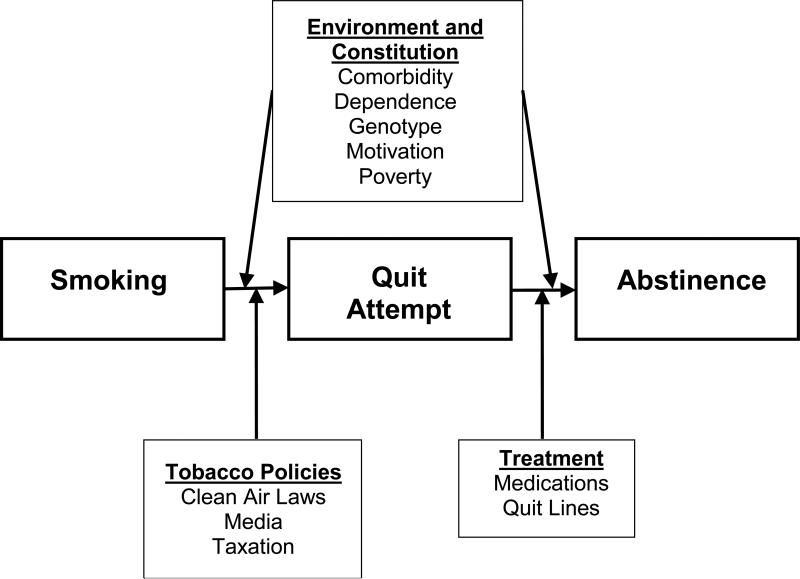
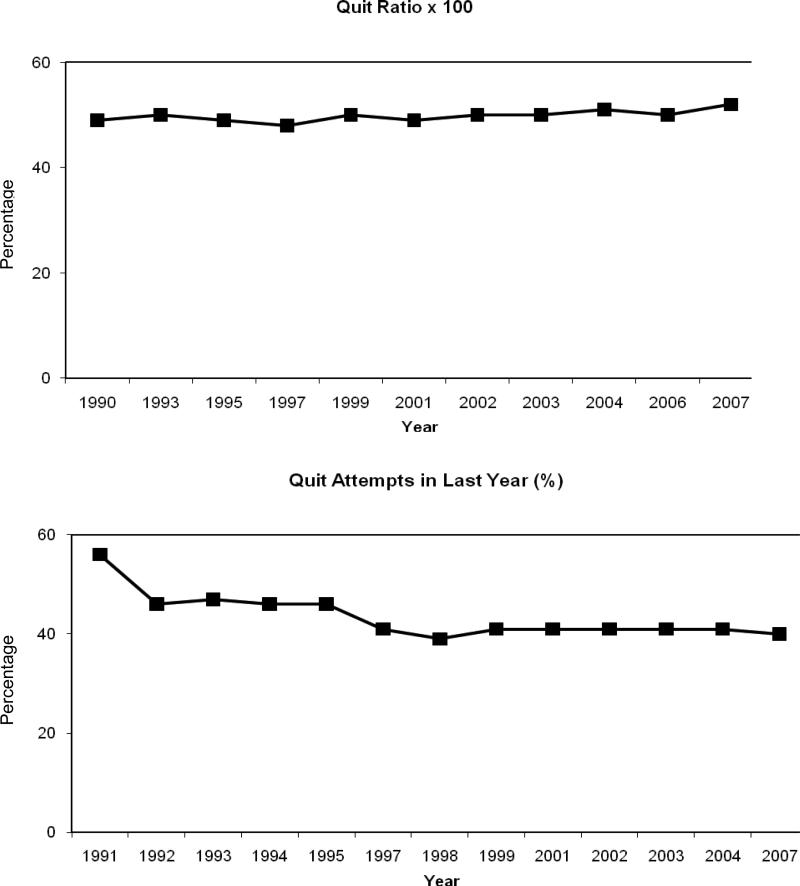
The "hardening hypothesis" states tobacco control activities have mostly influenced those smokers who found it easier to quit and, thus, remaining smokers are those who are less likely to stop smoking. This paper first describes a conceptual model for hardening. Then the paper describes important methodological distinctions (quit attempts vs. ability to remain abstinent as indicators, measures of hardening per se vs. measures of causes of hardening, and dependence measures that do vs. do not include cigarettes per day (cigs/day).) After this commentary, the paper reviews data from prior reviews and new searches for studies on one type of hardening: the decreasing ability to quit due to increasing nicotine dependence. Overall, all four studies of the general population of smokers found no evidence of decreased ability to quit; however, both secondary analyses of treatment-seeking smokers found quit rates were decreasing over time. Cigs/day and time-to-first cigarette measures of dependence did not increase over time; however, two studies found that DSM-defined dependence appeared to be increasing over time. Although these data suggest hardening may be occurring in treatment seekers but not in the general population of smokers, this conclusion may be premature given the small number of data sets and indirect measures of quit success and dependence in the data sets. Future studies should include questions about quit attempts, ability to abstain, treatment use, and multi-item dependence measures.
Copyright © 2011 Elsevier Ireland Ltd. All rights reserved.
Figures
References
-
- Breslau N, Johnson EO, Hiripi E, Kessler R. Nicotine dependence in the United States: prevalence, trends and smoking persistence. Arch. Gen. Psychiatr. 2001;58:810–816. - PubMed
-
- Burns DM, Major JM, Anderson CM, Vaughn JW. Those Who Continue To Smoke: Is Achieving Abstinence Harder and Do We Need to Change Our Interventions? Smoking and Tobacco Control Monograph No. 15. U.S. Department of Health and Human Services, Public Health Service, National Institutes of Health, National Cancer Institute; Bethesda: 2003. Changes in cross-sectional measures of cessation, numbers of cigarettes smoked per day, and time to first cigarette-California and national data. pp. 101–125.
-
- Celebucki C, Brawarsky P. Those Who Continue to Smoke: Is Achieving Abstinence Harder and Do We Need to Change our Interventions? U.S. Department of Health and Human Services, Public Health Service, National Institutes of Health, National Cancer Institute; Bethesda: 2003. Hardening of the target: Evidence from Massachusetts. pp. 127–145.
Publication types
MeSH terms
Grants and funding
LinkOut - more resources
Full Text Sources
Other Literature Sources
Medical
