


Composition of coronary thrombus in acute myocardial infarction
- PMID: 21414532
- PMCID: PMC3071619
- DOI: 10.1016/j.jacc.2010.09.077
Composition of coronary thrombus in acute myocardial infarction
Abstract
Objectives: We sought to analyze the composition of coronary thrombus in vivo in ST-segment elevation myocardial infarction (STEMI) patients.
Background: The dynamic process of intracoronary thrombus formation in STEMI patients is poorly understood.
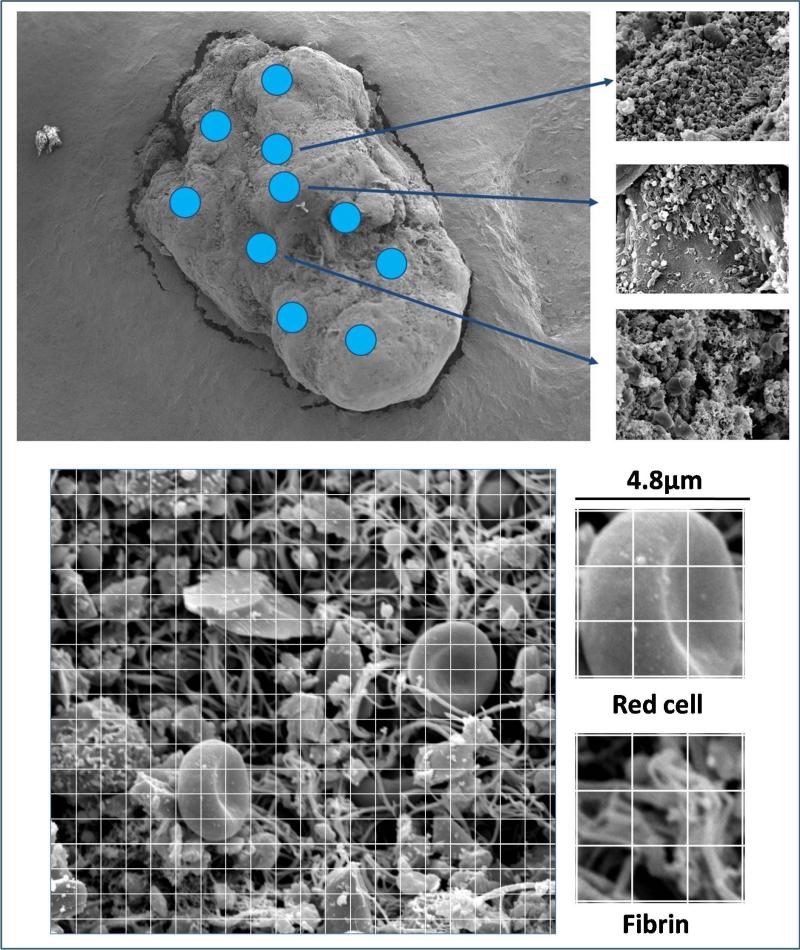
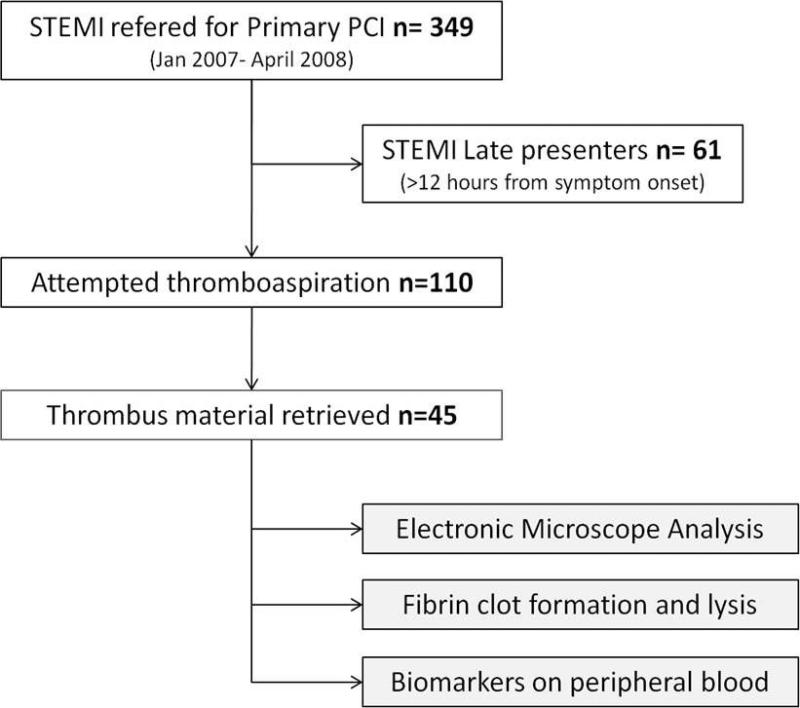
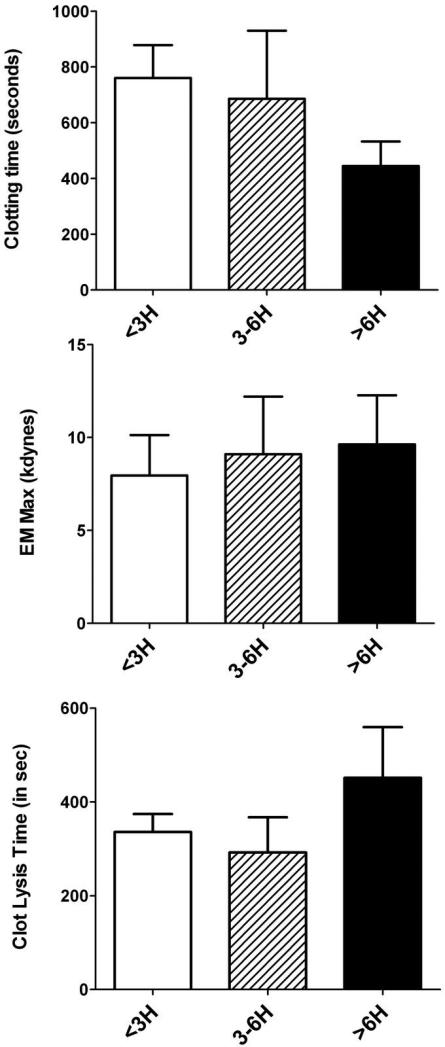
Methods: Intracoronary thrombi (n = 45) were obtained by thromboaspiration in 288 consecutive STEMI patients presenting for primary percutaneous intervention, and analyzed using high-definition pictures taken with a scanning electron microscope. Plasma biomarkers (TnI, CRPus, IL-6, PAI-1, sCD40 ligand, and TNF-α) and plasma fibrin clot viscoelastic properties were measured simultaneously on peripheral blood.
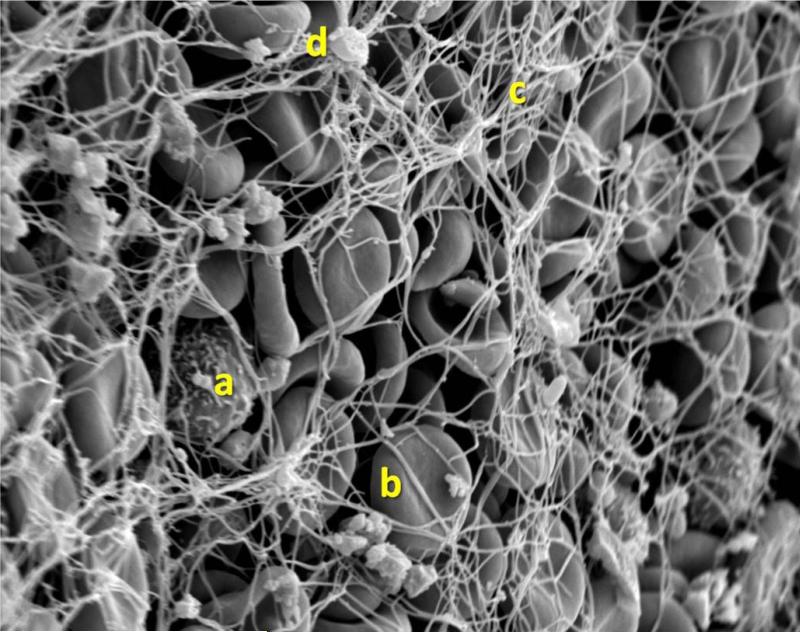
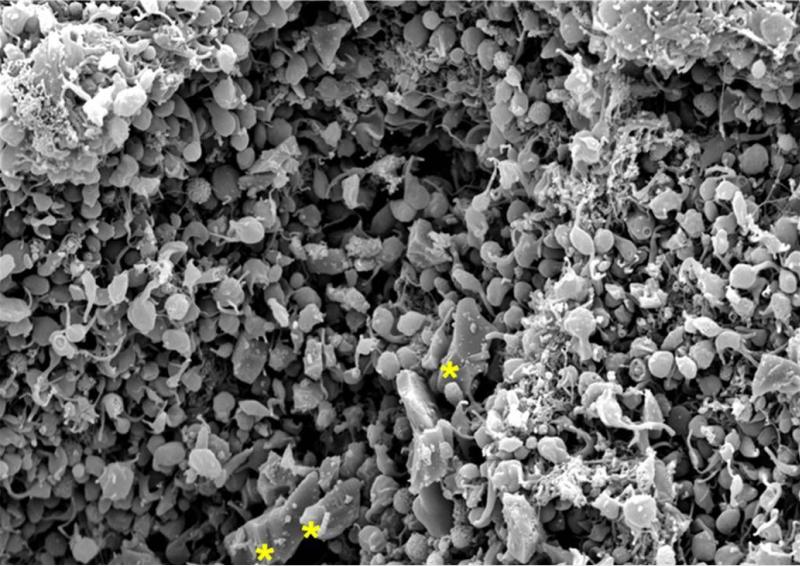
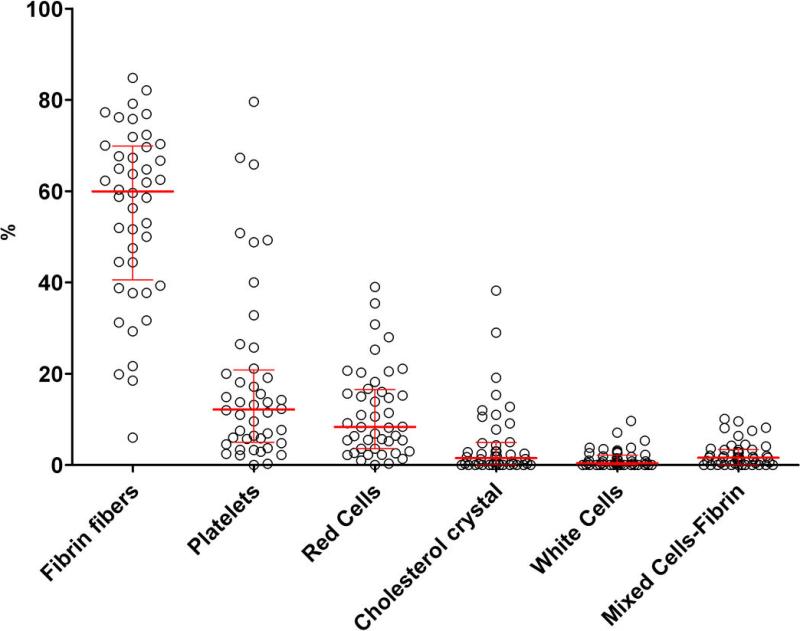
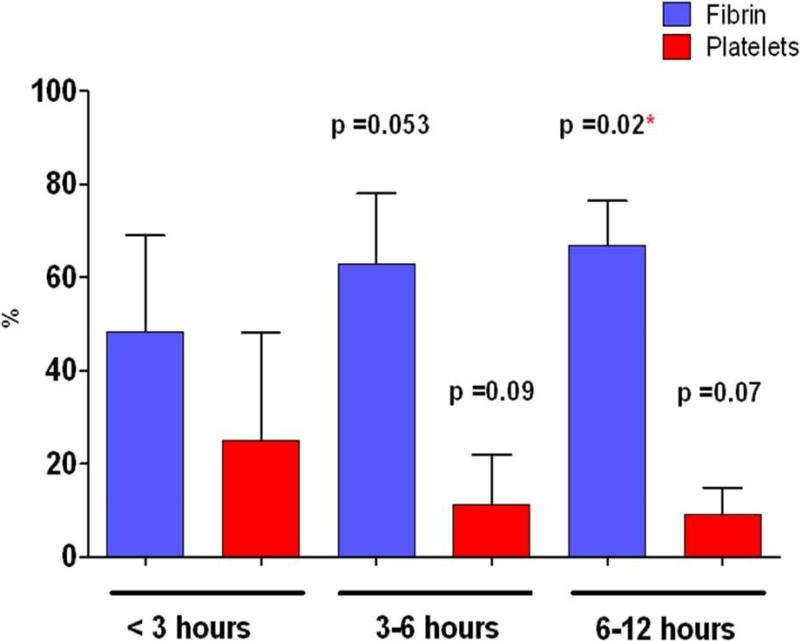
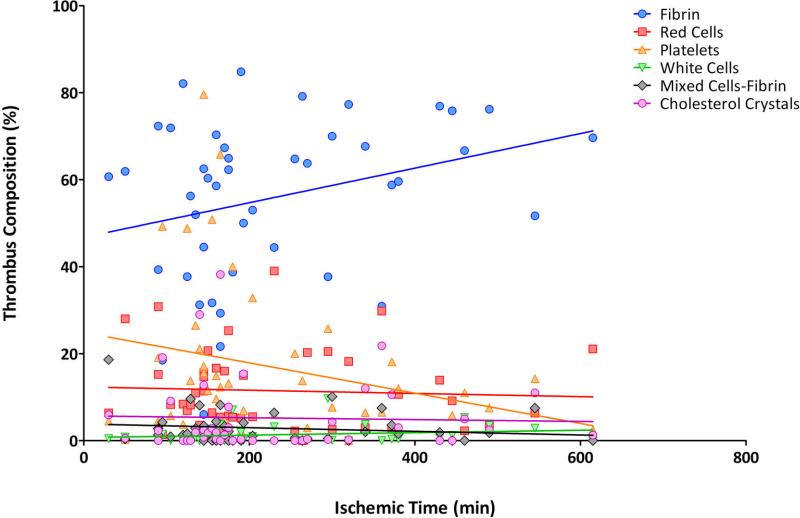
Results: Thrombi were mainly composed of fibrin (55.9 ± 18%) with platelets (16.8 ± 18%), erythrocytes (11.5 ± 9%), cholesterol crystals (5.2 ± 8.4%), and leukocytes (1.3 ± 2.0%). The median ischemic time was 175 min (interquartile range: 140 to 297). Ischemic time impacted thrombi composition, resulting in a positive correlation with intracoronary thrombus fibrin content, r = 0.38, p = 0.01, and a negative correlation with platelet content, r = -0.34, p = 0.02. Thus, fibrin content increased with ischemic time, ranging from 48.4 ± 21% (<3 h) up to 66.9 ± 9% (>6 h) (p = 0.02), whereas platelet content decreased from 24.9 ± 23% (<3 h) to 9.1 ± 6% (>6 h) (p = 0.07). Soluble CD40 ligand was positively correlated to platelet content in the thrombus (r = 0.40, p = 0.02) and negatively correlated with fibrin content (r = -0.36; p = 0.04). Multivariate analysis indicated that ischemic time was the only predictor of thrombus composition, with a 2-fold increase of fibrin content per ischemic hour (adjusted odds ratio: 2.00 [95% confidence interval: 1.03 to 3.7]; p = 0.01).
Conclusions: In acute STEMI, platelet and fibrin contents of the occlusive thrombus are highly dependent on ischemia time, which may have a direct impact on the efficacy of drugs or devices used for coronary reperfusion.
Copyright © 2011 American College of Cardiology Foundation. Published by Elsevier Inc. All rights reserved.
Figures
Comment in
-
The effect of ethanol on cholesterol crystals during tissue preparation for scanning electron microscopy.J Am Coll Cardiol. 2012 Jan 3;59(1):93; author reply 93-4. doi: 10.1016/j.jacc.2011.08.065. J Am Coll Cardiol. 2012. PMID: 22192678 Free PMC article. No abstract available.
References
-
- DeWood MA, Spores J, Notske R, et al. Prevalence of total coronary occlusion during the early hours of transmural myocardial infarction. N Engl J Med. 1980;303:897–902. - PubMed
-
- Falk E. Coronary thrombosis: pathogenesis and clinical manifestations. Am J Cardiol. 1991;68:28B–35B. - PubMed
-
- Maseri A, Chierchia S, Davies G. Pathophysiology of coronary occlusion in acute infarction. Circulation. 1986;73:233–9. - PubMed
-
- Mruk JS, Zoldhelyi P, Webster MW, et al. Does antithrombotic therapy influence residual thrombus after thrombolysis of platelet-rich thrombus? Effects of recombinant hirudin, heparin, or aspirin. Circulation. 1996;93:792–9. - PubMed
-
- Beygui F, Collet JP, Nagaswami C, Weisel JW, Montalescot G. Images in cardiovascular medicine. Architecture of intracoronary thrombi in ST-elevation acute myocardial infarction: time makes the difference. Circulation. 2006;113:e21–3. - PubMed
Publication types
MeSH terms
Substances
Grants and funding
LinkOut - more resources
Full Text Sources
Other Literature Sources
Medical
Research Materials
Miscellaneous
