


A new neural framework for visuospatial processing
- PMID: 21415848
- PMCID: PMC3388718
- DOI: 10.1038/nrn3008
A new neural framework for visuospatial processing
Abstract
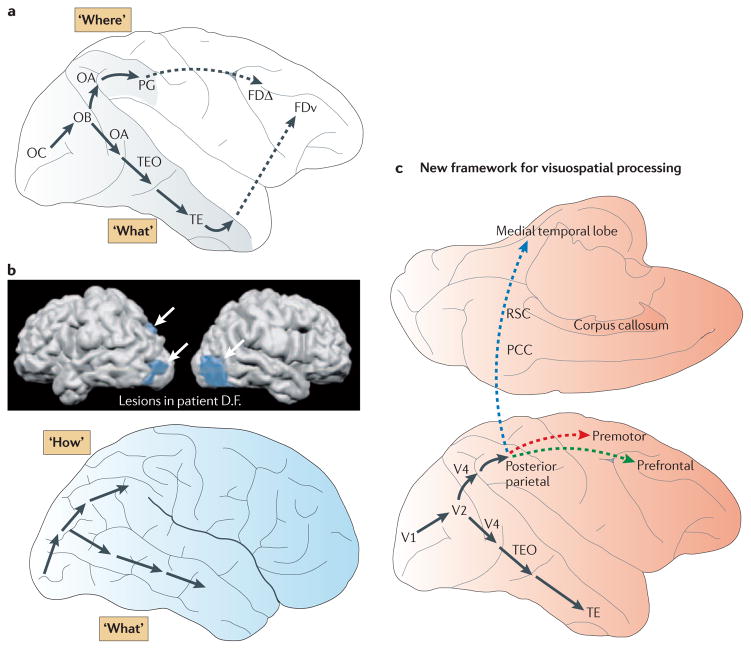
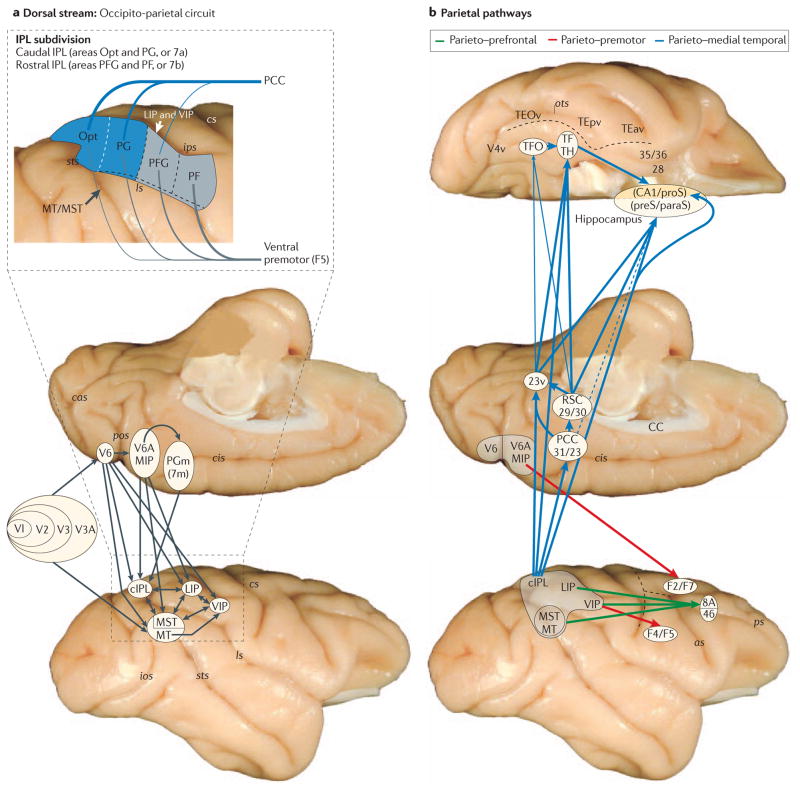
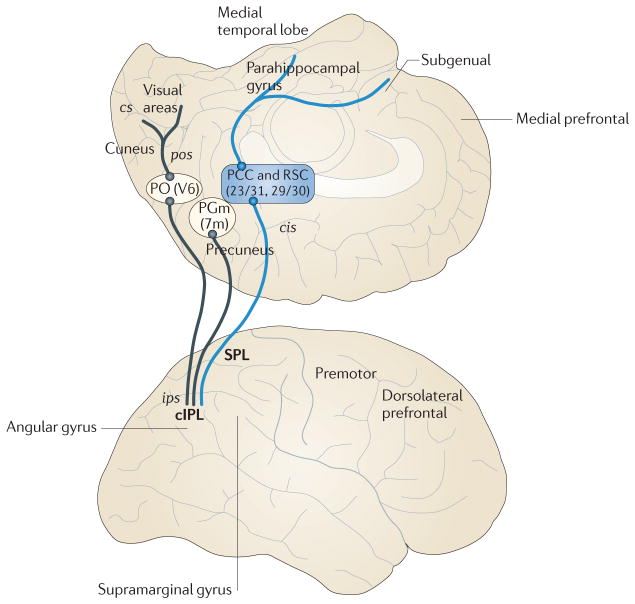
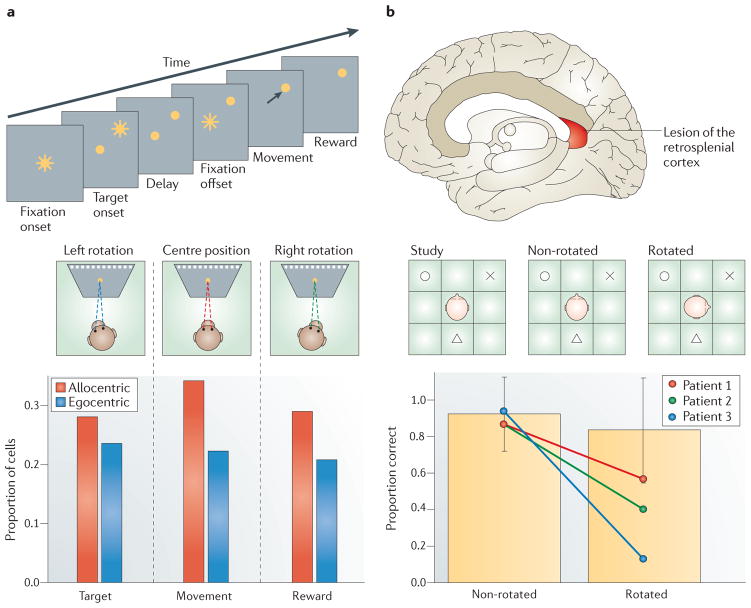
The division of cortical visual processing into distinct dorsal and ventral streams is a key framework that has guided visual neuroscience. The characterization of the ventral stream as a 'What' pathway is relatively uncontroversial, but the nature of dorsal stream processing is less clear. Originally proposed as mediating spatial perception ('Where'), more recent accounts suggest it primarily serves non-conscious visually guided action ('How'). Here, we identify three pathways emerging from the dorsal stream that consist of projections to the prefrontal and premotor cortices, and a major projection to the medial temporal lobe that courses both directly and indirectly through the posterior cingulate and retrosplenial cortices. These three pathways support both conscious and non-conscious visuospatial processing, including spatial working memory, visually guided action and navigation, respectively.
Conflict of interest statement
The authors declare no competing financial interests.
Figures
References
-
- Ungerleider LG, Mishkin M. In: Analysis of Visual Behavior. Ingle DJ, Goodale MA, Mansfield RJW, editors. MIT Press; Cambridge, Massachusetts: 1982. pp. 549–586.
-
- Mishkin M, Ungerleider LG, Macko K. Object vision and spatial vision: two cortical pathways. Trends Neurosci. 1983;6:414–417.
-
- Macko KA, et al. Mapping the primate visual system with [2–14C]deoxyglucose. Science. 1982;218:394–397. - PubMed
-
- Milner AD, et al. Perception and action in ‘visual form agnosia’. Brain. 1991;114:405–428. - PubMed
-
- James TW, Culham J, Humphrey GK, Milner AD, Goodale MA. Ventral occipital lesions impair object recognition but not object-directed grasping: an fMRI study. Brain. 2003;126:2463–2475. - PubMed
Publication types
MeSH terms
Grants and funding
LinkOut - more resources
Full Text Sources
