


HIV status is an independent risk factor for reporting lower urinary tract symptoms
- PMID: 21420120
- PMCID: PMC3565615
- DOI: 10.1016/j.juro.2010.12.043
HIV status is an independent risk factor for reporting lower urinary tract symptoms
Abstract
Purpose: HIV/AIDS is a worldwide epidemic. Limited evidence suggests that men infected with HIV/AIDS are at increased risk for lower urinary tract symptoms. We determined whether HIV/AIDS status is an independent risk factor for self-reported bothersome lower urinary tract symptoms in a large contemporary cohort.
Materials and methods: We performed a cross-sectional, Internet based survey of urinary quality of life outcomes in adult HIV infected and HIV uninfected men who have sex with men. The main outcome measure was International Prostate Symptom Score.
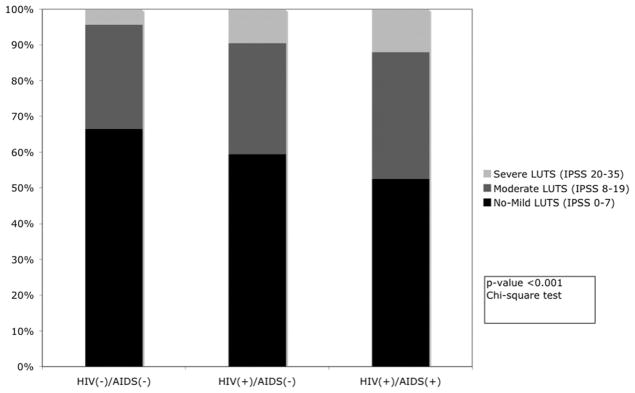
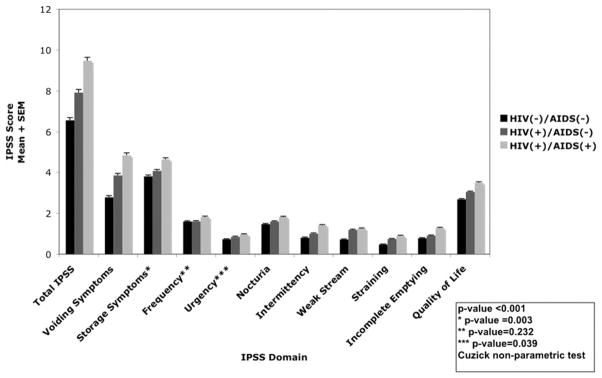
Results: Of respondents with complete data 1,507 were HIV uninfected (median age 42 years, mean 43) and 323 HIV infected (median age 45 years, mean 45.1). Of the HIV infected respondents 148 were nonAIDS defining HIV infected and 175 were AIDS defining HIV infected. After adjusting for age and other comorbid conditions, nonAIDS defining HIV infected and AIDS defining HIV infected status increased the odds of severe lower urinary tract symptoms by 2.07 (95% CI 1.04-3.79) and 2.49 (95% CI 1.43-4.33), respectively. HIV infected men had a worse total International Prostate Symptom Score for all domains including quality of life compared to HIV uninfected men. Within the population of men with HIV, those with AIDS had worse mean total International Prostate Symptom Score and all individual International Prostate Symptom Score components relative to nonAIDS defining HIV infected men.
Conclusions: HIV status is an independent risk factor for bothersome lower urinary tract symptoms. The odds of severe lower urinary tract symptoms are greater in HIV infected men with a history of AIDS.
Copyright © 2011 American Urological Association Education and Research, Inc. Published by Elsevier Inc. All rights reserved.
Conflict of interest statement
Financial interest and/or other relationship with Cerner and Elsevier.
Figures
References
-
- Hall HI, Green TA, Wolitski RJ, et al. Estimated future HIV prevalence, incidence, and potential infections averted in the United States: a multiple scenario analysis. J Acquir Immune Defic Syndr. 2010;55:271. - PubMed
-
- Volberding PA, Deeks SG. Antiretroviral therapy and management of HIV infection. Lancet. 2010;376:49. - PubMed
Publication types
MeSH terms
Grants and funding
LinkOut - more resources
Full Text Sources
Medical
