


Phylodynamics of HIV-1 from a phase III AIDS vaccine trial in Bangkok, Thailand
- PMID: 21423744
- PMCID: PMC3053363
- DOI: 10.1371/journal.pone.0016902
Phylodynamics of HIV-1 from a phase III AIDS vaccine trial in Bangkok, Thailand
Abstract
Background: In 2003, a phase III placebo-controlled trial (VAX003) was completed in Bangkok, Thailand. Of the 2,546 individuals enrolled in the trial based on high risk for infection through injection drug use (IDU), we obtained clinical samples and HIV-1 sequence data (envelope glycoprotein gene gp120) from 215 individuals who became infected during the trial. Here, we used these data in combination with other publicly available gp120 sequences to perform a molecular surveillance and phylodynamic analysis of HIV-1 in Thailand.
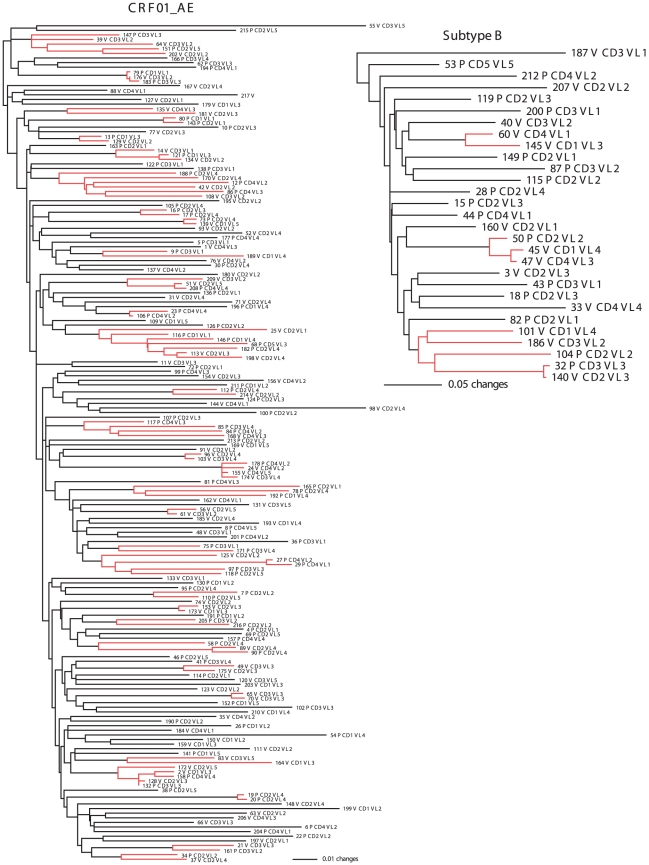
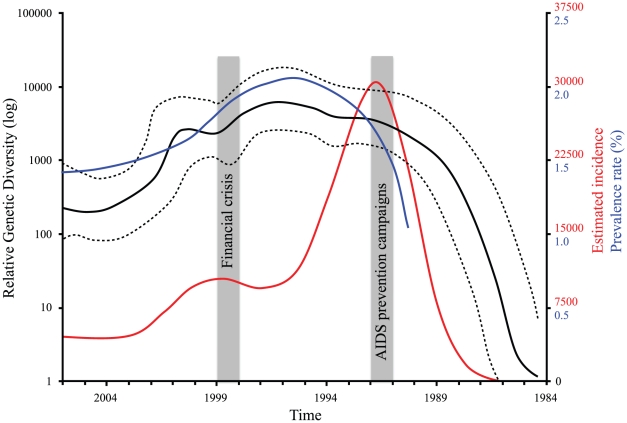
Methodology and findings: Phylogenetic and population genetic estimators were used to assess HIV-1 gp120 diversity as a function of vaccination treatment, viral load (VL) and CD4(+) counts, to identify transmission clusters and to investigate the timescale and demographics of HIV-1 in Thailand. Three HIV-1 subtypes were identified: CRF01_AE (85% of the infections), subtype B (13%) and CRF15_AE (2%). The Bangkok IDU cohort showed more gp120 diversity than other Asian IDU cohorts and similar diversity to that observed in sexually infected individuals. Moreover, significant differences (P<0.02) in genetic diversity were observed in CRF01_AE IDU with different VL and CD4(+) counts. No phylogenetic structure was detected regarding any of the epidemiological and clinical factors tested, although high proportions (35% to 50%) of early infections fell into clusters, which suggests that transmission chains associated with acute infection play a key role on HIV-1 spread among IDU. CRF01_AE was estimated to have emerged in Thailand in 1984.5 (1983-1986), 3-6 years before the first recognition of symptomatic patients (1989). The relative genetic diversity of the HIV-1 population has remained high despite decreasing prevalence rates since the mid 1990s.
Conclusions: Our study and recent epidemiological reports indicate that HIV-1 is still a major threat in Thailand and suggest that HIV awareness and prevention needs to be strengthened to avoid AIDS resurgence.
Conflict of interest statement
Figures
References
-
- Ruxrungtham K, Brown T, Phanuphak P. HIV/AIDS in Asia. Lancet. 2004;364:69–82. - PubMed
-
- Thailand Ministry of Public Health. Acquired immunodeficiency syndrome (AIDS). 1984. 509 The first reported cased in Thailand.
-
- Wirachsilp P, Kantakamalakul W, Foongladda S, Chuenchitra T, Kohriangudom S, et al. Surveillance of subtype and genetic variation of the circulating strains of HIV-1 in Thailand. Southeast Asian J Trop Med Public Health. 2007;38:814–827. - PubMed
-
- Weniger BG, Limpakarnjanarat K, Ungchusak K, Thanprasertsuk S, Choopanya K, et al. The epidemiology of HIV infection and AIDS in Thailand. AIDS. 1991;5(Suppl 2):S71–85. - PubMed
-
- Saengwonloey O, Jiraphongsa C, Foy H. Thailand report: HIV/AIDS surveillance 1998. J Acquir Immune Defic Syndr. 2003;32(Suppl 1):S63–67. - PubMed
Publication types
MeSH terms
Substances
LinkOut - more resources
Full Text Sources
Research Materials
