


Mechanism of cell adaptation: when and how do cancer cells develop chemoresistance?
- PMID: 21427552
- PMCID: PMC5558433
- DOI: 10.1097/PPO.0b013e318212dd3d
Mechanism of cell adaptation: when and how do cancer cells develop chemoresistance?
Abstract
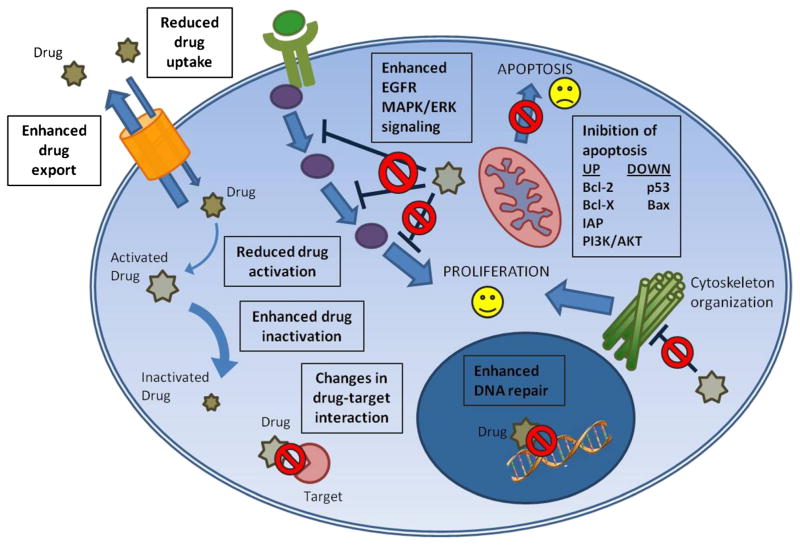
Chemotherapy treatments are considered essential tools to defeat cancer progression and dissemination to improve patients' quality of life and survival. Although most malignancies initially respond to chemotherapeutic treatments, after an unpredictable period, tumor cells develop mechanisms of resistance to the treatment. Different cell compartments are involved in the mechanism of chemoresistance, and multiple mechanisms can be activated by single cells at different times of the cancer progression. Alteration of drug metabolism, derangement of intracellular pathways' signaling, cross-talk between different membrane receptors, and modification of apoptotic signaling and interference with cell replication are all mechanisms that the cell uses to overcome the effect of pharmacological compounds.In this review, we describe different adaptation, mostly at the level of the proteome, which cancer cells use to develop resistance to cancer treatment.
Figures
References
-
- Goodman LS, Wintrobe MM, Dameshek W, et al. Nitrogen mustard therapy; use of methyl-bis (beta-chloroethyl) amine hydrochloride and tris (beta-chloroethyl) amine hydrochloride for Hodgkin’s disease, lymphosarcoma, leukemia and certain allied and miscellaneous disorders. J Am Med Assoc. 1946;132:126–132. - PubMed
-
- Frei E, 3rd, Karon M, Levin RH, et al. The effectiveness of combinations of antileukemic agents in inducing and maintaining remission in children with acute leukemia. Blood. 1965;26(5):642–656. - PubMed
-
- Gonzalez-Angulo AM, Morales-Vasquez F, Hortobagyi GN. Overview of resistance to systemic therapy in patients with breast cancer. Adv Exp Med Biol. 2007;608:1–22. - PubMed
-
- Chapal N, Molina L, Molina F, et al. Pharmacoproteomic approach to the study of drug mode of action, toxicity, and resistance: applications in diabetes and cancer. Fundam Clin Pharmacol. 2004;18:413–422. - PubMed
-
- Oldenhuis CN, Oosting SF, Gietema JA, et al. Prognostic versus predictive value of biomarkers in oncology. Eur J Cancer. 2008;44:946–953. - PubMed
Publication types
MeSH terms
Substances
Grants and funding
LinkOut - more resources
Full Text Sources
Other Literature Sources
