


Phenotypic and genotypic variations within a single bacteriophage species
- PMID: 21429206
- PMCID: PMC3072928
- DOI: 10.1186/1743-422X-8-134
Phenotypic and genotypic variations within a single bacteriophage species
Abstract
Background: Although horizontal gene transfer plays a pivotal role in bacteriophage evolution, many lytic phage genomes are clearly shaped by vertical evolution. We investigated the influence of minor genomic deletions and insertions on various phage-related phenotypic and serological properties.
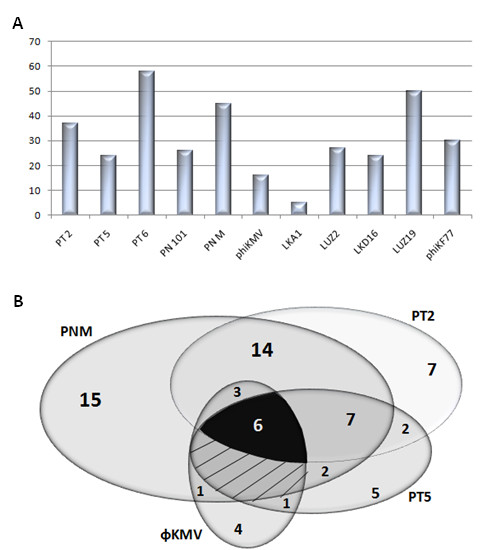
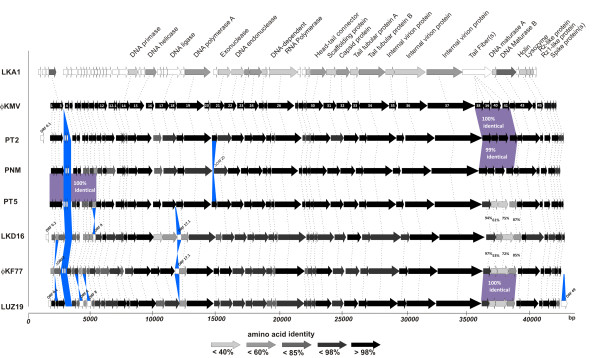
Findings: We collected ten different isolates of Pseudomonas aeruginosa bacteriophage ϕKMV. All sequenced genomes (42-43 kb, long direct terminal repeats) are nearly identical, which intuitively implied strongly similar infections cycles. However, their latent periods vary between 21 and 28 minutes and they are able to lyse between 5 and 58% of a collection of 107 clinical P. aeruginosa strains. We also noted that phages with identical tail structures displayed profound differences in host spectra. Moreover, point mutations in tail and spike proteins were sufficient to evade neutralization by two phage-specific antisera, isolated from rabbits.
Conclusion: Although all analyzed phages are 83-97% identical at the genome level, they display a surprisingly large variation in various phenotypic properties. The small overlap in host spectrum and their ability to readily escape immune defences against a nearly identical phage are promising elements for the application of these phages in phage therapy.
Figures
References
-
- Górski A, Miedzybrodzki R, Borysowski J, Weber-Dabrowska B, Lobocka M, Fortuna W, Letkiewicz S, Zimecki M, Filby G. Bacteriophage therapy for the treatment of infections. Curr Opin Investig Drugs. 2009;10:766–774. - PubMed
-
- Wright A, Hawkins CH, Anggård EE, Harper DR. A controlled clinical trial of a therapeutic bacteriophage preparation in chronic otitis due to antibiotic-resistant Pseudomonas aeruginosa; a preliminary report of efficacy. Clin Otolaryngol. 2009;34:349–357. doi: 10.1111/j.1749-4486.2009.01973.x. - DOI - PubMed
-
- Rhoads DD, Wolcott RD, Kuskowski MA, Wolcott BM, Ward LS, Sulakvelidze A. Bacteriophage therapy of venous leg ulcers in humans: results of a phase I safety trial. J Wound Care. 2009;18:237–238. - PubMed
Publication types
MeSH terms
LinkOut - more resources
Full Text Sources
Other Literature Sources
