


Promoting effects of nanoparticles/materials on sensitive lung inflammatory diseases
- PMID: 21431802
- PMCID: PMC3078294
- DOI: 10.1007/s12199-010-0177-7
Promoting effects of nanoparticles/materials on sensitive lung inflammatory diseases
Abstract
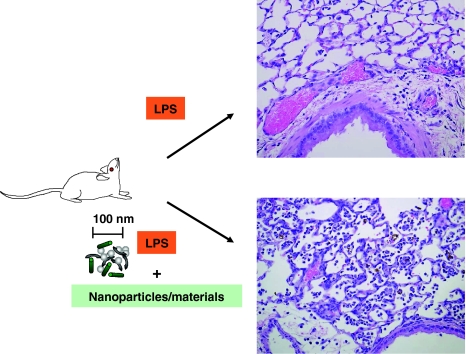
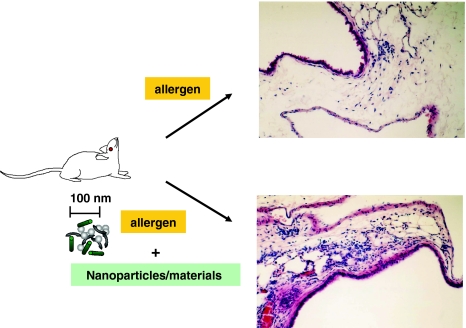
Although the adverse health effects of nanoparticles/materials have been proposed and are being clarified, their facilitating effects on preexisting pathological conditions have not been fully established. We provide insights into the environmental immunotoxicity of nanoparticles as an aggravating factor in hypersusceptible subjects, especially those with respiratory disorders, using our in vivo models. We first examined the effects of nanoparticles/materials on lung inflammation induced by bacterial endotoxin (lipopolysaccharide) as a test model against innate immunity, and demonstrated that nanoparticles instilled through both an intratracheal tube and an inhalation system can exacerbate lung inflammation. Secondly, we examined the effects of nanoparticles/materials on allergic pathophysiology, and showed that repetitive pulmonary exposure to nanoparticles has aggravating effects on allergic airway inflammation, including adjuvant effects on Th2-milieu. Taken together, nanoparticle exposure may synergistically facilitate pathological inflammatory conditions in the lung via both innate and adaptive immunological abnormalities.
Figures
References
-
- Peters A, Wichmann HE, Tuch T, Heinrich J, Heyder J. Respiratory effects are associated with the number of ultrafine particles. Am J Respir Crit Care Med. 1997;155:1376–1383. - PubMed
Publication types
MeSH terms
Substances
LinkOut - more resources
Full Text Sources
Medical