


Insulin-like growth factor-2 (IGF2) loss of imprinting marks a field defect within human prostates containing cancer
- PMID: 21432864
- PMCID: PMC3825178
- DOI: 10.1002/pros.21379
Insulin-like growth factor-2 (IGF2) loss of imprinting marks a field defect within human prostates containing cancer
Abstract
Background: Loss of imprinting (LOI) is an epigenetic alteration involving loss of parental origin-specific expression at normally imprinted genes. A LOI for IGF2, a paracrine growth factor, has been implicated in the development of prostate and other cancers. In the current study, we define IGF2 LOI in histologically normal prostate tissues in relationship to tumor foci and gene expression.
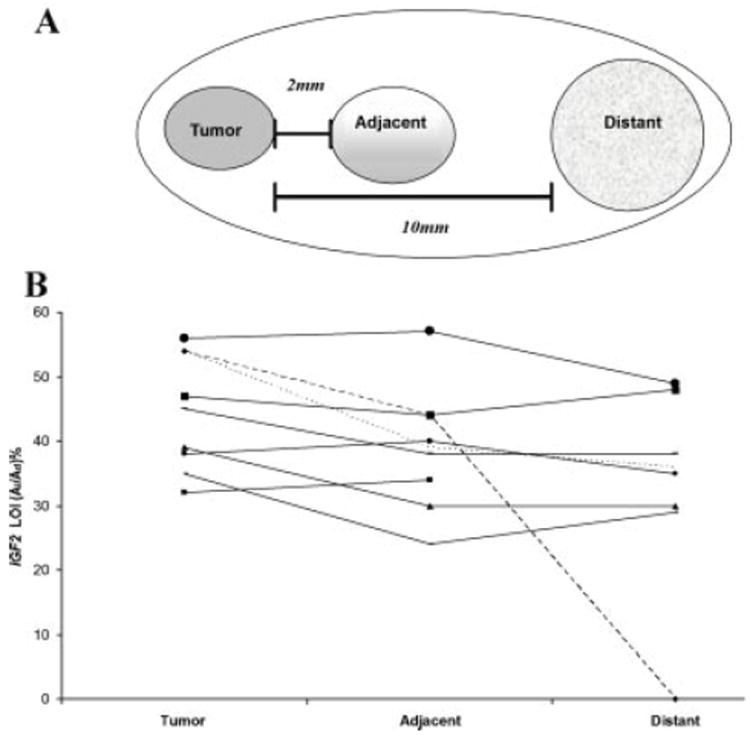
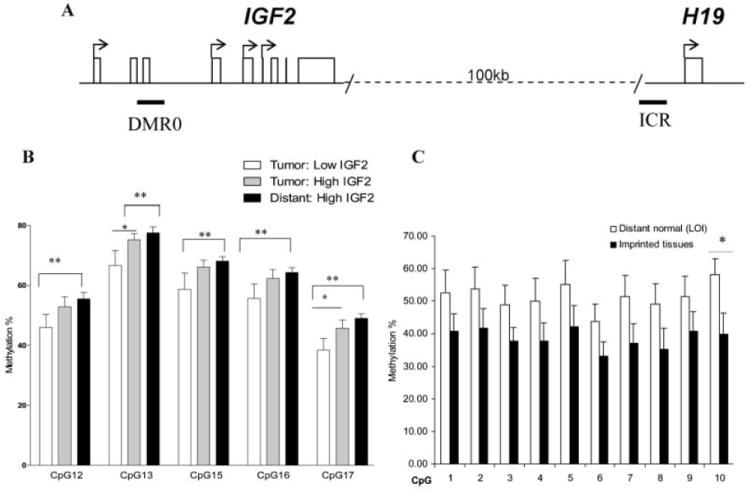
Methods: Microdissected tumor associated (TA) adjacent (2 mm) and distant (10 mm) tissues surrounding tumor foci were generated. IGF2 imprinting in informative prostate tissue sets was quantitated using a fluorescent primer extension assay and expression analyzed utilizing quantitative PCR. DNA methylation analyses were performed using quantitative pyrosequencing.
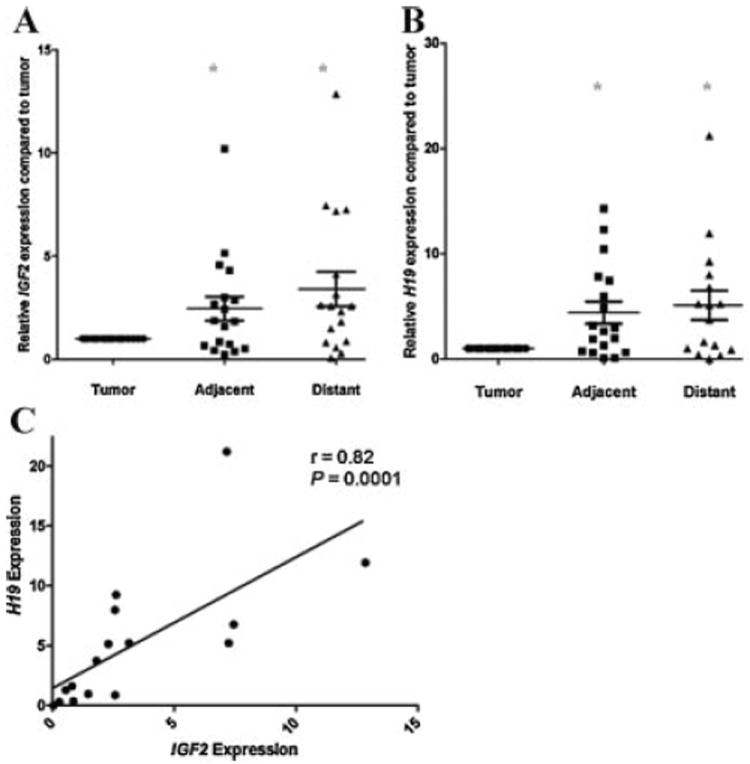
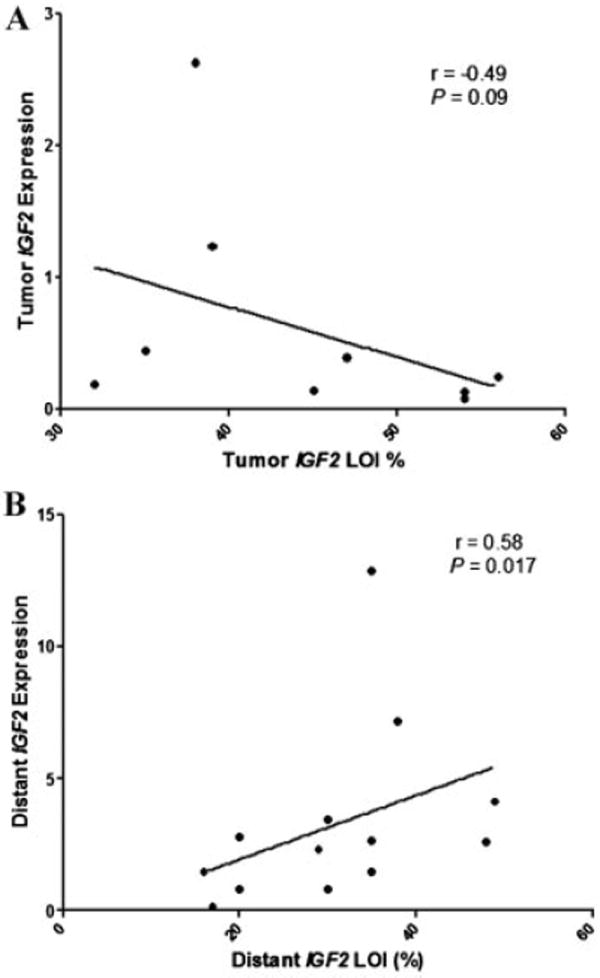
Results: A marked IGF2 LOI was found in adjacent TA tissues (39 ± 3.1%) and did not significantly decrease in tissues distant (38 ± 5.3%) from tumor foci (45 ± 2.9%; P = 0.21). IGF2 imprinting correlated with IGF2 expression in TA tissues, but not within the tumor foci. Hypomethylation of the IGF2 DMR0 region correlated with decreased IGF2 expression in tumors (P < 0.01). The expression of IGF2 and its adjacent imprinted gene H19 were increased in adjacent and distant tissues compared to tumors (P < 0.05) indicating the importance of factors other than LOI in driving IGF2 expression.
Conclusions: LOI of IGF2 occurs not only adjacent to prostate tumor foci, but is widely prevalent even in distant areas within the peripheral zone. These data provide evidence for a widespread epigenetic field defect in histologically normal tissues that might be employed to identify prostate cancer in patients.
Copyright © 2011 Wiley-Liss, Inc.
Conflict of interest statement
No financial connection between any of the authors and the subject matter.
Figures
References
-
- Slaughter DP, Southwick HW, Smejkal W. Field cancerization in oral stratified squamous epithelium. Clinical implications of multicentric origin. Cancer. 1953;6(5):963–968. - PubMed
-
- Qian J, Wollan P, Bostwick DG. The extent and multicentricity of high-grade prostatic intraepithelial neoplasia in clinically localized prostatic adenocarcinoma. Hum Pathol. 1997;28(2):143. - PubMed
-
- Epstein JI, Carmichael MJ, Partin AW, Walsh PC. Small high grade adenocarcinoma of the prostate in radical prostatectomy specimens performed for nonpalpable disease: pathogenetic and clinical implications. J Urol. 1994;151(6):1587–1592. - PubMed
-
- Vukovic B, Park PC, Al-Maghrabi J, Beheshti B, Sweet J, Evans A, Trachenberg J, Squire JA. Evidence of multifocality of telomere erosion in high-grade prostatic intraepithelial neoplasia (HPIN) and concurrent carcinoma. Oncogene. 2003;22(13):1978. - PubMed
Publication types
MeSH terms
Substances
Grants and funding
LinkOut - more resources
Full Text Sources
Other Literature Sources
Medical
Miscellaneous
