


2009 H1N1 influenza infection in Korean healthcare personnel
- PMID: 21442359
- PMCID: PMC7088200
- DOI: 10.1007/s10096-011-1213-2
2009 H1N1 influenza infection in Korean healthcare personnel
Abstract
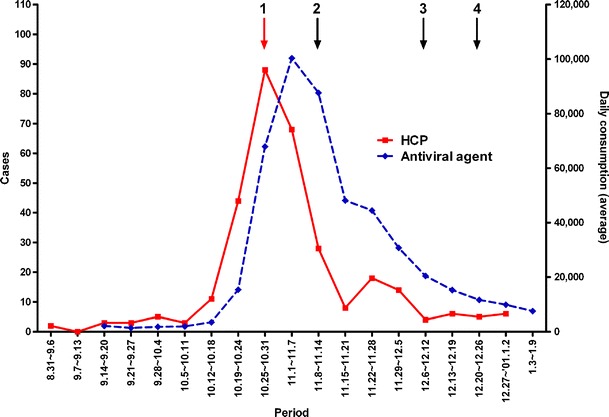
Healthcare personnel (HCP) can acquire influenza and transmit it to patients and other hospital staff. The aim of this study was to evaluate the attack rate of HCP by the 2009 H1N1 influenza virus during the 2009 pandemic influenza season in Korea. HCP infected with H1N1 virus were asked to fill out a questionnaire, which included job type, method of diagnosis, facility type, history of contact with patients infected by H1N1 virus, vaccination status, and use of personal protective equipment. A total of 328 HCP (female 68.6%, 225/328) were infected with H1N1 virus at the nine study centers. The highest attack rate was in physicians, followed by nurses and nurses' aides. Transmission occurred primarily after contact with outpatients (27.8%), followed by contact with inpatients (21.6%). Most (77.3%) of the infected HCP never used an N95 mask during contact with patients. Surgical masks were always used by 29.4% of the subjects and usually or intermittent used by 46.9%. The peak incidence of the H1N1 infection among HCP preceded that among the general population. Among HCPs, physicians, nurses, and nurses' aides were at the greatest risk of H1N1 infection. HCP should be more vigilant and protect themselves with appropriate personal protective equipment during the influenza season.
Figures
References
-
- Pearson ML, Bridges CB, Harper SA. Influenza vaccination of health-care personnel: recommendations of the Healthcare Infection Control Practices Advisory Committee (HICPAC) and the Advisory Committee on Immunization Practices (ACIP) MMWR Recomm Rep. 2006;55(RR-2):1–16. - PubMed
MeSH terms
LinkOut - more resources
Full Text Sources
Medical
Miscellaneous
