


Estimating the potential pool of HIV-infected deceased organ donors in the United States
- PMID: 21443677
- PMCID: PMC3110583
- DOI: 10.1111/j.1600-6143.2011.03506.x
Estimating the potential pool of HIV-infected deceased organ donors in the United States
Abstract
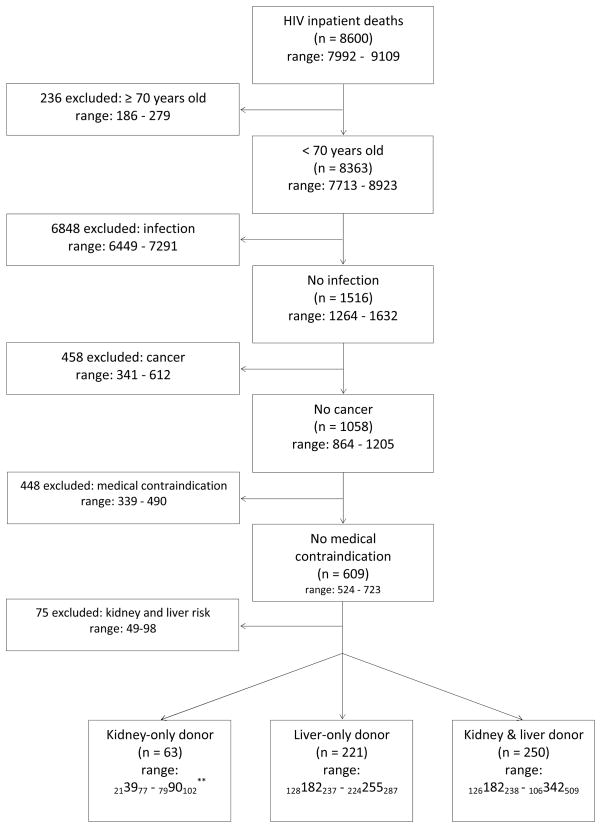
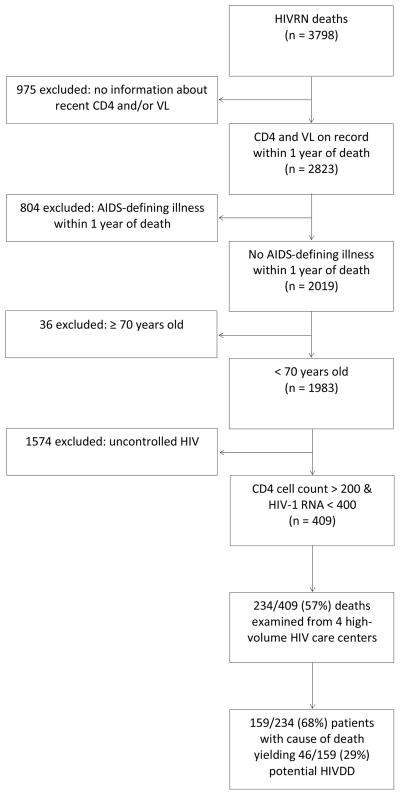
Human immunodeficiency virus (HIV) is no longer a contraindication to transplantation. For HIV-infected patients, HIV-infected deceased donors (HIVDD) could attenuate the organ shortage and waitlist mortality. However, this practice would violate United States federal law. The goal of this study was to estimate the potential impact of legalizing transplantation of HIV-infected organs by quantifying the potential pool of HIVDD. Using Nationwide Inpatient Sample (NIS) data, HIV-infected deaths compatible with donation were enumerated. Using HIV Research Network (HIVRN) data, CD4 count, plasma HIV-1 RNA level, AIDS-defining illnesses and causes of death were examined in potential HIVDD. Using UNOS data, evaluated donors who later demonstrated unanticipated HIV infections were studied. From NIS, a yearly average of 534 (range: 481-652) potential HIVDD were identified, with 63 (range: 39-90) kidney-only, 221 (range: 182-255) liver-only and 250 (range: 182-342) multiorgan donors. From HIVRN, a yearly average of 494 (range: 441-533) potential HIVDD were identified. Additionally, a yearly average of 20 (range: 11-34) donors with unanticipated HIV infection were identified from UNOS. Deceased HIV-infected patients represent a potential of approximately 500-600 donors per year for HIV-infected transplant candidates. In the current era of HIV management, a legal ban on the use of these organs seems unwarranted and likely harmful.
©2011 The Authors Journal compilation©2011 The American Society of Transplantation and the American Society of Transplant Surgeons.
Conflict of interest statement
The authors of this manuscript have no conflicts of interest to disclose as described by the American Journal of Transplantation.
Figures
References
-
- Mocroft A, Brettle R, Kirk O, Blaxhult A, Parkin JM, Antunes F, et al. Changes in the cause of death among HIV positive subjects across Europe: results from the EuroSIDA study. AIDS. 2002;16(12):1663–1671. - PubMed
-
- Palella FJ, Delaney KM, Moorman AC, Loveless MO, Fuhrer J, Satten GA, et al. Declining Morbidity and Mortality among Patients with Advanced Human Immunodeficiency Virus Infection. New England Journal of Medicine. 1998;338(13):853–860. - PubMed
-
- Locke JE, Montgomery RA, Warren DS, Subramanian A, Segev DL. Renal Transplant in HIV-Positive Patients: Long-term Outcomes and Risk Factors for Graft Loss. Arch Surg. 2009;144(1):83–86. - PubMed
-
- Stock PG, Roland ME. Evolving clinical strategies for transplantation in the HIV-positive recipient. Transplantation. 2007;84(5):563–571. - PubMed
Publication types
MeSH terms
Grants and funding
LinkOut - more resources
Full Text Sources
Medical
Research Materials
